ADU Homeowners Insurance: How to Protect Your Project Before, During, and After the Build
Key Takeaway
ADU homeowners insurance is not automatic: your existing policy may only cover a detached ADU under 'other structures' at roughly 10% of your dwelling limit, which is often too low to rebuild it. Renting the unit can trigger additional requirements, including landlord or short-term rental coverage. Notify your insurer in writing before construction begins and confirm all terms in writing after completion.
Does Homeowners Insurance Cover an ADU?
An accessory dwelling unit is not automatically protected by your existing homeowners policy, so tell your insurer before construction begins. An attached ADU may fall under your dwelling coverage, while a detached ADU often lands under "other structures" coverage with limits that may be too low to rebuild it. Renting the unit can require a landlord or specialized policy. This guide is for homeowners planning or building an ADU who want the coverage right from the start. Your actual coverage depends on structure, use, state, carrier, and policy wording, so always confirm the details with a licensed insurance professional.
How Insurers Classify an ADU: Attached vs. Detached
Most homeowners policies split your property into Coverage A (the dwelling itself) and Coverage B (other structures, like a shed or detached garage). Where your ADU falls usually depends on whether it's attached to or separate from the main house.
| ADU configuration | Common starting point | Main concern |
|---|---|---|
| Basement or interior conversion | Dwelling coverage | Higher rebuilding cost, separate occupancy |
| Attached addition | Dwelling coverage | Updated Coverage A limit |
| Attached garage conversion | Often dwelling coverage | Change from garage to living space |
| Detached backyard ADU (granny flat / in-law suite) | Other structures, endorsement, or separate policy | Coverage B may be too low |
| Detached rental ADU | Landlord policy or rental endorsement may be needed | Rental exclusions and liability |
Why Your "Other Structures" Coverage Limit May Fall Short
Coverage B is typically set at about 10% of your dwelling limit, and your fences, sheds, and detached garage may all share that same pool. Compare your actual policy limit against the estimated cost to rebuild the finished ADU, not its market value. An ADU can raise a property's value noticeably, which is exactly why the rebuilding figure needs recalculating. If your dwelling coverage drops below 80% of full replacement cost, an insurer may reduce what it pays on a claim.
Insurance Steps to Take Before ADU Construction
Adding square footage changes your property's replacement cost and risk, so standard policies may not cover construction automatically. Reach out early.
- Notify your insurer in writing before work begins.
- Describe the ADU type and how you plan to use it.
- Share dimensions, plans, materials, and target dates.
- Ask whether your policy continues during construction.
- Ask about inspection or fire-safety requirements.
- Check with your lender about added coverage.
- Get preliminary terms before committing to the build.
As an integrated design-build team, we help organize the plans, specs, and project records your insurance professional may ask for.
What Coverage You May Need During Construction
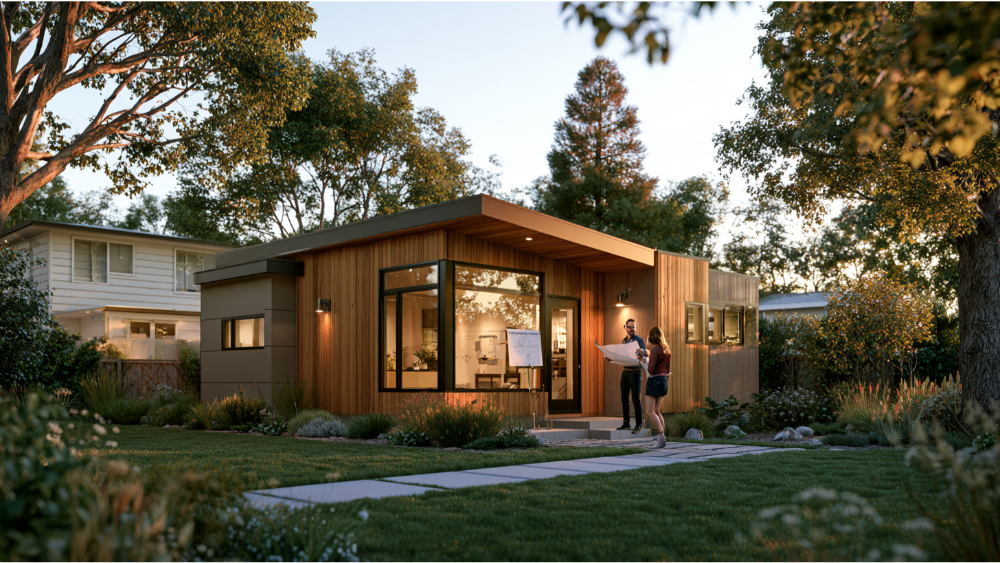
A standard homeowners policy may not cover a structure in progress. Builder's risk (course-of-construction) coverage can protect the ADU, materials on-site, and perils like fire, wind, theft, and vandalism. Confirm construction-site liability, and ask that your builder carries general liability and workers' compensation. Nail down the exact start and end dates so you can transition to permanent coverage without a gap. Terms vary by project and policy, so verify the specifics.
Updating Your Homeowners Policy After Completion
Give your insurer the final square footage and construction details, then recalculate replacement cost. Confirm whether the finished ADU sits under Coverage A, Coverage B, an endorsement, or a separate policy. Review your deductibles, and ask about ordinance-or-law coverage (which helps pay to rebuild to current codes) and extended replacement cost. Keep the written confirmation and your updated declarations page.
Insurance for a Family or Guest ADU
If a relative or guest lives in your in-law suite, your homeowners coverage may apply, but that isn't automatic. Clarify whose personal property is covered and how your policy defines a household member for liability purposes. If a relative pays rent or keeps a truly separate household, ask your insurer to confirm the arrangement in writing.
Insurance for a Long-Term Rental ADU
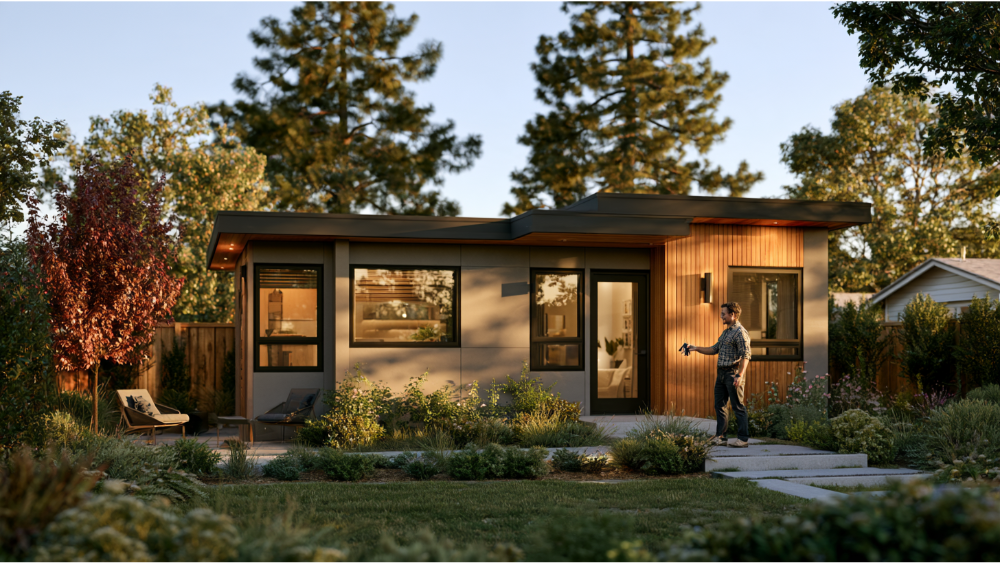
Renting out an ADU usually calls for landlord or rental-dwelling coverage. That can protect your owner-owned appliances and furnishings, premises liability, and loss of rental income after a covered loss. Your tenant's belongings are their responsibility, so require renters insurance in the lease. One rule keeps things clean: the lease, the actual occupancy, and the policy all need to describe the same use. For owners building an ADU as an income property, this is the coverage that protects the return.
Insurance for a Short-Term Rental ADU
Short-term rentals are often treated as a business use and commonly excluded from standard homeowners policies. You may need a home-sharing endorsement or a dedicated short-term rental policy. Don't rely on a booking platform's protection alone. Verify guest liability, property damage, theft, lost income, and any limits on how often you can rent.
Flood, Earthquake, and Other Coverage Gaps
Standard homeowners insurance generally excludes flood and earthquake damage, which need separate policies or endorsements. For a detached ADU, there's a detail most guides miss: an NFIP policy insures only one building, and its detached-garage allowance does not apply when the structure is used for residential purposes. A detached ADU may need its own flood policy. Ask about sewer backup and ordinance-or-law coverage too. Umbrella insurance adds liability protection only; it won't rebuild the structure.
Questions to Ask Your Insurance Professional
- Is the ADU under Coverage A, Coverage B, an endorsement, or a separate policy?
- What is the exact rebuilding limit, and is it replacement cost or actual cash value?
- Is rental activity covered, and is loss of rental income included?
- What liability limit applies to the ADU?
- Is builder's risk needed during construction, and when does that coverage end?
- Do flood, earthquake, or ordinance-or-law coverage extend to the ADU?
- Can you confirm all of this in writing?
Common ADU Insurance Mistakes to Avoid

- Waiting until construction finishes to call your insurer.
- Assuming permits create coverage.
- Assuming Coverage B is enough just because the ADU is detached.
- Not disclosing rental use.
- Assuming your policy covers tenant belongings.
- Confusing umbrella liability with property coverage.
- Insuring to market value instead of rebuilding cost.
- Letting construction coverage lapse before permanent coverage starts.
Plan Your ADU and Its Coverage Together
Insurance belongs in your ADU plan from the beginning, not after the final walkthrough. We coordinate design, drafting, permitting, and construction records so your insurance professional has what they need, when they need it. Skyline Design Build doesn't sell insurance; coverage decisions come from your licensed agent. If you're ready to start, we'd love to join you. Call (916) 701-9196 or reach us at skylinebuildinc.com/contact for a free consultation.
ADU Homeowners Insurance FAQ
What is covered in dwelling insurance?
Dwelling coverage protects the structure of your home and its attached parts against covered perils. It does not cover a tenant's belongings or lost rental income.
Do I need separate insurance for a detached ADU?
Often yes. The typical Coverage B limit may be too low to rebuild it, so you may need an endorsement or a separate policy. Ask your insurer which applies.
Does an ADU tenant need renters insurance?
Yes, it's strongly recommended. Your policy won't cover the tenant's personal property or personal liability, so renters insurance fills that gap.
Can adding an ADU cause my policy to be nonrenewed?
It's possible if the project goes undisclosed or the risk profile changes significantly. Disclose the ADU early and get your coverage confirmed in writing to avoid surprises.