Does an ADU Need a Separate Utility Meter?
Key Takeaway
An ADU does not automatically need a separate utility meter - whether one is required depends on your utility provider, local codes, and how you plan to handle tenant billing. California law, for example, limits requiring new meters for converted ADUs. A separate meter can run $6,000 to $10,000 for electric service alone, while a shared meter costs least upfront but complicates billing for rentals.
An ADU does not automatically need a separate utility meter. Whether one is required, allowed, or off the table depends on your serving utility, the codes your city has adopted, how much capacity your existing utilities have, and how you plan to handle billing. For a rented accessory dwelling unit, many utilities lean toward separate service, while some local regulations (California law, for example, limits requiring new meters for converted ADUs) push the other way. It sounds like a small detail, but a meter decision can reshape your plans, permitting, and budget. If you're planning an ADU in Sacramento, the Bay Area, or anywhere else, here's the honest version: the answer comes down to four decisions, which we'll call permission, capacity, billing, and future flexibility.
Separate Meters vs. Sub Meter vs. Shared Meter: Know the Difference
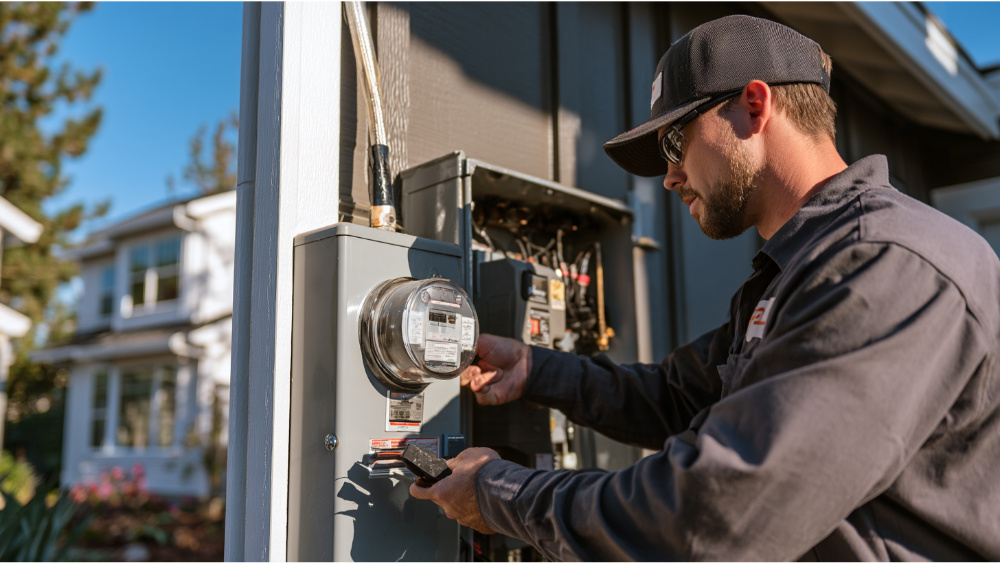
Three utility connections arrangements come up again and again, and the whole conversation gets clearer once you can tell them apart.
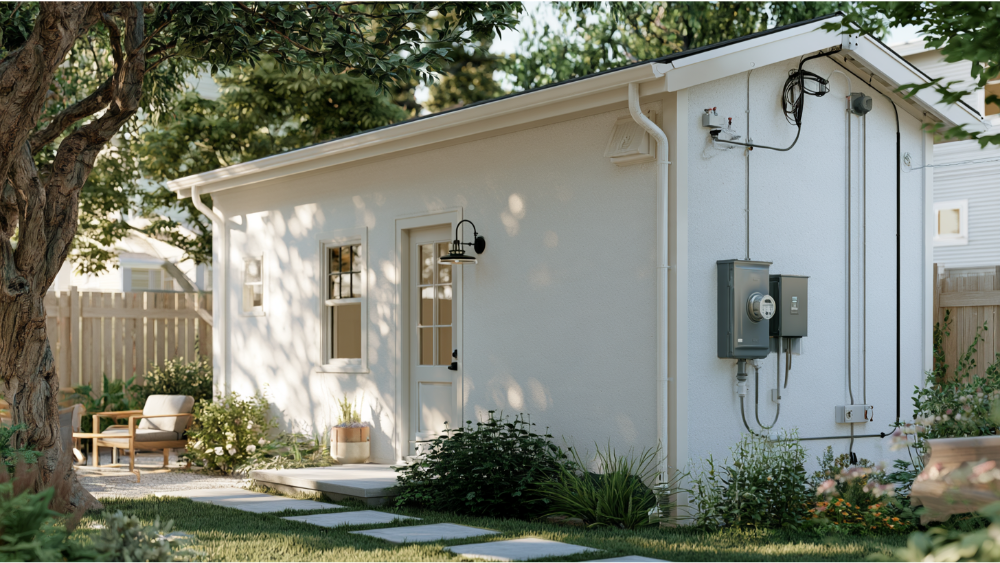
- Separate (direct) utility meter. The utility owns the meter and issues a bill tied to it. Depending on the utility's account rules, your ADU occupant can sometimes become the customer of record and open their own accounts.
- Sub meter. A private device installed downstream of the main utility meter. The utility still bills the master account; the sub meter just measures the ADU's portion of usage for monitoring or owner-administered billing.
- Shared meter. One meter feeds both homes, and nothing measures the ADU's individual utility usage.
One more thing worth untangling: a meter, a service connection, an electrical panel, a utility account, and a mailing address are not the same thing. You can have one service feeding two separate meters, two meters both billed to the owner, or a separate address with fully shared utilities. HUD and the EPA both draw the same line between a utility-owned meter and a private sub meter, and keeping those apart saves a lot of confusion later in your ADU project.
Who Decides Whether Your ADU Needs a Separate Utility Meter?
There isn't one authority. There are usually four, and they don't always agree, which is exactly why most homeowners get contradictory answers about their utilities.
- Your local building department (the authority having jurisdiction). Reviews permits and enforces the codes your city has actually adopted, including any local requirements layered on top.
- The electric, gas, and water/sewer utilities. They control utility-owned meters and utility connections, each under their own service rules.
- State utility regulators and landlord-tenant law. These govern sub meter billing and whether, and how, you can bill a tenant for utilities.
- Your design professionals. They determine whether your existing utilities can actually carry a second dwelling unit.
The 2024 model codes (IRC, IPC, IFGC) are useful references, but a model code has no legal force until a jurisdiction adopts it, and local amendments vary. Installing separate meters generally means permits, inspections, and coordination with the utility before anyone pours a foundation. That's why we always recommend pinning down utility requirements early in planning rather than assuming.
Does an ADU Need a Separate Electric Meter?
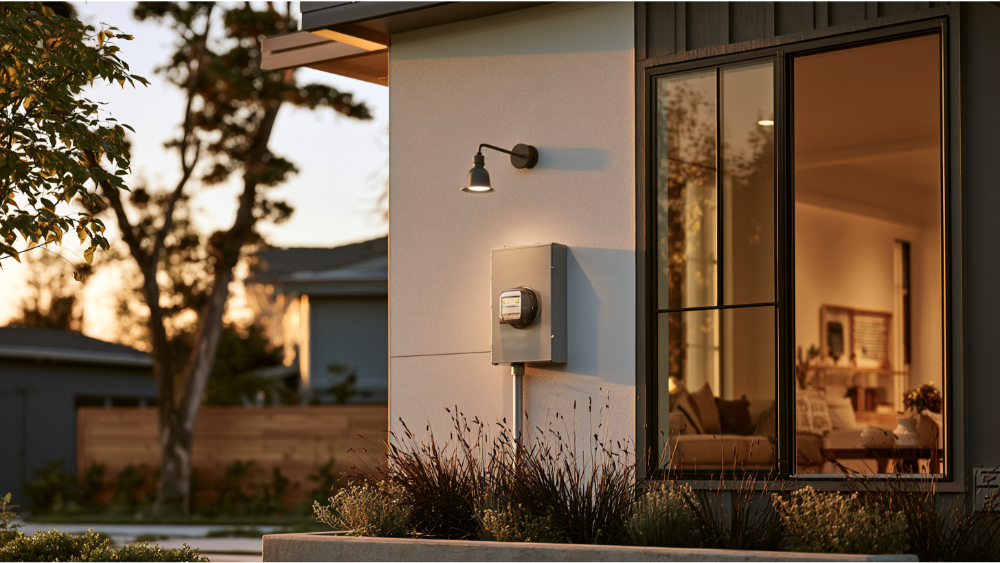
This is where the utility rule and the electrical code part ways. The utility decides whether it will set a second meter. The electrical code decides whether the wiring and panel are safe and adequately sized. Those are two different approvals, and both matter to the power feeding your accessory dwelling.
Your ADU can run off a dedicated subpanel fed from the main panel, or off its own separate electrical service. A subpanel is often the simpler route, and as broad industry context those installations commonly run in the $2,000 to $5,000 range depending on scope. But a shared panel only works if the main service can actually handle the new load, and panel sizing is settled by a formal load calculation, not by counting empty breaker spaces. Empty slots are not the same as available panel capacity.
The 2024 IRC sets a minimum 100-amp, three-wire service for a single family dwelling, while still requiring the service to be sized for the calculated load. That minimum does not mean your ADU needs its own 100-amp service, nor that an existing 100-amp service can carry both homes. Model code permits two to six service disconnects, and it requires that each occupant have access to the disconnect serving their unit even when the electrical service is shared. Utility practice varies widely: some utilities require separate meters for new ADUs, some require them specifically for rented units, and some states restrict requiring new meters on conversions. Treat those as examples of variation, not national rules. And remember the power limit may sit upstream, in the transformer serving your property, where only the utility can answer.
Does an ADU Need a Separate Water Meter?
You have the same three choices with water: a shared meter, a separate utility water meter, or a private sub meter. A separate utility meter generally requires a separately configured plumbing system tied into the main house, which is more involved than it sounds. A sub meter measures the ADU's downstream usage but ordinarily does not create a separate utility account, so the master bill still comes to you.
Meter sizing is driven by the combined fixture demand of both homes, so it should be coordinated with the utility or building department rather than guessed. EPA WaterSense guidance makes the point that utility water meters are typically utility-owned and that sizing belongs with the provider. One detail worth catching: the 2021 IPC model code calls for a full-open shutoff valve at each dwelling unit's water supply entrance. A shared meter doesn't mean your ADU should lack its own independent shutoff.
What About Sewer Service for Detached ADUs?
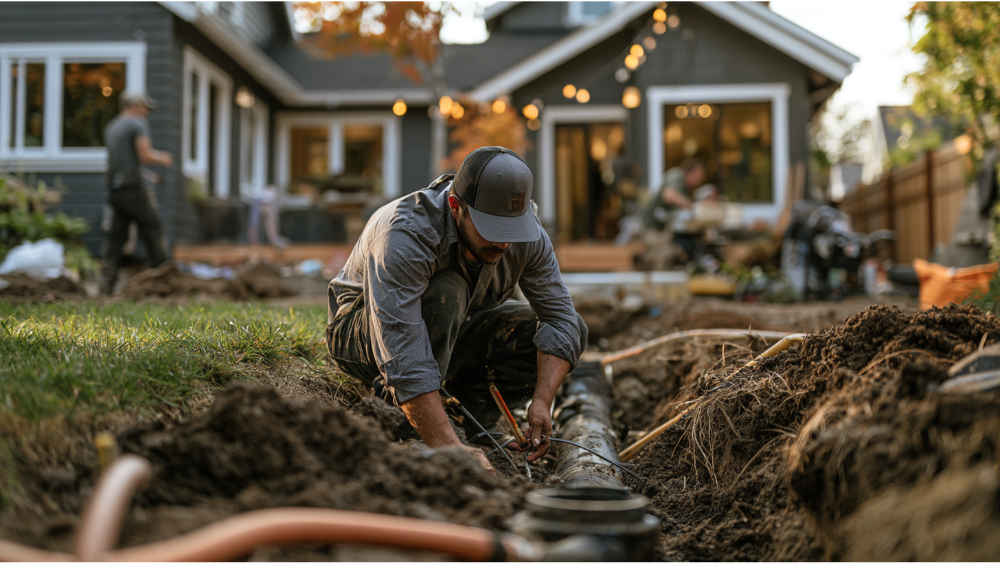
"Separate sewer meter" is usually the wrong question. Most residential wastewater isn't directly metered. Utilities commonly base sewer charges on your water usage, though some use flat fees or equivalent-dwelling-unit methods instead. So a separate water meter does not automatically create a separate sewer account.
The questions that actually matter are physical and financial. Will the ADU share your existing sewer lateral? Is that lateral sized correctly and in good condition, or is it compromised by age or tree roots pushing into the line? Does the project need a new connection, a cleanout, a backwater valve, or a proportional capacity charge? Detached ADUs are more likely to need new lateral runs because of the distance from the existing connection, and a unit placed near a detached garage can add even more trenching. That's where condition issues tend to surface. Getting the lateral assessed early in planning keeps these from becoming mid-project surprises that drive up costs.
Does an ADU Need a Separate Gas Meter?
Gas is utility-specific, so the utility's service rules come first. On the code side, the 2024 IFGC model requires that when one gas meter supplies more than one building or tenant, each gets its own shutoff valve; for a common system serving multiple buildings, those shutoffs go outdoors at each building. The gas system also has to be checked for adequate capacity whenever you add appliances.
There's a clean way to sidestep the question entirely: an all-electric ADU needs no new gas meter at all. The tradeoff is that cooking, heating and cooling, water heating, and possibly the dryer all land on the electrical system, which loops right back to that load calculation and panel sizing on your main house panel.
Separate Meter vs. Sub Meter vs. Shared Meter: Pros and Cons
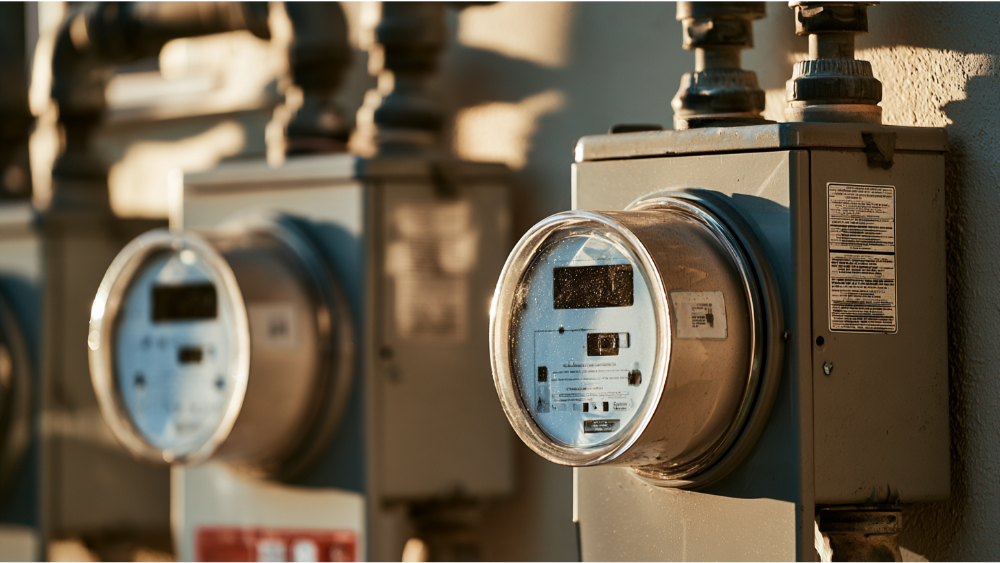
Separate meters make an ADU operationally independent. They allow direct tenant billing, keep operating-cost tracking clean, make emergency shutoffs easier, and tend to make tenants more mindful of what they use. When you meter separately, the ADU occupant can carry their own electric bill and the owner isn't caught in the middle. The costs are the upfront installation and a fixed monthly service charge per account. A shared meter is the simplest and cheapest to set up, but it can complicate billing and strain tenant relationships.
| Arrangement | Utility bills tenant directly? | Tracks ADU usage? | Owner responsible? | Potential infrastructure work | Best suited to |
|---|---|---|---|---|---|
| Separate utility meter | Sometimes, per utility rules | Yes | Only the owner's own account | New service, trenching, electrical panel work, fees | Rentals wanting full independence |
| Sub meter | No (utility bills master) | Yes | Yes, master account | Private metering device, wiring | Owners wanting usage data |
| Shared meter | No | No | Yes | Minimal | Family use, or where separate service isn't available |
What Does It Cost to Install Separate Utility Connections for an ADU?
We'll be straight with you: there is no reliable national price for this, and the actual costs depend on your site. The figures floating around online are broad industry context at best, and they often skip the scope details that actually move the number. As rough context only, a new separate electric meter and service can run in the $6,000 to $10,000 range, subpanels often $2,000 to $5,000, and trenching can exceed $10,000 depending on distance. None of those are a Skyline quote or a guarantee.
What really drives your costs are the specifics:
- Trench length from the service point to the ADU
- Overhead versus underground service
- Whether the main house panel needs replacing
- Transformer or upstream utility work affecting power capacity
- Electrical meter location and access
- Utility connection fee and capacity charges, often proportional to size
- Water or sewer capacity fees
Because the drivers vary so much, the utility scope should be defined before final drafting and construction pricing. That's the only way to put a real number in front of you instead of a guess that changes later. Clear utility planning keeps the construction phase and its costs honest from the start.
Can You Charge an ADU Tenant for Shared Utilities?

Permission to install a sub meter is not the same as permission to bill however you like. Sub meter billing is frequently regulated, and the rules can cover lease disclosures, meter accuracy standards, billing frequency, allowable administrative fees, how common-area usage is handled, caps so the tenant pays no more than your actual utility cost, records the tenant can review, and whether service can be shut off for nonpayment. Some arrangements have utilities included in the rent, while others itemize what the tenant must pay. There's no universal formula for splitting a shared bill.
Treat this as general guidance, not legal advice, and verify the specifics against your state law, public utility commission, and local utility before you bill anyone. Billing rules often trace back to California code and state law where you operate, so it pays to be aware of them. If rental income is a goal, separate meters keep billing clean and protect that income from disputes, even after a tenant moves out and a new one arrives.
Could Separate Meters Affect Financing or Appraisal?
They can factor in, but they don't decide anything on their own. Fannie Mae's current Selling Guide lists separate utility meters as one characteristic an appraiser may weigh when deciding whether a property is a one-unit home with an ADU or a two-to-four-unit property, alongside a unique address and whether the new unit can legally be rented. Freddie Mac's appraisal guidance leans on zoning, land-use compliance, utility characteristics, marketability, and comparable sales. Note that a separate meter is not the same as a lot split, which creates an entirely separate parcel.
So a separate meter improves operational independence. It does not create a separate parcel through lot splits, and it does not guarantee a bump in appraised value. If financing or refinancing is a major goal, talk metering through with your lender or appraiser before you commit.
Questions to Ask Before You Finalize Your ADU Plans

Get written answers to these before the plans are locked:
- Does the utility require, allow, or prohibit metering your ADU separately for your unit type?
- Is a new address required?
- Can both meters share one service connection?
- Is your existing electrical, water, gas, and sewer infrastructure adequate (load calculation, panel capacity, lateral condition)?
- Are trenching or right-of-way permits required?
- Are connection or capacity charges involved?
- Who owns the meter and receives the bill?
- Is private sub meter billing permitted where you are?
- How will rooftop solar electricity generation be allocated?
- What utility work must be finished before final inspection?
A neighbor's project or an answer you found online two years ago is not a substitute. Utility rules, permits, and adopted codes change, and the only reliable source is your providers in writing.
A Smarter Sequence for Planning Your ADU Project Utilities
Order matters here. Resolve the utility questions during planning, before final drafting, and you avoid redesigns and schedule slips. Knowing which special considerations apply to your lot early is crucial.
- Define the intended use, family or rental, since that shapes the billing decision.
- Identify every utility provider serving your property.
- Request written service requirements from each one.
- Complete the capacity, panel sizing, and load calculations.
- Compare your configurations against costs and goals, including how you'll handle space constraints on the lot.
- Reflect the chosen setup in the permit plans and construction scope.
This is exactly where an integrated team earns its keep. When drafting, utility planning, permits, and construction live under one roof, the meter decision gets settled before it can derail the design, instead of being discovered after the plans are done.
Plan Your ADU Utilities With Confidence
Your ADU is a personal project, and the utility details shouldn't be where it gets stressful. At Skyline Design Build, we coordinate drafting, utility planning, permits, and construction as one team, so the metering decision is made early and there are no mid-project surprises. We'd love to join you in your unique project and give you the clarity to move forward. Reach out for a free consultation: call (916) 701-9196 in Sacramento or (415) 480-4607 in the Bay Area, email [email protected], or use the contact form at skylinebuildinc.com.
Frequently Asked Questions About ADU Utility Meters
What is the cheapest utility option for an ADU?
A shared meter is usually the lowest upfront cost, since there's no new meter, service, or trenching. The catch is that it complicates tenant billing and may not be permitted for a rental, so check your local rules first.
How much does it cost to change an electric meter?
As broad context only, a new separate electric meter and service commonly runs several thousand dollars, with wide swings based on trenching, electrical panel work, and utility fees. There's no reliable national figure, so see the cost-drivers section above and get a scoped quote.
Is a sub meter the same as a separate utility meter?
No. A sub meter sits downstream of the main meter, and the utility still bills the master account. A separate meter is utility-owned with its own account, which is what can let a tenant become the customer of record.
Does a separate water meter also create a separate sewer bill?
Not automatically. Sewer is often billed on water usage and is a distinct account and decision from your water meter, so confirm it with your wastewater provider.
What's one drawback of adding an ADU?
The honest answer is upfront costs and complexity, including possible panel upgrades, trenching, or capacity charges. For many owners that's offset over time by rental income, added flexibility, and property value.