Biophilic Interior Design Beyond Houseplants: An Evidence-Informed Guide
Key Takeaway
Biophilic interior design is an evidence-informed approach that connects people to nature indoors through natural light, materials, organic forms, airflow, and spatial layout - not just plants. The professional framework covers 15 patterns across three categories, updated in April 2026. Research links these strategies to lower stress, better mood, and improved restoration, though findings are largely correlational.
What Is Biophilic Interior Design?
Biophilic interior design is an evidence-informed approach that creates a meaningful connection between people and nature inside the places we live. It works through natural light, views, plants, water, airflow, natural materials, organic forms, and layouts that help us rest and focus. A room filled with houseplants is not the whole idea. The strongest biophilic interiors coordinate light, materials, sensory experience, and the way you actually move through and use a space.
The word biophilia describes the human pull toward the natural world, the quiet comfort we feel near sunlight, greenery, or an open view. Biophilic design is the practice of bringing that affinity into built environments, whether a home or a workplace. When your interiors reflect the natural world, the whole environment starts to feel calmer and more alive. If you're planning a remodel, an ADU, or a new build and you want a home that feels more connected to the outdoors, this is the framework worth understanding before you start buying anything.
Is Biophilic Design Just Decorating With Plants?
No. Plants are one tool among many. A genuinely biophilic interior works across five layers, and only the first one involves the ferns on your windowsill.
The first layer is direct nature: natural light, real greenery, water, fresh air, and views of the outdoors. The second is indirect references to nature, such as wood grain, stone, botanical patterns, and earthy color. The third is spatial quality, the way a room offers both an open outlook and a sheltered corner to settle into. The fourth is multisensory experience, including the sound of moving water, the smell of natural materials, and the feel of linen or wool under your hand. The fifth is function and comfort, because a beautiful space that doesn't suit how you live won't feel restorative for long.
When people say a room feels "off" despite being full of plants, it's usually because only that first layer got any attention. Good biophilic interior design treats every one of these layers as part of one environment, not as separate add-ons. The approach rests on our evolved human nature relationships with the living world, the deep place based relationships that shaped how we feel at home.
The Three Categories and Updated 15 Biophilic Design Patterns
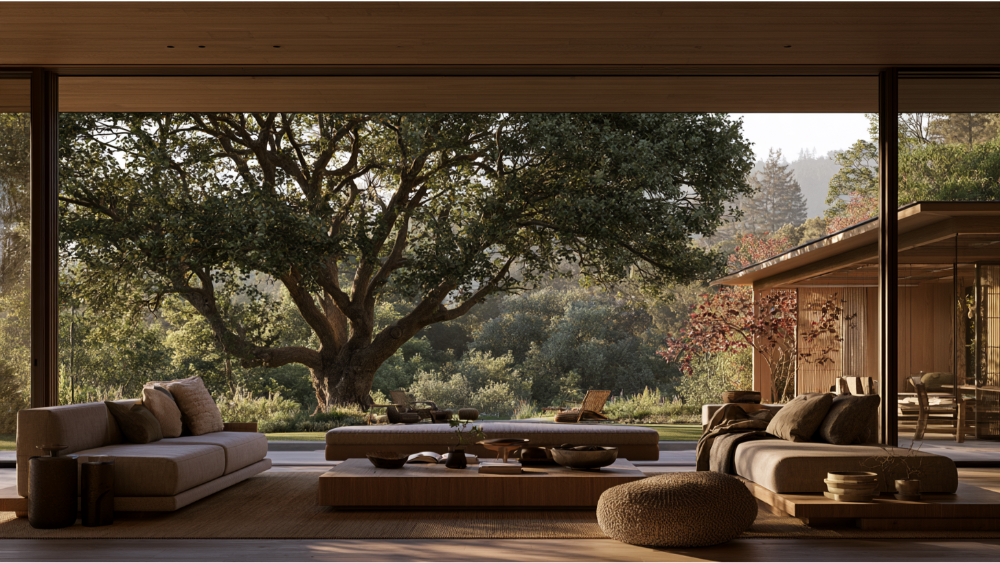
The most widely used professional framework organizes biophilic design into three categories. Originally it described 14 patterns. The April 2026 revision of the anniversary edition expanded it to 15, adding Awe as the fifteenth, defined as stimuli that challenge your existing frame of reference and shift how you perceive a space.
- Nature in the Space (7 patterns): views, nature sounds, plants, water, natural light, airflow, and natural systems.
- Natural Analogues (3 patterns): organic forms, natural materials, and ordered complexity.
- Nature of the Space (5 patterns): prospect, refuge, mystery, risk/peril, and the newly recognized Awe.
Because the revision is recent, many current articles still describe only 14 patterns. Both numbers are correct depending on the edition, so don't be thrown when you see them used interchangeably. An earlier framework from designer Stephen Kellert laid out six broader environmental features and design elements of biophilic design, and it remains a useful lens. You don't need to memorize every pattern. What matters is recognizing that these biophilic principles cover direct nature, nature-inspired materials and natural shapes, and the spatial experience of the room itself. This is the vocabulary interior designers return to again and again when they shape a biophilic environment.
What Biophilic Design Encompasses for Human Health and Well Being
The honest answer: the evidence is encouraging, but it's not a prescription. Biophilic design encompasses strategies that have been associated with lower stress, better mood, improved attention, and faster recovery in a range of settings. Those associations point toward real well being gains and are worth taking seriously, since the goal is to improve well being rather than make clinical promises. They are also mostly correlational, which means research can show a connection without proving that a single feature caused the result. A calming effect in the right room can reduce stress, and in care settings thoughtful design may even help expedite healing, which speaks to the link between built spaces and human health.
A September 2026 systematic review focused on residential complexes screened nearly 2,500 records and included 13 moderate-to-strong studies. Vegetation appeared in 12 of them, natural light in 10, and water and natural or local materials in seven each. The authors were clear that all of their findings were correlational.
Natural light shows a similar pattern. A 2024 review examined 33 studies and 67 tested relationships between indoor daylight and restoration:
| Result | Share of relationships |
|---|---|
| Positive restorative effect | 42% |
| No effect | 49% |
| Mixed or other | 6% |
| Negative | 3% |
You'll see claims that a biophilic environment raises cognitive productivity by around 15%. Figures like that tend to come from offices and other non-residential settings, so treat them as context, not a promise for your living room. Biophilic interior design may support comfort, mental well being, and restoration in modern life. It is not a medical treatment.
How to Add Biophilic Design Without Any Construction
You can shift how a room feels without touching a wall. These changes are easy and fully reversible, which makes them a low-pressure place to start.
- Turn seating toward your best window or outdoor views instead of the TV so natural light reaches you where you sit.
- Keep windows unobstructed so daylight reaches deeper into the space, and use large windows where you have them for more direct experience of the outdoors.
- Choose a few well-suited indoor plants rather than many struggling ones, matched to the light you actually have, and try hanging planters or potted plants to bring life to bare corners.
- Add natural texture and organic forms through wool throws, linen, a stone bowl, or a curved side table and other furniture with soft, natural shapes.
- Carve out a small protected reading or rest corner, a refuge with your back to a wall and a view ahead that creates a serene space.
- Bring in natural sound or seasonal touches, like an open window on a mild day or branches cut from the yard, for an indirect experience of nature when a direct view isn't possible.
None of this requires a budget or a crew. It's a comfortable way to create a sense of connection to nature in your own home before you commit to anything larger, and small natural elements go a long way in our everyday lives.
Biophilic Opportunities During a Home Remodel
A remodel opens doors that decorating can't. This is where window and door placement, natural light, and finish selection come into play, and where the choices start to affect how a space performs for years.
Reworking where windows and doors sit can transform a room's connection to the outdoors. Plan that daylight with glare control and shading, because more glass is not automatically better design. Pair new glazing with orientation, privacy, and thermal comfort so a bright room doesn't become hot or uncomfortable. Choose natural and low-emitting finishes. Build in window seats, niches, and sheltered nooks that give a room both outlook and refuge. Strengthen the transition between inside and outside with wider openings or a covered patio that extends your living spaces into the natural environment just beyond the door. Green walls can add a living accent indoors where floor space is tight.
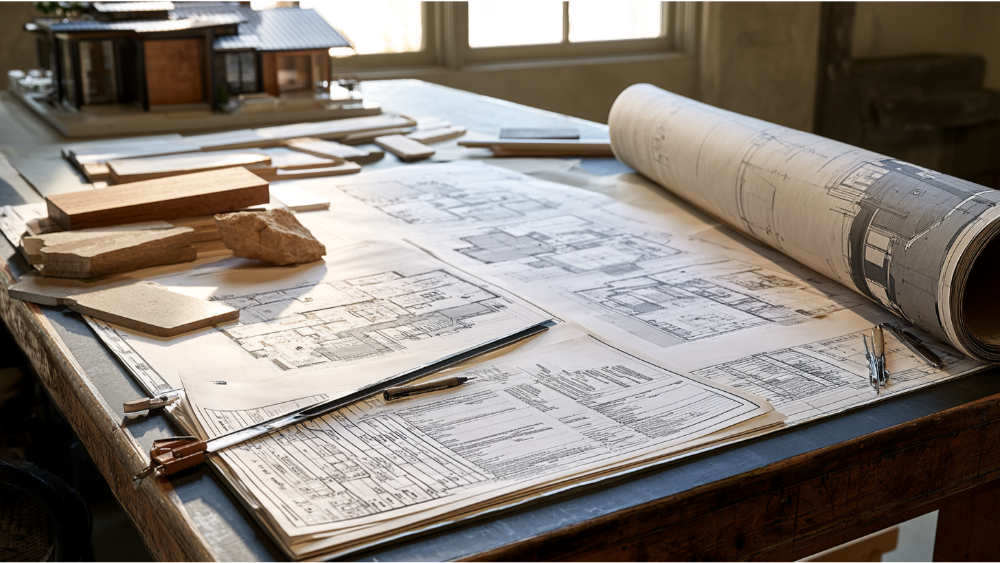
This is the stage where our remodeling and drafting work matters most, because a window seat framing the right view is a drawing decision long before it's a construction one.
Designing a Biophilic Home From the Ground Up
A new home gives you the most control, because you can shape the architecture around nature instead of adapting to it later. Thoughtful biophilic architecture starts with the land.
Begin with site and solar orientation so natural light falls where you want it through the day. Position the living spaces you use most, the living and dining areas, around the best views and light. Plan prospect and refuge together, pairing open sightlines with cozier, protected spaces. Integrate courtyards, skylights, and sightlines to the landscape so nature is part of daily life, not a backdrop. Coordinate daylight, shading, airflow, and privacy during drafting, while changes still cost pencil lines rather than demolition.
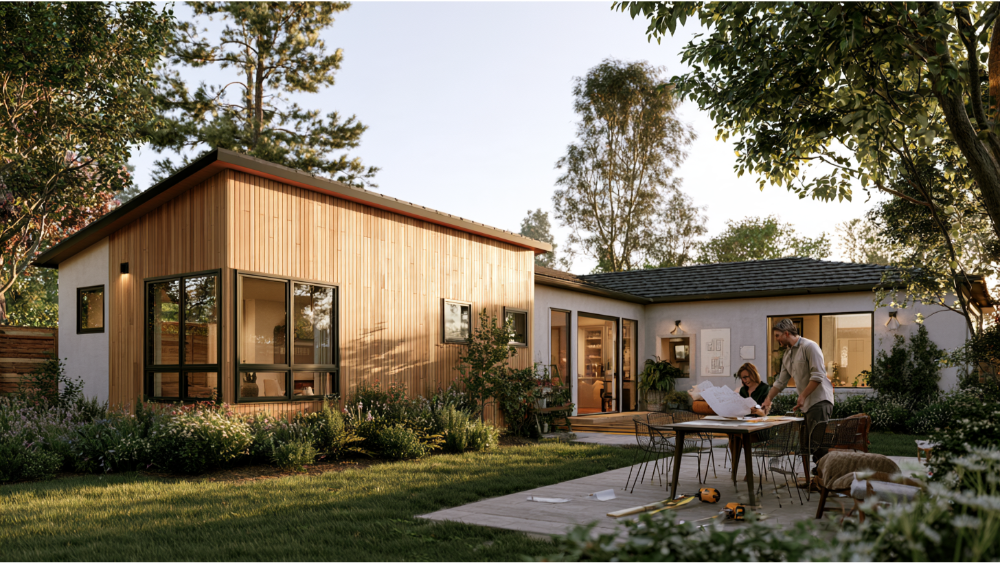
Design can also respect the nature already on your site. There are homes built without felling a single existing tree, where the architecture bends around the natural environment instead of clearing it. That kind of result comes from one team working from blueprint to build. We'd love to help you plan a home like that from the first sketch.
Room-by-Room Biophilic Interior Design Ideas

Tie every choice to how the room is used, not only how it looks.
Living Room
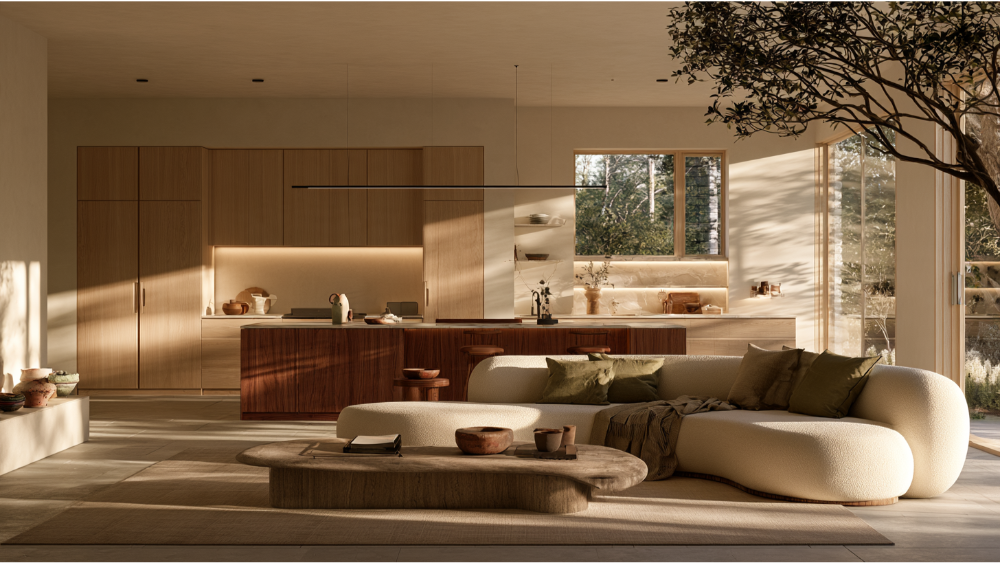
Orient seating toward views and natural light, add organic-form furniture, and layer natural textures so the space invites you to slow down.
Kitchen and Dining Room
Use organic materials at surfaces you touch daily, bring daylight over prep and eating zones, and connect the dining room to an outdoor dining area where you can.
Bedroom
Favor morning daylight to support your natural rhythm, keep the palette calm, and give the room a sheltered, refuge-like quality for rest.
Bathroom
Balance natural light against privacy in a biophilic bathroom, choose stone and wood rated for wet areas, and watch humidity so moisture doesn't become a problem.
Home Office
Position the desk for daylight and a view, which supports both focus and the mental breaks that keep you productive.
Entry and Hallways
Treat the entry as the first sensory moment of home, with natural material and a glimpse of greenery or light to set the tone.
Natural Materials, Colors, Light, and Organic Forms
Wood, stone, clay, cork, wool, and linen carry a sense of nature into a room better than any print can, building natural layers of texture that feel alive. Organic curves and biomorphic patterns inspired by the outdoors soften the straight lines of a built environment and add visual interest. Earthy palettes drawn from greens, blues, browns, and warm neutrals tie the whole scheme together and reinforce the natural world you're trying to evoke.
Here's the honest part: "natural-looking" is not the same as genuinely natural, and natural is not automatically sustainable or healthy. A wood species can be beautiful and still be irresponsibly harvested, so look for FSC-certified sources when sourcing matters to you. A finish can be labeled low-VOC and still contain other compounds worth asking about, since EPA notes those labels don't guarantee a product is safer overall. Weigh durability and maintenance alongside looks. Good design balances cost and craftsmanship, pairing functionality with aesthetic appeal rather than trading one for the other. These are the material elements that make a biophilic interior feel grounded rather than staged, and the design elements that shape how a room reads from across the room.
Indoor Air, Moisture, and Plant Safety
Houseplants are not an air-cleaning system. It's a popular belief, and the real-building evidence doesn't support it. One EPA-referenced review found a median clean-air delivery of about 0.023 cubic meters per hour per plant. Matching the VOC removal you already get from ordinary ventilation would take roughly 10 to 1,000 plants per square meter of floor, which is a greenhouse, not a living room. Living things still earn their place for the visual, sensory, and emotional value they bring to the environment. Just don't ask them to do a job they can't.
Since we spend about 90% of our life indoors, and some indoor pollutants run two to five times higher than outdoor levels, real air quality comes from three strategies EPA identifies:
- Source control: choose low-emitting materials and finishes.
- Ventilation: bring in fresh air, and ventilate for at least 72 hours after installing off-gassing finishes or flooring.
- Filtration: use appropriate air cleaning where it's needed.
Manage moisture too. Keep indoor humidity below 60%, ideally 30% to 50%, which matters for living walls, water features, and dense planting. Choose pet- and child-safe plants using the ASPCA plant lists, and remember even non-toxic plants can cause stomach upset if eaten.
Common Biophilic Design Mistakes to Avoid
- Treating biophilic design as plant styling and nothing more.
- Adding plants without enough natural light for them to survive.
- Maximizing glazing with no plan for glare or heat.
- Layering so many textures and patterns that the space feels busy.
- Installing living walls or water features with no maintenance plan.
- Assuming natural materials are automatically sustainable.
- Making health claims the evidence doesn't support.
Where Biophilic Design Fits: From Styling to New Build
The right starting point depends on how much you want to change and how involved the work becomes. The table below sorts the three approaches covered above so you can see at a glance where each one fits.
| Approach | Construction involved | What it typically includes |
|---|---|---|
| No-construction styling | None, fully reversible | Reorienting seating toward light and views, unobstructed windows, well-suited plants, natural texture and organic forms, a refuge corner, seasonal and natural sound touches |
| Home remodel | Moderate | Reworked window and door placement, daylight with glare control and shading, low-emitting finishes, window seats and sheltered nooks, wider indoor-outdoor openings or a covered patio |
| New build from the ground up | Full | Site and solar orientation, living spaces placed around the best light and views, prospect and refuge planned together, courtyards and skylights, daylight and airflow coordinated during drafting |
How to Plan a Cohesive Biophilic Interior

Biophilic design works best as a coordinated approach, not a single feature bolted on at the end. Start with the experience you want each room to give you. This element focuses attention on how each interior spaces feels to use. Evaluate the natural light, views, movement, and function you're working with. Select the patterns that fit your home rather than forcing all 15 into one space. Use drafting and 3D visualization to test the big decisions before you commit, so you can see a window seat or a reoriented layout before anything is built. Coordinate your interiors with the architectural and construction planning, choose furniture and finishes that carry the same natural shapes and elements, and set clear maintenance expectations before installation.
That coordination is exactly why one integrated team beats juggling a separate architect, designer, drafter, and builder. Our interior designers handle drafting through interior design through construction under one roof, and we design each environment to its climate and orientation rather than a template. Good home design is really about the human experience of a place and the deep human nature relationships that connect us to our interiors. If you'd like honest guidance on where to start, reach out for a free consultation at (916) 701-9196 or (415) 480-4607, or email [email protected]. We'd love to join you in your project and help bring more of the natural world into your daily life, and into the time indoors that fills so much of our lives.
Frequently Asked Questions
Is biophilic interior design just about plants? No. Plants are one element among many, sitting alongside natural light, natural materials, organic forms, and the spatial qualities of a room.
Are there 14 or 15 patterns of biophilic design? The original framework described 14. The 2026 revision added Awe as the 15th, so you'll see both numbers in current writing depending on the edition.
Do houseplants really clean indoor air? The evidence doesn't support them as a meaningful residential air cleaner. They offer sensory and emotional value in your environment, but they don't replace ventilation and filtration.
Is biophilic design the same as sustainable design? They're related but distinct. Biophilic design focuses on the human connection to nature, while sustainable design addresses resource use and impact, and a natural material isn't automatically sustainable.
Can biophilic interior design be affordable? Yes. Many high-impact changes need no construction at all. It's about coordinating light, views, materials, and function, balancing cost and craftsmanship rather than buying expensive features.