Coastal Interior Design: How to Create a Relaxed, Refined Home
Key Takeaway
Coastal interior design is a light, relaxed style built around natural textures, abundant daylight, and a soft palette of whites, sandy neutrals, and muted blues or greens. The modern version skips literal nautical props entirely, favoring materials like linen, rattan, and weathered wood. For wet areas, nonabsorbent surfaces are essential, and indoor humidity should stay between 30% and 50% to prevent mold.
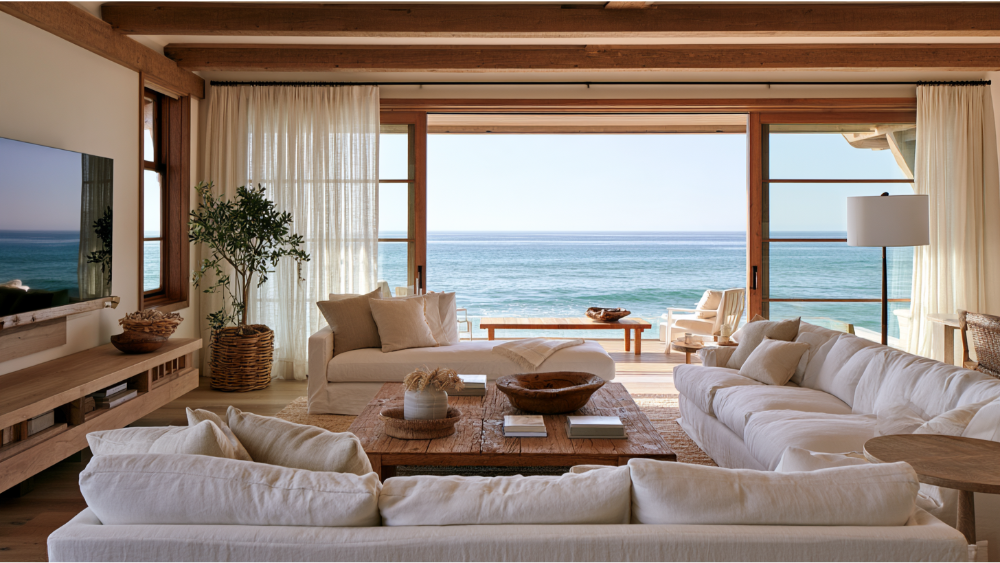
Coastal interior design is a light, relaxed style inspired by shoreline colors, natural texture, and daylight, built around comfortable materials you can actually live with. It leans on crisp whites, sandy neutrals, and soothing hues of soft blue or green, with wood, linen, and woven materials doing the heavy lifting. The modern coastal version skips anchors, shells, and literal beach props entirely. If you're planning a refresh or a full remodel, the goal is the same: a coastal home that feels personal rather than themed, and performs as well as it looks. The whole idea rests on one point we'll come back to often. Coastal is a feeling, not a collection of souvenirs.
Coastal Design Style vs. Beachy vs. Nautical
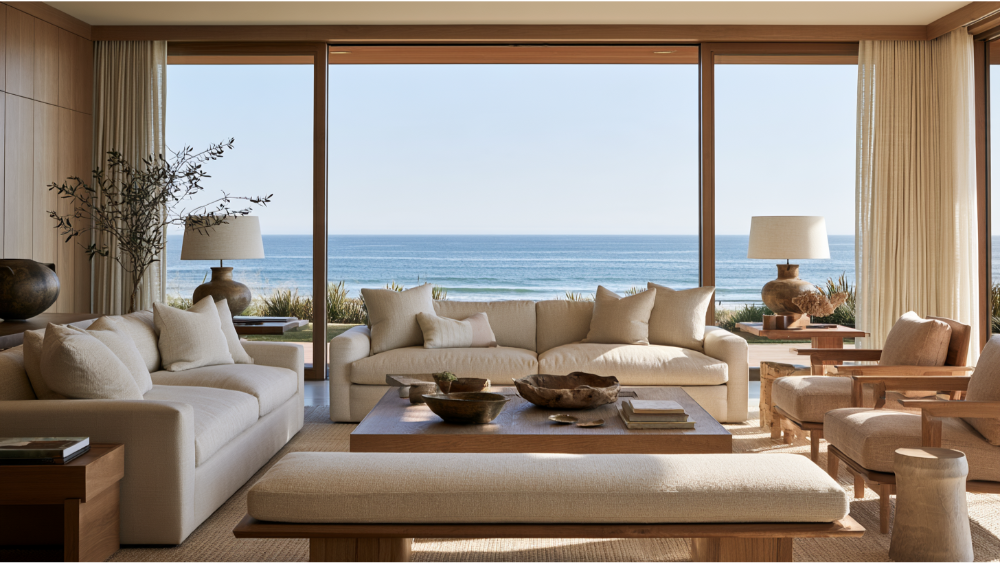
These styles get blurred together, but they're not the same thing. Here's the quick version:
- Coastal: An atmosphere of natural light, calm, and natural texture. A contemporary room in this coastal design style can have no recognizable maritime motifs at all.
- Nautical: More literal. Rope, anchors, flags, ship imagery, and nautical accents like bold stripes make a direct reference to the sea.
- Beach house: Casual and sun-washed, built for easy living and sandy feet.
- Mediterranean or tropical coastal: Warmer, with plaster walls, terracotta, and lush greenery.
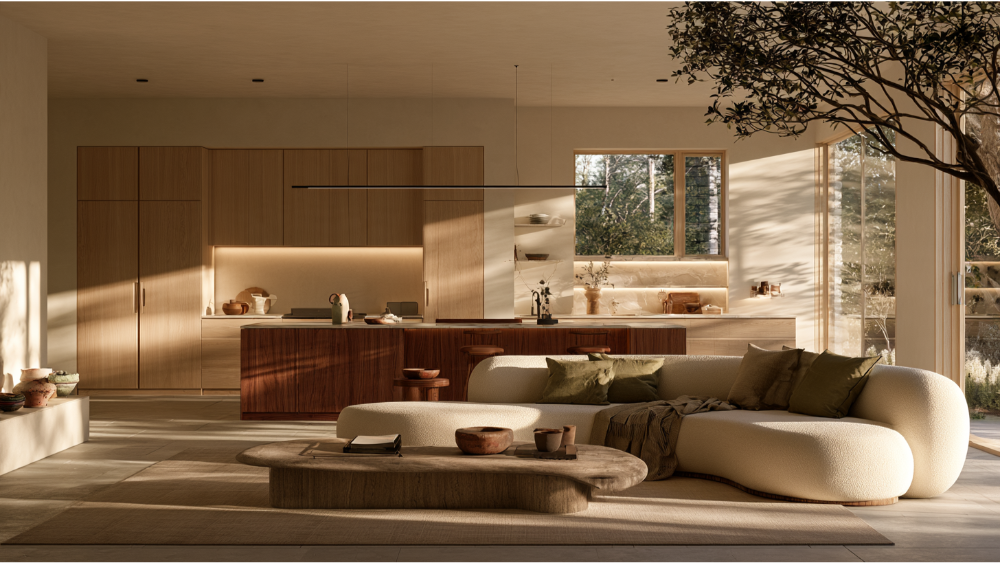
- Modern coastal: Clean lines, simplicity, and restraint, with texture replacing clutter.
Skipping the obvious nautical clichés is usually what separates a sophisticated room from a gift-shop one.
Choose the Coastal Interior Design Style That Fits Your Home
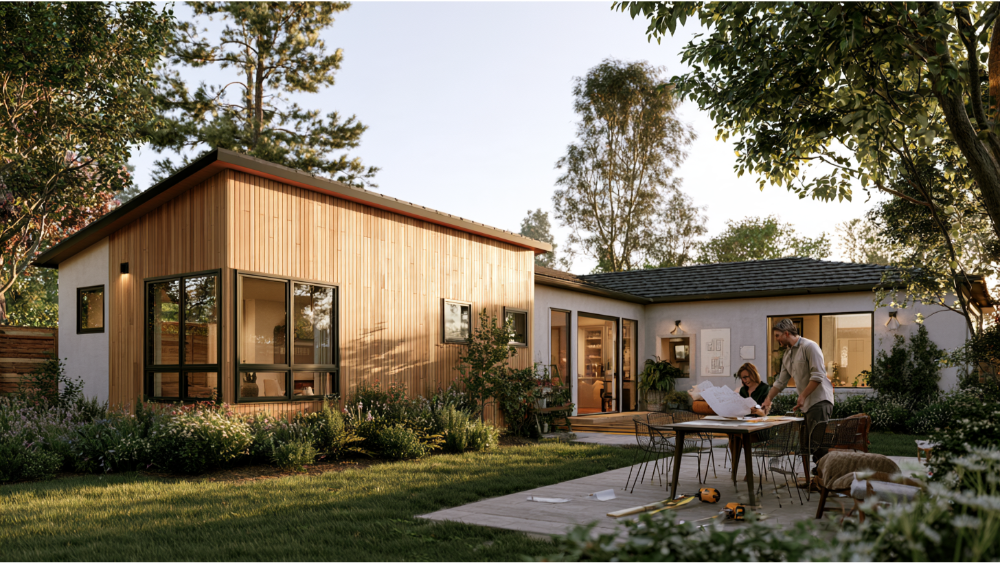
The best direction respects the home you already have. A refined, traditional coastal interior suits classic architecture with trim and detailing. Warm modern coastal decor fits open, light-filled contemporary spaces. Mediterranean coastal pairs beautifully with stucco, arches, and tile. Casual cottage coastal feels right in cozy, smaller rooms with vintage character. Start with your home's bones and natural light, then choose the version that flatters them. Forcing a theme onto architecture that resists it is how interior spaces end up feeling staged. Your home is personal, and the style should read as yours.
The Core Elements of Coastal Interior Design
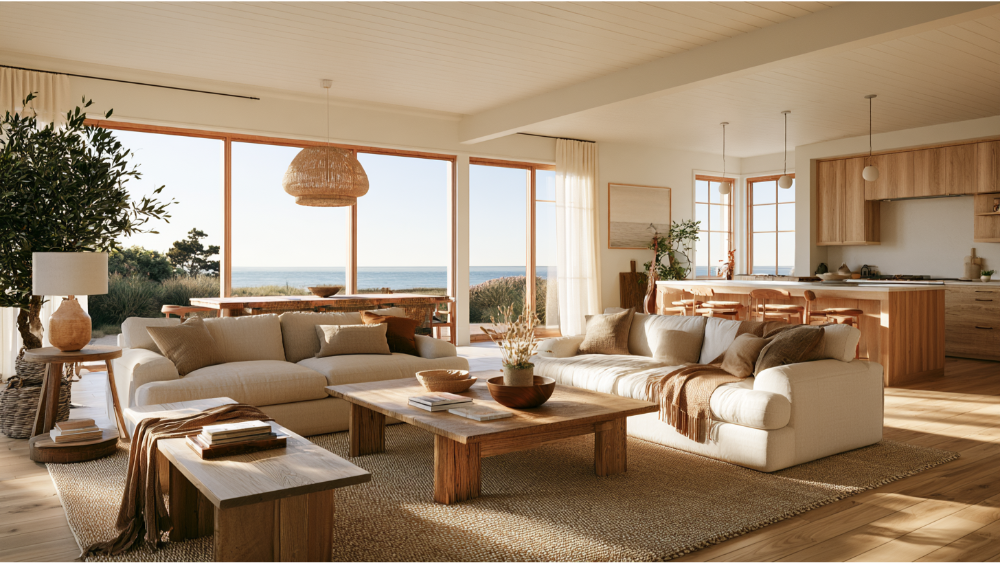
A few ingredients define the look no matter which direction you choose:
- Abundant daylight that keeps the space feeling open and gives it an airy feel.
- Natural textures that add warmth and depth, from woven fibers to weathered wood.
- Comfortable furniture in a relaxed layout with a laid back vibe that invites people to settle in.
- Breathing room that keeps surfaces uncluttered and air circulating.
- A connection to the outdoors and natural elements, often through greenery that brings an organic, living quality inside.
- Edited, personal home decor rather than matching sets.
Mixing textures instead of relying on bold patterns is what gives a quiet room its interest, though a single graphic print can still work as a focal point.
How to Build a Coastal Color Palette
Start with a neutral color palette of warm whites and creams as your foundation, then layer in sand, oat, taupe, and driftwood tones. Muted blues and seafoam greens echo water and sky, while deeper accent colors like navy or aqua add contrast where you want it. Pulling your color scheme from a real seaside landscape keeps everything coherent. Blue and white are optional, not a rule, and a warm, neutral-driven color palette can feel just as coastal. Before you commit, sample your top colors on the wall and watch them through the day. Paint shifts with the room's actual light, and seeing it in place saves expensive second-guessing.
Natural Materials and Textures That Balance Beauty and Performance
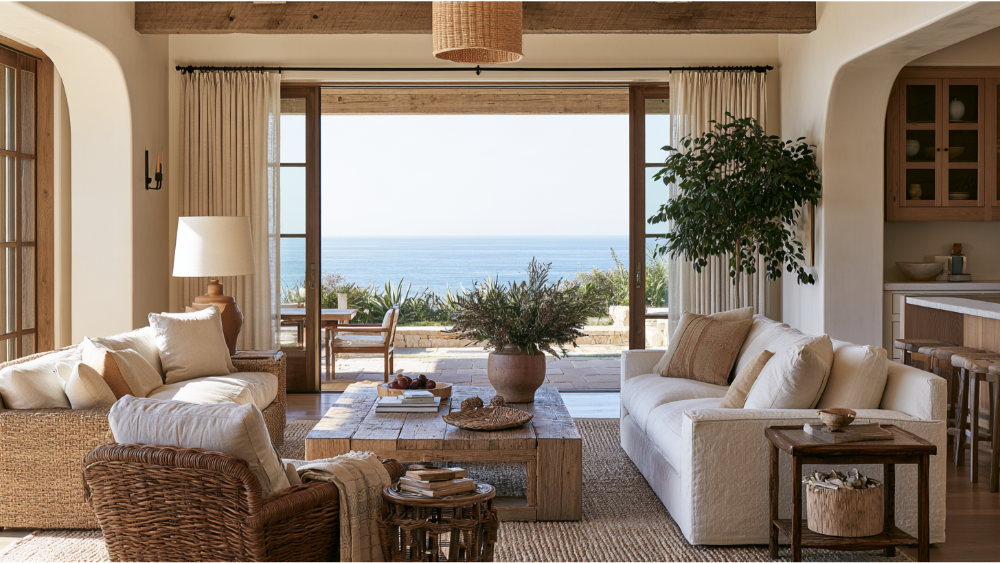
Natural materials carry the relaxed feel: wood and wood-look surfaces, airy fabrics like linen and washable performance textiles, cane and rattan, plus stone, tile, plaster-style finishes, handmade ceramics, and small touches of sea glass. Earthy tones in these pieces reinforce the connection to nature. The detail most guides skip is where each one belongs. Absorbent natural fiber rugs are lovely in dry living spaces but a poor choice where water is routine. The EPA recommends nonabsorbent, water-stable materials in bathrooms, kitchens, laundry rooms, and entries, and keeping indoor humidity between 30% and 50% (below 60%) to limit mold. If something gets wet, dry it within 24 to 48 hours.
- Jute rugs, sisal rugs, untreated wood: great in dry rooms, risky near moisture.
- Porcelain tile, stone, sealed surfaces: ideal for wet areas and high traffic.
- Performance linen and cotton blends: forgiving with kids and pets.
Using Natural Light Without Ignoring Comfort or Efficiency
Daylight is central to the coastal feeling, and large windows are part of why coastal living reads as bright, but bigger glass isn't automatically better. Windows account for an estimated 25% to 30% of a home's heating and cooling energy, so orientation, glare, heat gain, and privacy all deserve a look. The NFRC label reports U-factor, Solar Heat Gain Coefficient, and Visible Transmittance as rating scales, which helps you balance light against performance. Replacing old single-pane windows with ENERGY STAR-certified products lowers energy bills by up to 13% on average, though your results depend on the home and climate. For treatments, favor sheer curtains and airy, cordless options. The CPSC advises that stock operating cords be cordless, inaccessible, or 8 inches or shorter, which matters in family homes. Light fixtures in woven or natural finishes extend the same design aesthetic overhead.
Coastal Furniture, Storage, and Layout
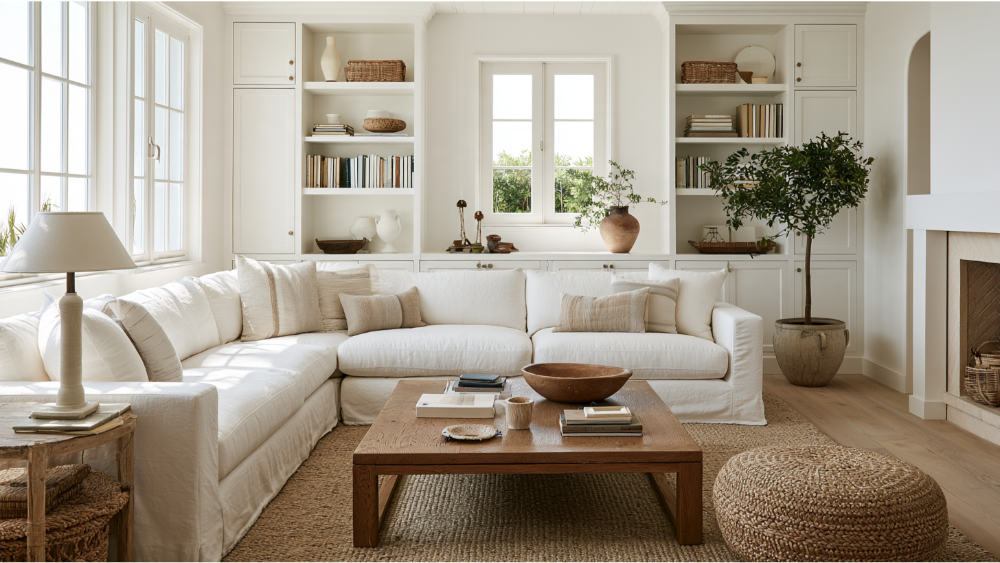
Choose comfortable shapes with soft, breathable upholstery like linen and cotton, then soften them with throw pillows and throw blankets. Open layouts and visual breathing room keep nothing feeling crowded. Skip the matched furniture set in favor of pieces that feel collected over time, mixing a few older or handmade finds with newer ones for character and patina. Plenty of concealed storage keeps surfaces calm and the uncluttered, casual feel intact. That edited quality is what makes an inviting space feel effortless rather than decorated, and it gives the room a real sense of ease.
Bringing the Coastal Look Outdoors
Carry the palette and coastal elements onto porches, decks, and patios so the transition into your outdoor spaces feels continuous. Outdoor curtains and ceiling fans make covered spaces usable and comfortable. Repeating your interior colors outside is one way coastal style takes shape beyond four walls, creating a cohesive flow between inside and out with plenty of coastal charm. If your climate allows, an outdoor kitchen extends the relaxed, ocean-facing way of living into the yard.
Coastal Design Room by Room
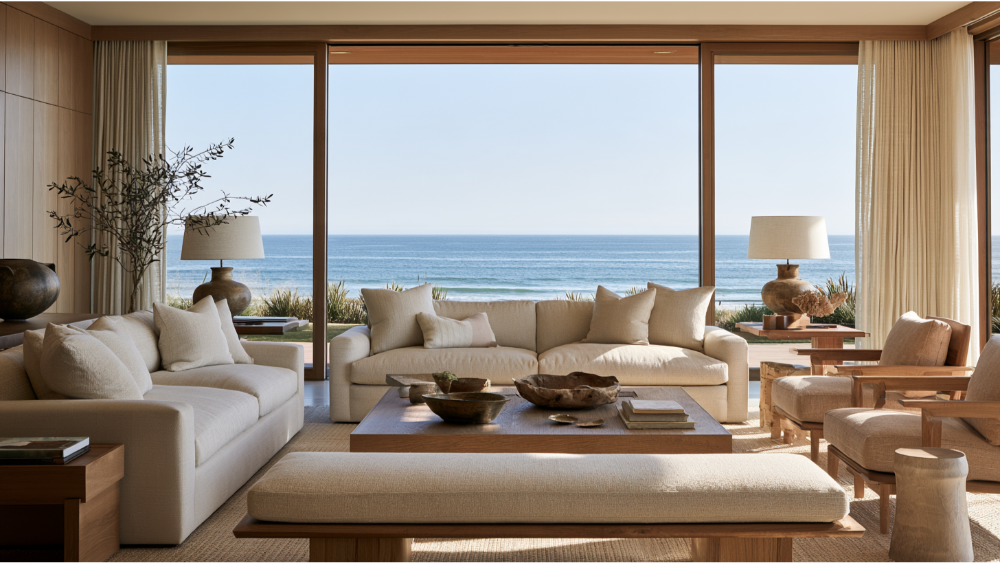
- Living room: Light woods, soft upholstery, and layered texture around a comfortable layout.
- Kitchen: Pale cabinetry, natural stone, and durable, washable surfaces.
- Bedroom: A restful, serene palette with light-toned woods and minimal, subtle accessories.
- Bathroom: Moisture-stable tile and stone, kept airy and bright.
- Entry and mudroom: Hardworking, water-tolerant finishes that still feel soft.
Our dedicated coastal kitchen, bathroom, and living room guides go deeper on each.
How to Keep Coastal Home Decor From Looking Cliché
Limit literal motifs. A single piece of weathered driftwood reads better than a shelf of shells. Avoid stark, all-white flatness by layering warm neutrals and real texture, and don't let one material take over the whole room. The best interior designers add collected art and personal objects that mean something to you. The most convincing coastal spaces draw from an actual beach and a real life, not a retail display.
If Your Home Is Actually Near the Coast
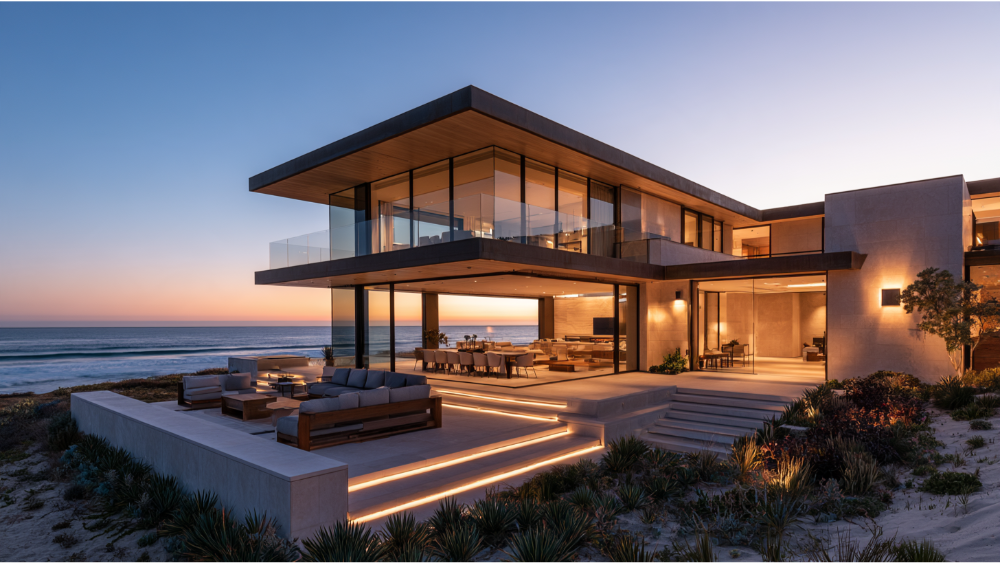
Living by the water is a different design problem than coastal style. Control humidity, choose nonabsorbent materials in wet areas, and plan for salt-air corrosion. FEMA notes that more corrosion-resistant connectors and fasteners perform better in aggressive coastal conditions. In a Special Flood Hazard Area, defined by the base flood with a 1% annual chance of occurring, FEMA's 2025 Technical Bulletin 2 sorts finish materials into acceptable and unacceptable. Ceramic or porcelain tile, terrazzo, and concrete may be acceptable below flood levels, while carpet, wood flooring, laminate, particleboard cabinetry, and wallpaper are not. Local codes and flood maps control. And in pre-1978 homes, paid work disturbing paint triggers EPA's lead-safe Renovation, Repair and Painting Rule.
Do You Need Decorating or a Remodel? (And How Skyline Helps)
Match the project to the goal. A styling refresh handles pillows, rugs, and art. A paint and finish update changes color and mood. A single-room remodel reworks a kitchen or bath. Beyond that, layout, window, and millwork changes or a whole-home interior design move into construction territory.
That's where having one team matters. We start with a free consultation and a look at how you actually live, then move to mood boards and a restrained palette, drafting and space planning, and 3D rendering so you can see selections before anything is permanent. We handle documentation and permitting when it's needed, then coordinate construction and final styling. Design, drafting, and build sit under one roof, with honest pricing and regular updates. We'd love to join you in your project across Sacramento and the Bay Area. Call (916) 701-9196 or (415) 480-4607, email [email protected], or reach us at skylinebuildinc.com/contact.
Coastal Interior Design FAQs
What are the key elements of coastal decor?
Abundant daylight, natural texture, a soft and warm palette, comfortable furniture, indoor-outdoor flow, and edited personal décor. Skip the literal beach props.
Does coastal design have to use blue and white?
No. Warm whites, sand, oat, and earthy greens with a few deeper accents are fully coastal. Blue and white are one option, not a requirement.
What is coastal cottage style?
A casual, cozy take on coastal design with vintage or collected pieces, light-toned woods, and soft patterns. It feels lived-in and relaxed rather than polished.
What's the difference between coastal and nautical design?
Coastal is about atmosphere and a natural palette. Nautical uses literal maritime motifs like rope, anchors, and ship imagery. A coastal room can have none of those.
What does hiring an interior designer cost?
It varies by scope, project size, and region, so no single figure fits every home. We offer a free consultation and transparent pricing, so you'll understand the investment before any commitment.