Colonial House Interior Design: A Preservation-First Guide for Modern Living
Key Takeaway
Colonial house interior design works best when you preserve the home's defining architecture, including symmetrical proportions, fireplaces, hardwood floors, and original millwork, while updating furniture, lighting, and storage for modern life. Colonial Revival homes, the most common type in the U.S., were built roughly from the 1880s through the 1940s. Paint research from Colonial Williamsburg found more than 20 paint generations in original buildings, proving authentic palettes included greens, reds, and grays, not just neutrals.
What Is Colonial House Interior Design?
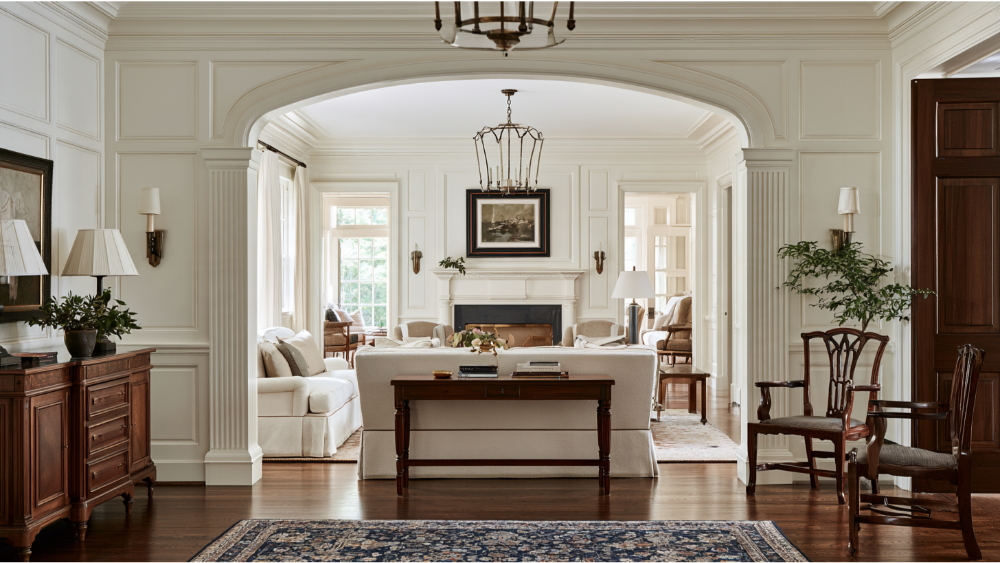
Colonial house interior design works best when you preserve the home's defining architecture (balanced proportions, fireplaces, wood floors, woodwork, staircases, and clearly arranged rooms) while updating the furniture, color, lighting, storage, and building systems for how you actually live today. The goal is a comfortable home that honors its character, not a museum you tiptoe through. If you've fallen for the symmetry, the central hallway bisecting the home, and the fireplace sitting at the heart of a room, you already understand why this style endures. These interiors reflect practical needs, local resources, and European colonial architecture brought over by early settlers. Whether you're refreshing a dated room, planning a full remodel, or decorating a newer colonial style home, we want to help you keep what makes your home special and let go of what no longer serves you
First, Identify Which Type of Colonial Home You Have
Colonial is an umbrella term, not one style. American colonial architecture draws on European settlement traditions from the 17th through 19th centuries, and regional variations run deep. This is a thread of American history woven into how people built and lived, and before you choose paint or furniture, figure out what you actually own.
- Original or historically significant Colonial: an authentic early home, often with real preservation value.
- Georgian-influenced Colonial: grounded in symmetry, balance, and classical proportion.
- Colonial Revival: per the National Park Service, built roughly from the 1880s through the 1940s, sparked by the 1876 Philadelphia Centennial. These homes were often larger and more robust than the Georgian and Federal sources they nodded to. By the 1920s, Colonial Revival influences shaped a large share of new suburban houses.
- Dutch, Spanish, and French/Creole Colonial: distinct regional traditions with their own layouts and climate responses.
Most U.S. homeowners actually own a Colonial Revival or a newer colonial style home, so this guide focuses on American Colonial and Colonial Revival interiors. British or tropical Colonial decor (rattan, four-poster beds, explorer maps) is a separate look and not what your Revival house is asking for.
The Defining Characteristics of Colonial Homes
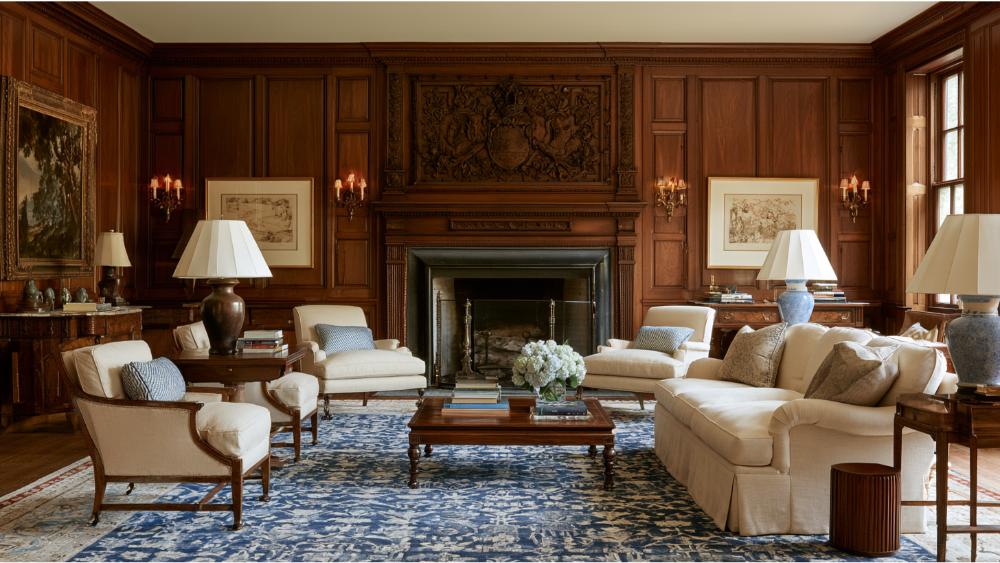
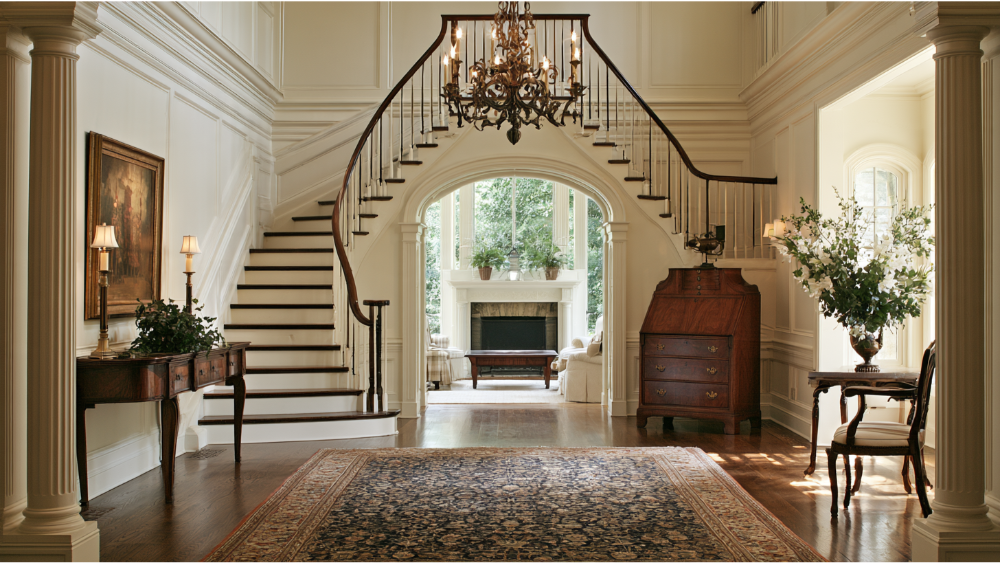
Symmetry and proportion are the backbone of the style. Colonial interiors organize themselves around balance and central focal points, and the fireplace usually anchors the main living spaces. Rooms were historically compartmentalized and separate, typically organized around clearly defined functions rather than open-plan flow, and a center hall often connects them in a logical sequence. This is the quiet elegance that makes colonial homes feel grounded and timeless, and it captures the essence of why so many Americans still love the look.
The key features and architectural details that carry the character include:
- Primary staircases and the arrival sequence
- Fireplace mantels as focal points
- Wide-plank hardwood floors, often local pine or oak
- Paneling and wainscoting
- Crown molding, baseboards, and door and window trim
- Built-in shelves and cabinets
- Multi-pane windows and paneled interior doors
Before you decide what to change, walk through your house with fresh eyes. The NPS recommends identifying character-defining features before planning any alteration. Note what's original, what's intact, what's been altered, and what's missing. The simplicity of plain trim can be just as historically meaningful as elaborate molding, so don't dismiss something just because it isn't fancy.
Decide What to Preserve, Adapt, Replace, or Add
Once you know what you have, you can make honest decisions about it. The Secretary of the Interior's Standards for Rehabilitation favor retaining historic character, repairing deteriorated features rather than automatically replacing them, and matching design and material when replacement is truly necessary. A simple framework keeps you honest:
| Preserve where practical | Adapt for modern use | Replace when necessary | Add thoughtfully |
|---|---|---|---|
| Original floors, stairs, trim, mantels | Kitchens, baths, storage, lighting | Severely deteriorated or unsafe components | Compatible molding, cabinetry, fixtures, technology |
Two truths help here: not everything old is original, and not everything original is equally significant. A 1980s addition isn't sacred, and a worn but authentic staircase may be worth saving. Colonial design relied on locally available hardwoods built for durability and daily use, which is exactly why so much of it is worth repairing, from the floors underfoot to the mantels overhead. We believe the most successful remodel begins by listening and documenting, not by swinging a hammer. Being straight with you about what's worth keeping is simply doing the right thing from the start.
How to Make Modern Colonial Interiors Feel Fresh With Natural Light
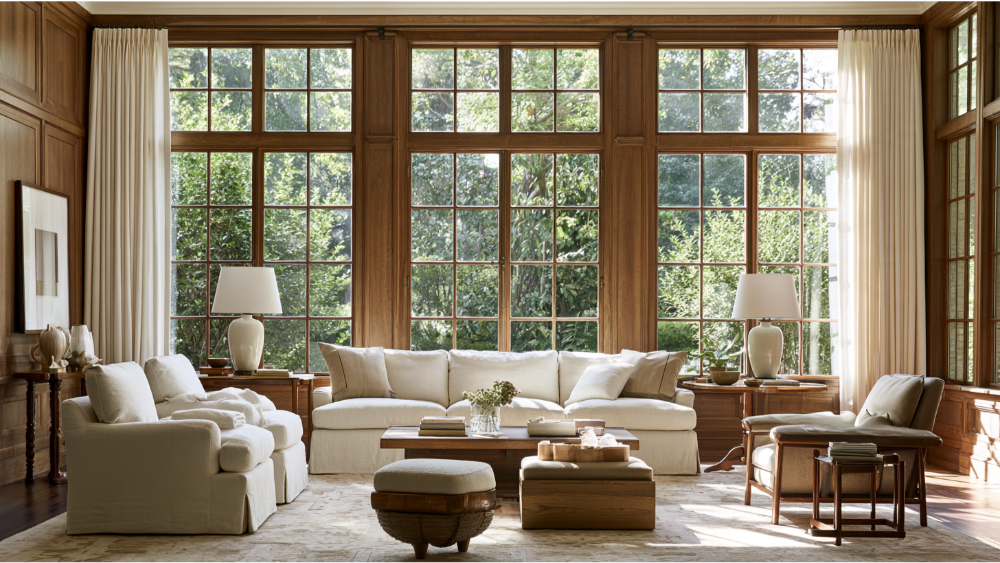
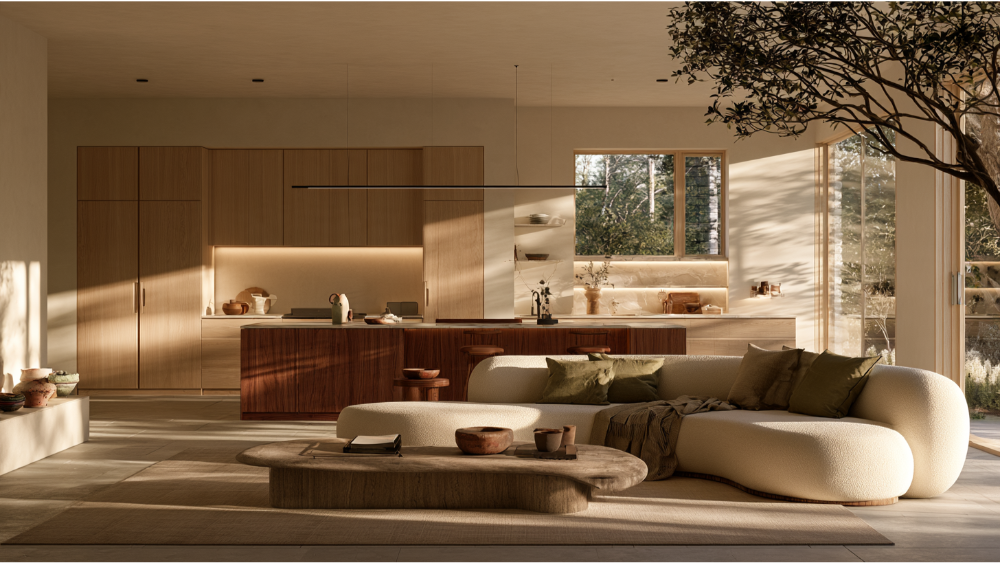
Modern colonial keeps the bones and loses the fuss. The look leans on clean lines, minimal ornamentation, and warm, earthy neutrals layered over the home's traditional structure. You don't erase the architecture; you give it room to breathe, and the result is an inviting space that still feels true to its roots.
The moves with the most impact:
- Simplify the furniture plan and give each piece space.
- Use symmetry selectively instead of buying matching sets for every room.
- Build contrast rather than painting everything white, which flattens the detail you're trying to show off.
- Pair traditional architecture with cleaner furniture silhouettes and elegant profiles.
- Layer your lighting (ambient, task, and accent) instead of relying on one fixture, and update dated fixtures that fight the look.
- Bring in natural light where the structure allows, since brighter rooms show off the woodwork and floors.
- Reduce clutter and integrate real storage.
- Soften hard floors with wool rugs that add warmth without hiding the wood.
- Keep a consistent material and finish story so the whole home reads as one home.
Trimwork in a modern interpretation is often simpler and cleaner than a strict historical version, which lets the old woodwork you've kept stand out instead of competing with new detail. If you want a touch of rustic, country character, a reclaimed-wood mantel or a worn leather chair adds age without tipping into theme-park territory. A quick search on Google or a browse through design magazines will surface plenty of ideas, and these small moves go a long way toward balancing old and new.
Colonial Color Palettes and Materials: Authentic, Sympathetic, or Modern
Here's the myth worth correcting: colonial interiors were never all beige, white, and dark wood. Microscopic paint analysis by Colonial Williamsburg has uncovered bare wood, reddish-browns, creams, grays, greens, and even expensive verdigris finishes, with researchers finding more than 20 paint generations in many original buildings. Walls in the colonial era and colonial period carried far more color than the usual neutral formula suggests, and drawing inspiration from documented palettes is a smart start when you want historically honest color. Take time to discover what was true for your home's age.
That gives you three honest routes:
- Paint-analysis-led historical: colors documented for your home's era, ideal for a significant house.
- Historically sympathetic: period-appropriate hues without a strict restoration.
- Modern colonial: warm earthy neutrals with saturated accents that suit daily life.
For materials and furnishings, favor local hardwoods like oak, cherry, walnut, and mahogany, painted millwork, and a brick surround at the fireplace. Natural textiles (wool, linen, and cotton) in classic patterns like restrained checks, stripes, and simple patterns feel right for upholstery, curtains, and rugs, as do ceramics, mirrors, and traditional lighting. Choose colonial furniture for its proportion and craftsmanship, not because it checks a thematic box. A few well-chosen pieces carry a formal living or dining room far better than a crowded set, and quality upholstery lets older frames earn their place for years. A nostalgic nod in the right spot, such as a period-inspired lantern, adds warmth without overdoing it.
Can You Open Up a Colonial Floor Plan Without Losing Its Character?
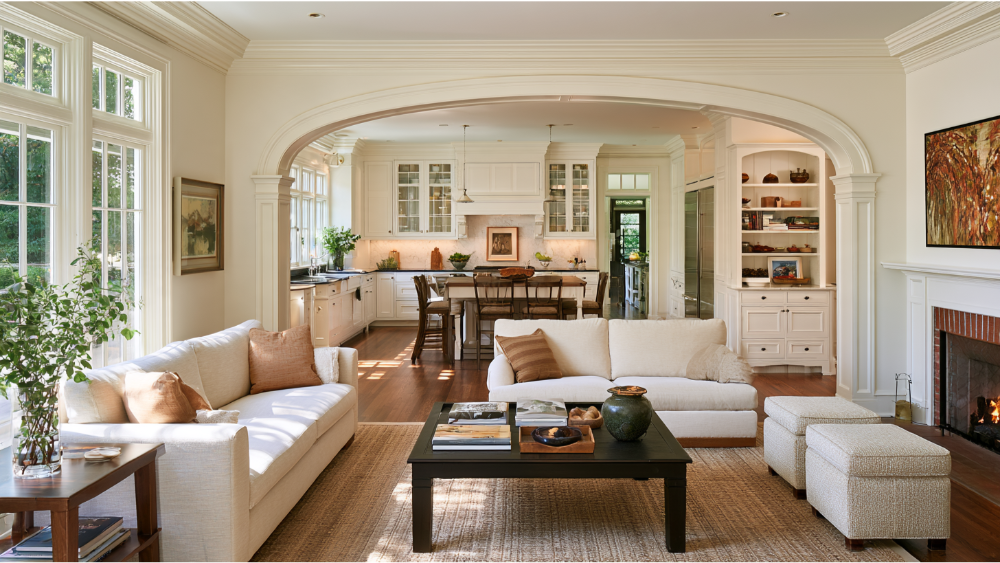
Yes, carefully. There's a spectrum, and where you land on it decides whether the home still reads as Colonial. The compartmentalized rooms and the central hallway that bisects the home are defining traits, so the more divisions you remove, the more character you trade away.
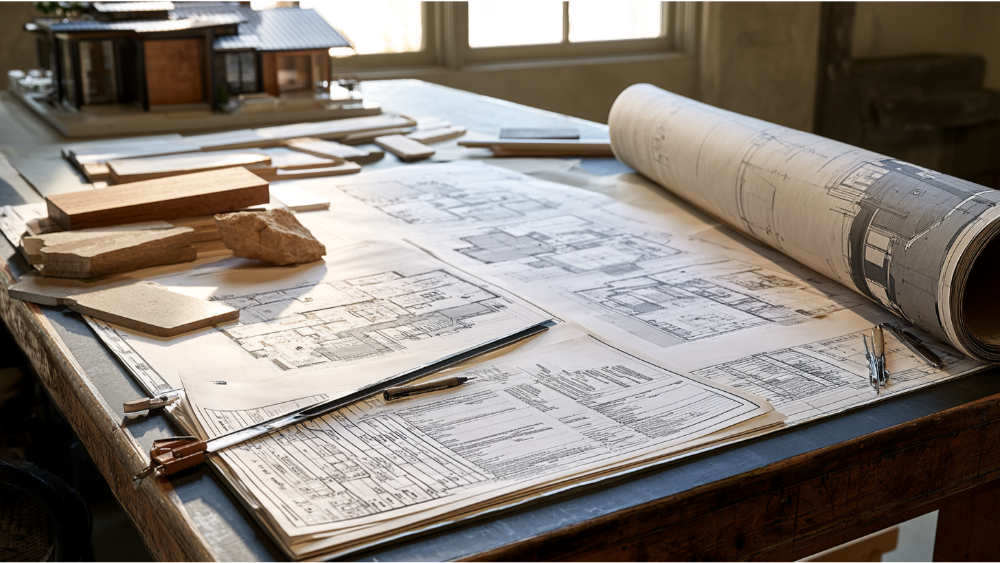
From least to most invasive: improve circulation with better sightlines, widen a doorway, create a cased opening, or connect two selected rooms such as the kitchen and family room. Removing most of the first-floor walls lands at the far end, and it's where the style tends to disappear. Any of these beyond cosmetics usually requires structural review, drafting, and coordination of HVAC, plumbing, wiring, and appliances. This is the point where a decorating project becomes a remodeling project. Our drafting and 3D rendering let you compare options before anything is demolished, so there are no surprises. (We cover this in a dedicated companion article on opening up a Colonial floor plan.)
Lead Paint and Old-House Safety Before Work Begins
If you're sanding, stripping, or repainting old trim or paneling, safety comes first. The federal government banned residential lead-based paint in 1978, and the EPA estimates it's present in 87% of homes built before 1940, 69% of homes from 1940 to 1959, and 24% of homes from 1960 to 1977. The EPA's Renovation, Repair and Painting Rule generally requires paid firms disturbing painted surfaces in pre-1978 housing to be certified and follow lead-safe practices, including when sanding trim, replacing windows, or opening walls. This matters in many colonial homes, where original finishes run deep.
Your windows may not need replacing at all. The NPS notes that historic wood windows can often be repaired, weatherstripped, and paired with a storm window, and a 2002 study found that combination can perform comparably to a new low-e vinyl replacement. Plaster walls and old floors deserve the same careful eye. This is exactly why an experienced, transparent team beats casual DIY.
Our Design-to-Build Process and Final Planning Checklist
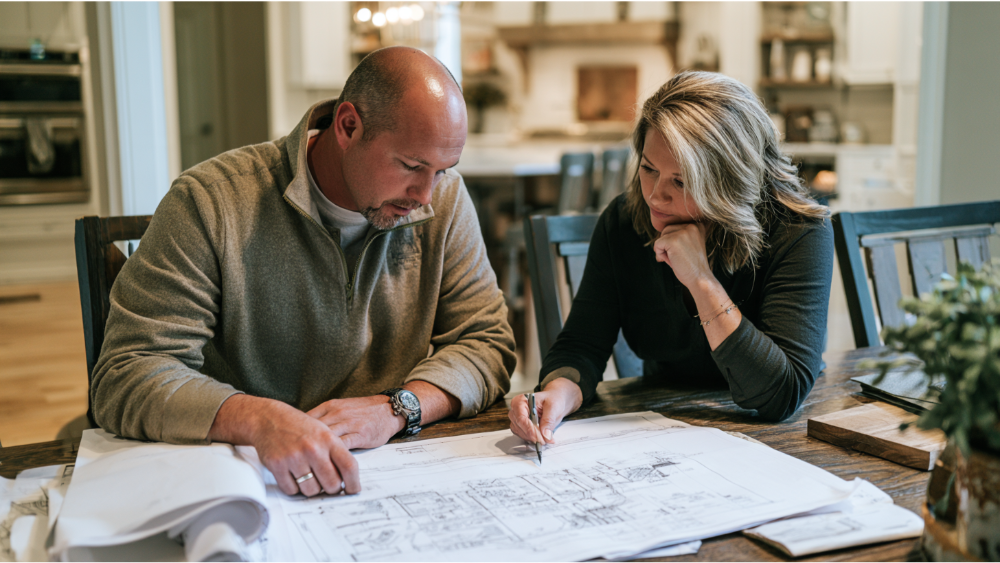
At Skyline Design Build, interior design, drafting, 3D visualization, and construction all live under one roof, so you're not juggling separate providers who don't talk to each other. One team keeps the details that usually fall through the cracks connected from start to finish, and we can help you create interiors that work for your household, from the main living areas to the bedrooms.
Our process looks like this:
- Define your vision and daily needs
- Document the home's existing architectural features
- Set preserve-and-modernize priorities
- Develop design and drafting options
- Use 3D rendering to compare choices with confidence
- Finalize materials, fixtures, and scope
- Build it with regular updates
- Walk through the finished space together
Before you start, ask: Which features are original? What isn't working for your household? Which changes are cosmetic versus structural? Are painted surfaces likely to predate 1978? Will new details feel compatible rather than artificially aged? We'd love to join you in your project. Call us at (916) 701-9196 or (415) 480-4607, email [email protected], or reach out through our website for a free consultation.
Frequently Asked Questions
How can I modernize a colonial style home without losing its character?
Preserve the defining architecture (proportions, fireplaces, floors, millwork, and staircases) and update the pieces that change easily: furniture, color, lighting, and storage. Keep the bones, refresh everything else.
What is the difference between Colonial and Colonial Revival design?
Original colonial homes are authentic early buildings. Colonial Revival homes were built roughly from the 1880s through the 1940s and were inspired by earlier Georgian and Federal forms rather than copying them exactly, often at a larger scale.
What colors work well in a colonial style interior?
Warm earthy neutrals work, but they aren't the whole story. Paint research shows historically accurate greens, reds, and grays were common too, so you're not limited to beige and cream.
Should I paint original wood paneling or trim?
You can, but assess its significance first, since original millwork may be worth keeping as is. On any pre-1978 surface, follow lead-safe practices before sanding or stripping.