Contemporary Interior Design in 2026: How to Create a Warm, Personal Home That Feels Current
Key Takeaway
Contemporary interior design reflects how people actually live right now, combining functional layouts, warm natural materials, clean lines softened with curves, and personal pieces that feel current without chasing fleeting trends. In 2026, the style has grown warmer and more eclectic, with 43% of designers naming curved furniture a top trend and 36% of sourced pieces being vintage or antique. Build a timeless foundation first, then layer in current expressions you can refresh easily.
What Is Contemporary Interior Design?
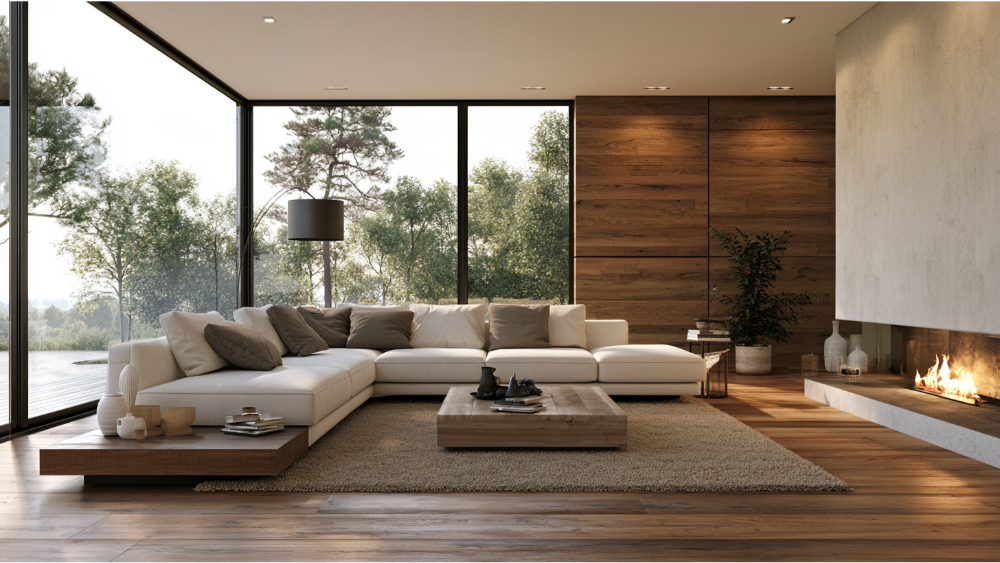
Contemporary interior design reflects how people actually live and build homes right now, not a single fixed moment in history. In 2026, contemporary interior design means functional layouts, warm natural materials, softened lines, layered texture, intentional color, and personal pieces that feel current without chasing trends that fade in a season. Because it is tied to the present, the contemporary interior design style keeps evolving as tastes and lifestyles change.
If you are imagining your dream home and want it to still feel right years from now, not just on move-in day, this is the approach that gets you there. The word contemporary literally means belonging to the present, which is why it is constantly evolving rather than locked to one era. We think of contemporary design in two parts: build the lasting foundation, then layer in the present moment. Get that balance right, and your contemporary home feels both current and personal for a long time.
Contemporary vs. Modern vs. Minimalist vs. Transitional: The Key Differences
The most common mix-up is simple. Modern design is a fixed period, while contemporary style refers specifically to whatever is current and evolving. Modern interior design grew out of the early-to-mid 20th century and the modernist movement, so its look is set. Contemporary design borrows freely from modernism, organic design, vintage furniture design, and Scandinavian design, shifting as the present shifts. Those are the key differences worth remembering before you commit to any direction. Minimalism is a discipline that can live inside a contemporary space, not a synonym for it, and simplicity is a value it shares with several other style families.
| Trait | Contemporary | Modern | Minimalist | Transitional |
|---|---|---|---|---|
| Historical period | Now, always evolving | Early-to-mid 20th century | Mid-20th century onward | Blend of eras |
| Lines and forms | Straight and curved mix | Clean lines, geometric | Pared-back, essential | Soft, balanced |
| Color | Neutral base plus intentional color | Warm neutrals, primary accents | Restrained, tonal | Warm, muted |
| Materials | Mixed, natural and refined | Wood, metal, glass | Few, high-quality | Traditional and current blend |
| Ornament | Selective, personal | Limited | Minimal | Moderate |
| Flexibility over time | High | Low (fixed style) | Moderate | Moderate |
We will keep this short here. A deeper comparison of contemporary and modern interior design deserves its own article.
What Does Contemporary Design Look Like in 2026?
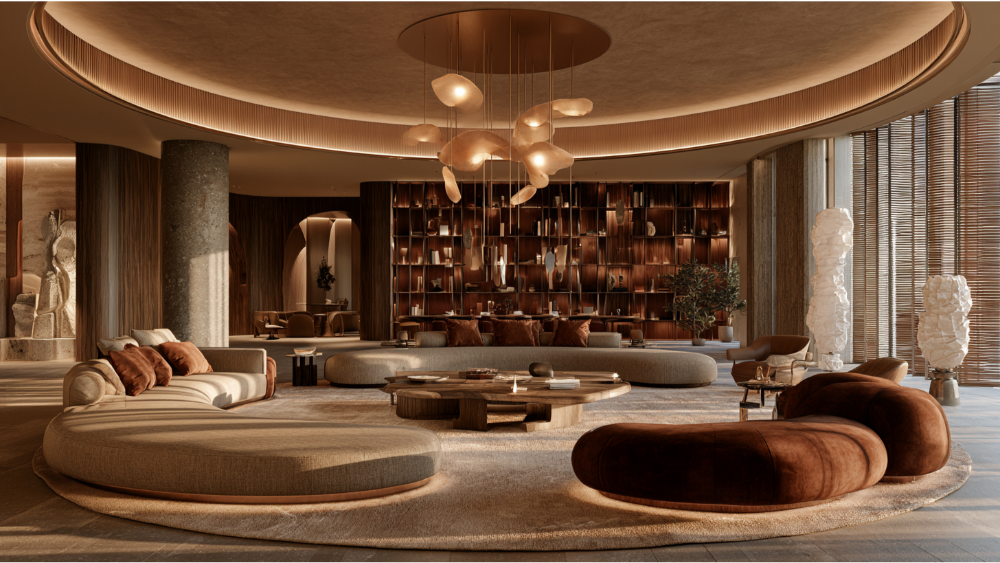
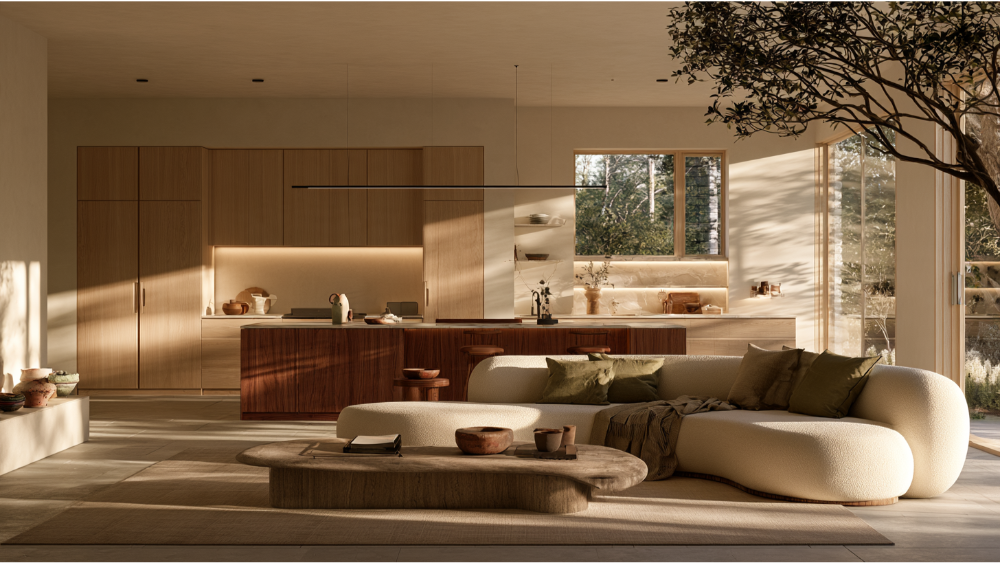
Contemporary design has grown warmer, more personal, and less rigidly minimalist than the stark gray rooms people once pictured. Natural textures like wood and stone soften a space, and earthy tones add comfort where cool neutrals used to dominate. The result is a modern interior that invites you in rather than keeping you at arm's length. The best contemporary interiors mix modern comfort with the practicality of everyday life.
Enduring foundations and key characteristics
These key characteristics do not change much year to year. Function-led layouts that match how you move through a room. Deliberate negative space so the eye can rest. Visual continuity across surfaces, often with sleek lines and softer edges working together. A mix of materials. Quality lighting. Storage built into the design rather than added on. And personalization, so the contemporary home reflects you.
2026 design trends and expressions
These design trends are current signals, not rules. Warm woods and earth tones. Curves and softened geometry. Vintage and collected pieces mixed with new furniture. Layered color and pattern. Sculptural lighting. Textured walls. A 2026 designer survey found 39% of designers reporting requests for maximalism and 38% for eclecticism, with 43% naming curved or irregular furniture as a 2026 trend. On average, designers reported that 36% of items sourced for 2025 projects were vintage or antique. Read these current trends as directions the contemporary style is leaning, not a checklist you have to follow.
The Essential Elements of a Contemporary Interior: Clean Lines and Beyond
A contemporary interior is built on a handful of decisions, most of them about how the space works before how it looks. These are the elements that give the contemporary interior design style its structure.
- Layout and circulation. How you walk through and use each space comes first. Everything else follows.
- Clean lines, softened. Straight lines and clean lines stay, but 2026 pairs them with curves so rooms feel approachable.
- A warm, flexible color foundation. A neutral base that leaves room for contrast and texture.
- Natural and refined materials. Wood, stone, and quality metals and glass add warmth and depth.
- Texture and pattern. Layered fabrics and finishes keep a neutral space from feeling flat.
- Layered lighting. Multiple sources at different heights instead of one ceiling fixture.
- Integrated storage. Built-in and concealed, so surfaces stay uncluttered.
- Art, vintage, and personal objects. The pieces that make the space yours.
- Technology that supports the room. Present when you need it, out of sight when you do not.
Minimal window treatments let natural light do more of the work, and a single sculptural fixture can anchor the whole room and create an easy focus for the eye.
What Colors and Palettes Define Contemporary Interiors?
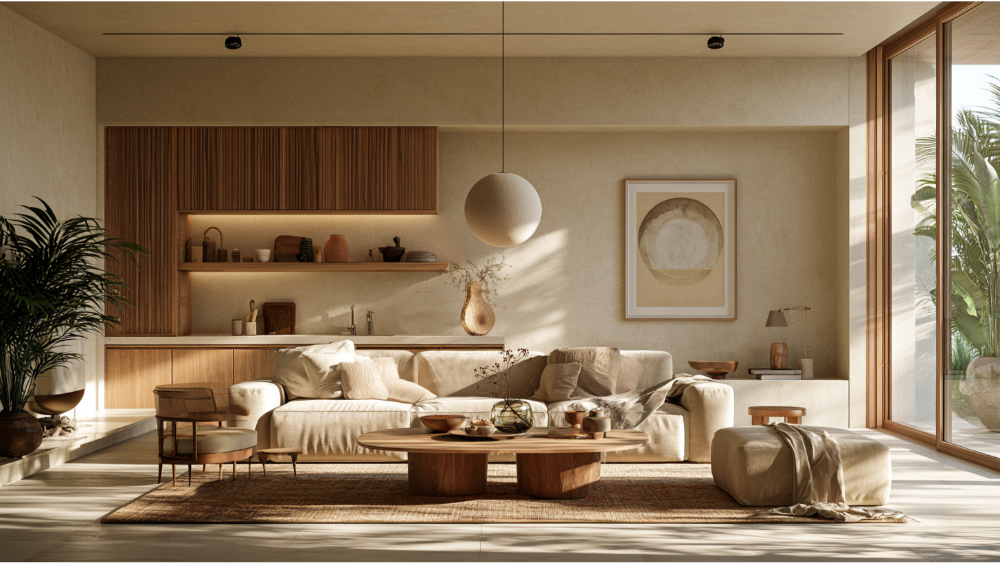
Contemporary color palettes start neutral, but they are far from colorless. The old "cool gray only" assumption is out of date. A foundation of neutral walls in whites, beiges, and soft grays gives you a canvas, and intentional color brings it to life. That might be bold accents like teal or mustard, earthy tones like taupe and olive green, or a monochromatic scheme built from shades of one color. Neutral color palettes are also incredibly forgiving, since they let you add personality later without a full redesign. Black and white combinations still read as striking and current, and matte black works beautifully as a grounding accent on fixtures and hardware in contemporary interiors. Brushed brass is another finish worth considering when you want a warmer metallic note.
Kitchen data backs this up. In a 2026 kitchen trends study, 96% of industry respondents named neutrals popular, but green landed at 86% and blue at 78%. A neutral palette does not mean a dull room. It means a deliberate one, with color placed where you want the eye to focus.
Permanent Decisions vs. Flexible Design Layers
Here is where our approach pays off: build the lasting foundation, then layer in the present moment. The trick is knowing which decisions are hard to reverse and which you can change on a weekend.
Construction-level (harder to change)
- Floor plan, including open floor plans
- Doors and openings, including glass doors
- Cabinetry
- Flooring and tile
- Plumbing locations
- Electrical plan
- Recessed and architectural lighting
- Built-ins
Easy to update
- Paint
- Furniture and rugs
- Window treatments
- Art and pillows
- Decorative lighting, including floor lamps
- Accessories
Keep the fixed features timeless and durable, and express the current design trends in the layers you can swap later. When the design, drafting, and construction are handled by one coordinated team, those permanent choices get locked in correctly the first time, which is exactly where mismatched work usually goes wrong.
How Do You Make a Contemporary Space Feel Warm Instead of Cold?
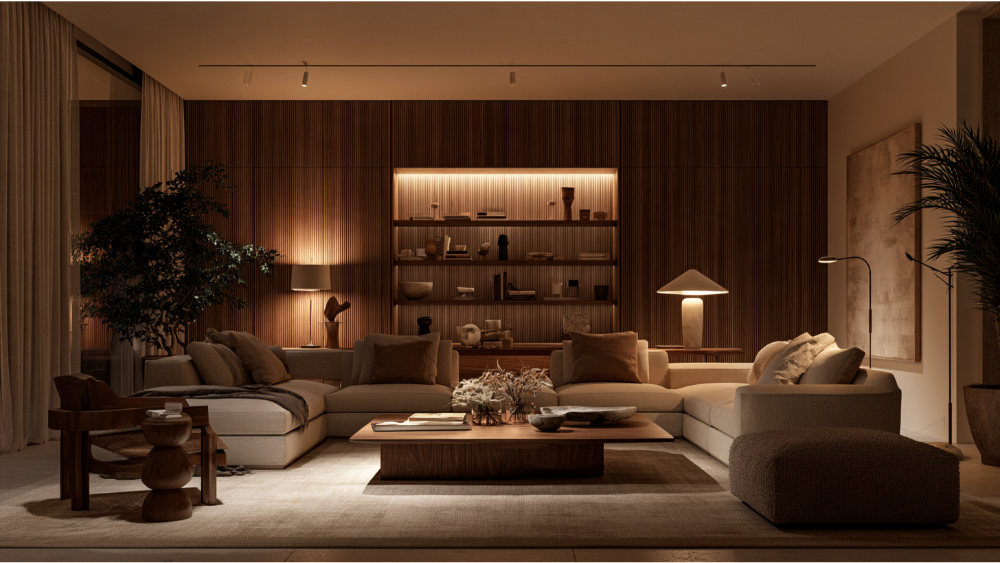
Warmth comes from layering, not from a single feature. Contemporary interiors feel cold when they lean entirely on gray, black, glass, and polished surfaces, so the fix is to add variety and warmer modern elements.
- Layer tactile materials: wood, stone, wool, linen, leather.
- Use several lighting levels instead of one bright ceiling light.
- Mix straight and curved forms so the space feels human.
- Bring in wood and natural variation, with its grain and imperfection.
- Display meaningful art and personal objects.
- Use earthy tones to soften neutral backdrops, and let natural light in with minimal window treatments.
Warmth is what keeps a contemporary home from feeling like a showroom. A home should feel like yours, and these are the choices that make it personal.
How Do You Layer Lighting in a Contemporary Home?
Good contemporary lighting works in three layers. Ambient lighting gives the space general visibility. Task lighting covers specific activities like cooking or reading. Accent lighting and decorative pieces add depth and highlight focal points. Light-colored walls and ceilings help bounce light around, so artificial lighting carries further after dark. A sculptural pendant or an arched floor lamp can act as a focal point on its own, while large windows and minimal treatments pull in as much natural light as possible. Arched floor lamps are a favorite of many contemporary designers because they throw soft, indirect light over a seating area.
A few facts worth building into the plan. The U.S. Department of Energy recommends a minimum 80 CRI for interior lighting, with 90 or higher indicating excellent color fidelity, which matters when you want paint and material colors to read accurately. ENERGY STAR notes that certified LED bulbs can use up to 90% less energy and last 15 times longer than standard bulbs. There is no single "right" color temperature, since room use, finishes, and natural light all factor in, so dimmers and layered sources give you the flexibility to get it right.
Applying Contemporary Design Room by Room
Living room
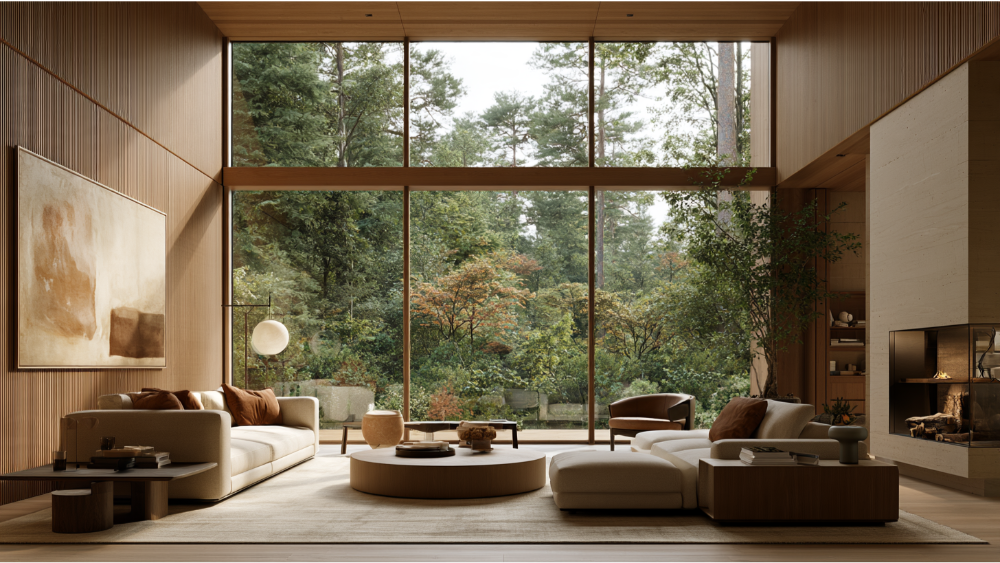
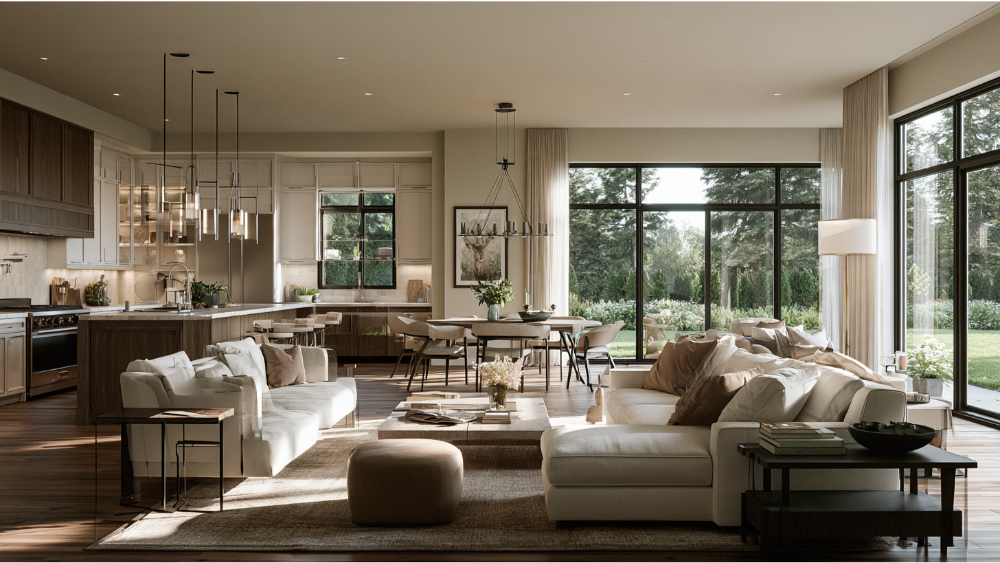
In a contemporary living room, arrange open seating around a clear focal point, mix textures across the sofa, rug, and throws, add a sculptural light, and hang abstract art or personal pieces. A gallery wall of black and white photography can also become a quiet feature wall. Keep the living room furniture scaled to the space so circulation stays easy, and let one or two statement pieces carry the style rather than crowding every corner.
Kitchen
Flat slab cabinet fronts and integrated appliances create the visual continuity contemporary kitchens are known for. In the 2026 kitchen trends report, 69% of respondents saw slab doors gaining popularity, with 72% noting panel-faced refrigerators and 85% panel-faced dishwashers. A thoughtful kitchen remodel is one of the most impactful contemporary upgrades, and it is an area our team handles start to finish.
Bathroom
Prioritize natural light, dimmable fixtures, and calm materials. A 2026 bathroom study found 40% of homeowners linked natural light to relaxation and 39% cited dimmable lighting, both easy wins in a remodel.
Dining room, bedroom, and transitional spaces
Layer soft textures, lean on warm neutrals, and build in storage so entries, hallways, and bedrooms stay calm and uncluttered. In the dining room, a single pendant and a well-scaled table keep an uncluttered layout that still feels inviting. The same contemporary design principles that shape your living room carry through every space, so no one room feels disconnected from the rest.
How Do You Keep Contemporary Decorating From Dating Quickly?
You keep it current by not committing the whole house to a trend. The features that are expensive to change should stay timeless and durable, while trends live in the layers you can replace.
- Do not make every fixed feature a trend statement.
- Repeat materials and color palettes for cohesion across every space.
- Express current design trends mainly in paint, textiles, art, and contemporary furniture.
- Prioritize durable, maintainable finishes.
- Design for your actual routines, not for a photograph.
- Leave room for the home to evolve with you.
No one can promise a style will never shift, since taste is constantly evolving. What we can do is design so the foundation carries the years and the surface stays easy to refresh. That is the heart of contemporary decorating that lasts.
From Inspiration to Finished Home: How the Process Works
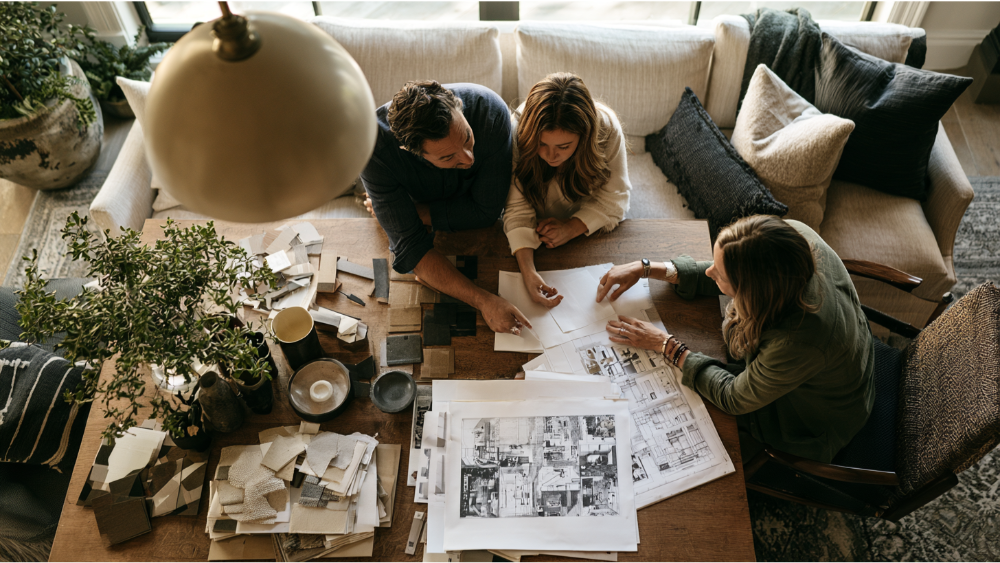
The biggest worry most homeowners carry is whether the finished space will match what they pictured. A clear, coordinated process is how you close that gap, and a good interior designer keeps every decision moving in the same direction. Here is the path we follow.
- Define your lifestyle needs and design priorities.
- Set scope and budget priorities honestly, up front.
- Measure and document existing conditions.
- Develop space plans and concept boards.
- Review 3D rendering and visualization so you can see the space before anything is built.
- Approve material and finish samples you can hold in your hand.
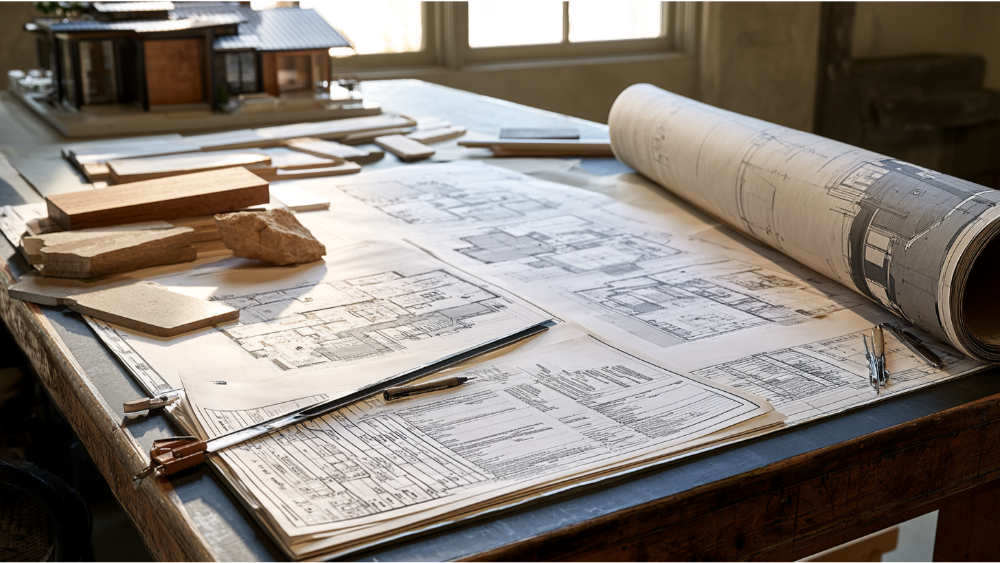
- Prepare detailed, permit-ready drawings where required.
- Coordinate procurement and construction with regular updates.
- Walk through the finished home together.
Seeing a 3D rendering and reviewing real samples and finish schedules before construction is how you avoid surprises. Because we handle design, drafting, and construction as one team, nothing gets lost between a separate architect, designer, and builder. You stay in control, and we stay honest and transparent at every step.
Material, Lighting, and Renovation Considerations
The practical side of a beautiful space matters as much as the look. We spend about 90% of our time indoors, according to the EPA, and some organic pollutants can run two to five times higher indoors than outdoors, so what goes into your home affects how it feels to live in.
- Choose lighting with appropriate CRI and add dimmers for flexibility.
- Request product-emission documentation for finishes and furnishings.
- Ventilate during and after installation.
- Select TSCA Title VI-compliant composite wood (federal formaldehyde limits run roughly 0.05 to 0.13 ppm across categories).
- Use lead-safe procedures in pre-1978 homes, where the federal RRP rule generally applies above about 6 square feet of interior or 20 square feet of exterior painted surface per room.
- Pick cordless or compliant window coverings, with cords no longer than 8 inches per CPSC guidance.
- Build in code and permit review for any structural, electrical, plumbing, or mechanical change.
And remember that "natural" does not automatically mean sustainable. Durability, sourcing, and maintenance all shape a material's real footprint.
Common Contemporary Design Mistakes to Avoid
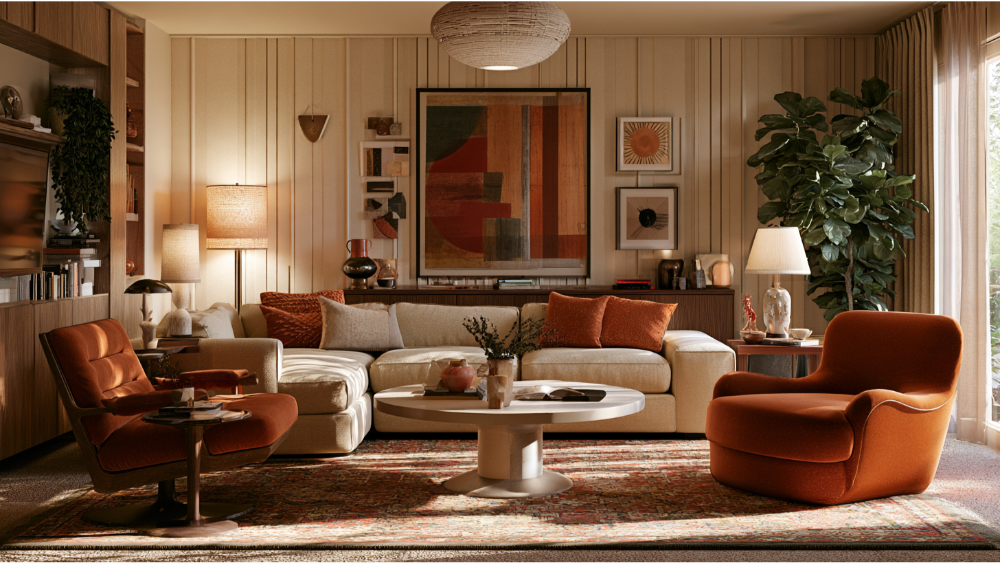
- Assuming contemporary means cold or colorless.
- Confusing it with fixed modernist style from the modern era.
- Following every trend at once instead of pulling thoughtfully from various styles.
- Choosing finishes separately without checking undertones.
- Underplanning lighting and electrical placement.
- Removing walls to create open spaces without considering acoustics, storage, and furniture placement.
- Prioritizing appearance over maintenance and daily function.
- Buying contemporary furniture before confirming scale and circulation.
Frequently Asked Questions
What is contemporary design in interiors? It is design that reflects how people live and build now, combining functional layouts, warm natural materials, clean lines softened with curves, layered texture, and personal pieces that feel current rather than locked to one historical style.
What is the difference between modern and contemporary interior design? Modern interior design is a fixed early-to-mid-20th-century movement with a set look, drawing on ideas like art deco from the same broad period. Modern contemporary interior design, by contrast, is current and always evolving, borrowing from many influences as tastes change.
What is the rule of 3 when decorating? Grouping objects in odd numbers, especially threes, reads as more balanced and natural to the eye than even, symmetrical pairings. It is a quick way to make shelves, tabletops, and vignettes feel intentional.
What items make your house look cheap? Mismatched undertones, poor lighting, furniture that is the wrong scale for the space, and flimsy finishes. Most of these trace back to choices made in isolation instead of planned together.
What interior styles are trending? As of 2026, warmer contemporary style and organic modernism are strong, with maximalist and eclectic accents and curved forms gaining ground. Clean flat roofs and crisp silhouettes still define many modern homes. These are directional signals for 2026, not permanent rules.
Bring Your Vision to Life With Skyline Design Build
Build the lasting foundation, then layer in the present moment. We would love to help you translate your vision into a contemporary home that feels current and personal. As a single integrated design-build team, we handle design, drafting, and construction under one roof with honest, transparent communication from the first conversation to the final walkthrough. If you are ready to start, reach out for a free consultation at (916) 701-9196, email [email protected], or send us a note through our website contact form.