Dark Academia Interior Design: Atmosphere Without the Gloom
Key Takeaway
Dark academia interior design is a moody, book-centered style built on deep color, dark wood, built-in bookshelves, and collected vintage furnishings inspired by historic libraries and Gothic Revival architecture. The look works in small rooms and modern homes alike. Layer warm light at 2700K to 3000K, keep ceilings and trim lighter, and fill shelves with real books and personal objects to avoid a staged, theatrical feel.
Dark academia interior design is a moody, book-centered style inspired by historic libraries, traditional universities, Gothic Revival details, and collected vintage furnishings. Picture the reading rooms of old universities like Oxford, with deep color, dark wood, and shelves that look earned rather than ordered. The style works best when it's designed as a functional, personal space and not assembled as a pile of props. If you love the look but worry your room will feel dim or theatrical, you're asking the right question. We'll show you how to get the atmosphere while keeping light, function, and comfort intact.
Where the Dark Academia Aesthetic Came From
Dark academia is an internet aesthetic, not an old historical design movement. It emerged online around 2014 on Tumblr, spread to Instagram around 2017, and grew into wider popularity through the early 2020s. Donna Tartt's 1992 novel The Secret History is a central influence on the mood, but she did not coin the term. The named aesthetic came together years later, online.
What gives the look its depth is that its visual vocabulary borrows from genuine historic sources. Gothic architecture began in northern France in the early 12th century, and Gothic Revival later reinterpreted those forms for studies and personal libraries. That lineage, along with Collegiate Gothic campuses, is why the style reads as scholarly rather than costume-like when it's done with care.
The Core Dark Academia Design Elements
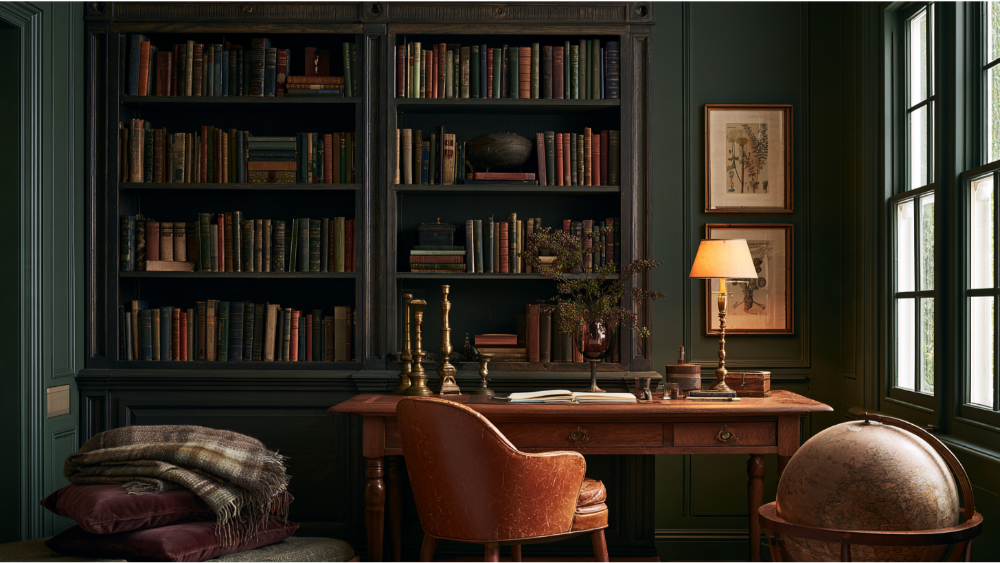
A few building blocks appear in nearly every successful dark academia room. The goal is a collected-over-time feel, not a matched furniture set.
- Dark wood and traditional furniture: leather armchairs, pippy oak pieces, and solid, classic forms.
- Built-in bookshelves and personal collections: books, vintage globes, busts, antique clocks, and other objects with a story.
- Tactile textiles: velvet, wool, tweed, and plaid that invite touch and absorb light softly.
- Brass, iron, stone, and aged finishes: brass candleholders and aged metal hardware that warm the palette.
- Classical, botanical, and literary art: framed botanical prints, antique portraits, and antique mirrors to add depth.
- Millwork and architectural detail: paneling and molding that favor age, texture, and craftsmanship over minimalism.
How Do You Build a Dark Academia Color Palette?
Start with one dominant deep hue and build around it. Charcoal gray makes a strong, neutral core. Deep brown leans earthy and grounded. Forest green ties to a romanticized view of nature, navy brings scholarly polish, and burgundy carries that sense of deep intellectualism.
Once you've chosen your anchor, ground it with warm wood and neutrals so the room has somewhere to breathe. Add one supporting saturated tone and a small accent, like mustard or ochre, for a spark of warmth. Test your paint in both daytime and evening light before committing, because deep colors shift dramatically depending on the hour. The key move that keeps a space from feeling gloomy: don't make every surface equally dark. Balance is what makes the palette feel intentional.
How to Get a Moody Aesthetic Without a Gloomy Room
Lighting is where most dark academia rooms succeed or fail. A dark palette still needs real illumination, so the trick is layering warm light rather than simply dimming everything.
- Layer three types of light: ambient for the room, task for work and reading, and accent for mood.
- Choose warm white, 2700K to 3000K, for a library-like glow. Cooler light at 4000K and above reads blue and breaks the spell.
- Mind color rendering: look for CRI 80 at minimum, and CRI 90 or higher to make wood, leather, burgundy, green, and brass look rich instead of muddy.
- Use dimmers with compatible LEDs. Good-quality white LEDs last roughly 30,000 to 50,000 hours.
- Add dedicated reading light at desks and chairs, plus picture lights and sconces for atmosphere.
Atmospheric light sets the tone, and functional light lets you actually read. You need both. Real candles show up constantly in dark academia inspiration, but an open flame isn't required. Candles cause thousands of U.S. home fires each year (the NFPA reports an estimated annual average of 5,894 from 2020 to 2024), so flameless candles and dim-to-warm LEDs give you the same flicker without the risk.
Furniture, Built-Ins, and Architectural Details
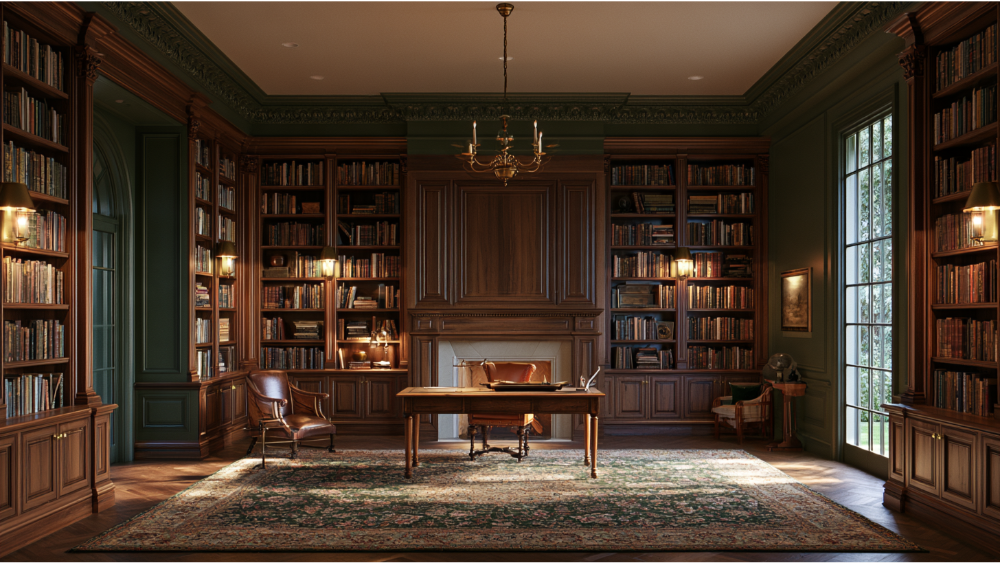
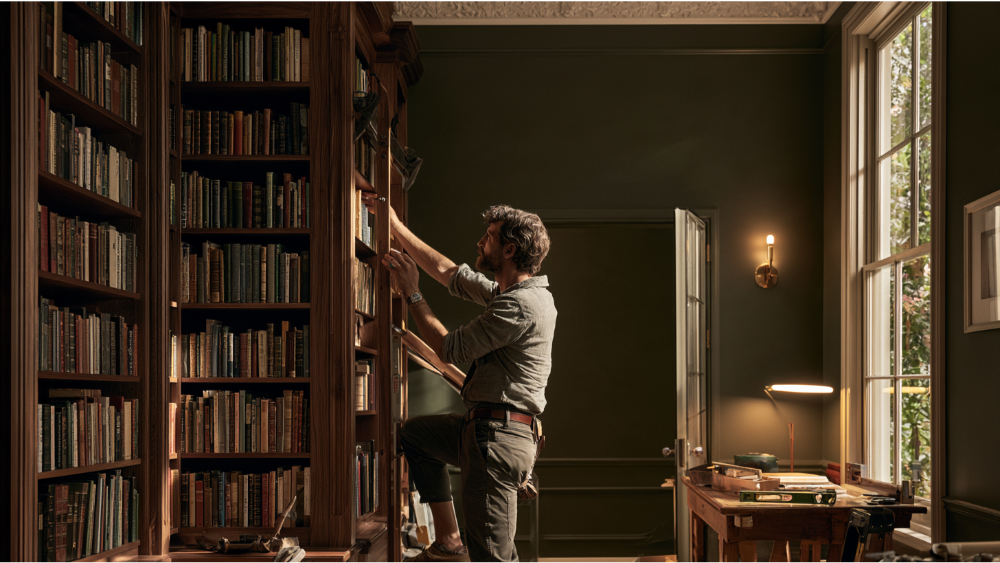
Movable pieces set the mood, but permanent details give a room its character. Floor-to-ceiling bookcases, wall paneling, molding, a traditional desk, and a fireplace surround turn a styled space into a convincing one. Dark wood shelving is close to essential here, and the craftsmanship of the millwork is often what separates a room that feels custom from one that feels decorated.
These elements ask more of you than decor does. Built-ins, paneling, and wiring for sconces require coordinated design and construction, which is a different commitment level than swapping lamps and textiles. Planning them together, rather than piecemeal, is how the finished result matches what you pictured.
How to Make Dark Academia Feel Collected, Not Themed
The style is less about dark colors and more about meaningful spaces. A room full of mass-produced props reads like a stage set, while a room full of real objects feels lived in.
- Do fill shelves with books you actually read.
- Do display personal objects, real art, and a few pieces with history, like a vintage globe or an antique portrait.
- Do mix old and new so nothing feels like a showroom.
- Avoid novelty props such as quills, skulls, and empty decor books bought by the yard.
- Use closed storage to keep visual clutter in check.
Dark Academia Ideas by Room
Home office or library
Built-in shelves, a solid desk, a leather reading chair, and a focused task light to work by.
Living room
Velvet seating, layered textiles, and a gallery wall of classical or botanical art.
Bedroom
Deep wall color, warm layered bedding, and soft task lighting beside the bed.
Dining room
A dark wood table, wall sconces, and brass touches for a quiet glow at dinner.
Kitchen and bathroom
Dark cabinetry, stone, and aged hardware look striking, but these rooms need moisture-resistant, durable, cleanable finishes and strong task lighting. They're worth more specialized planning than a general refresh.
Can Dark Academia Work in a Small Room or Modern Home?

Yes to both. In a small room, deep color can feel cozy instead of cramped if you choose carefully. Give the space one strong focal point, such as a single dark feature wall, and protect your circulation so the room still flows. Combine open and closed storage, keep ceilings, trim, or a few textiles lighter, and use antique mirrors and directed light to add depth.
In a modern home, pair deep color and millwork with clean lines, then let a handful of antique or tactile pieces soften the edges. The contrast between crisp architecture and warm, collected objects is what makes it work.
Decorating Refresh or Full Remodel? Choosing Your Commitment Level
How far you take dark academia depends on your goals and budget. We think of it as three levels:
- Decor refresh: paint, textiles, lamps, art, and movable furniture.
- Architectural enhancement: molding, paneling, wallpaper, sconces, fireplace surrounds, and semi-custom shelving.
- Integrated remodel: custom built-ins, lighting and electrical plans, cabinetry, flooring, layout changes, and coordinated interior design.
Before any paint goes up or a wall moves, 3D rendering and visualization lets you see how dark color, millwork, cabinetry, and lighting will actually read in your room. That's how you make informed decisions and move forward with confidence. If you'd like a partner for the design and the build, we'd love to join you in your project. Skyline Design Build serves the Greater Sacramento area and the San Francisco Bay Area. Call us at (916) 701-9196 or reach out through our website to schedule a free consultation.
Practical Safety and Material Considerations
A few national guidelines are worth keeping in mind, since dark academia projects often involve old millwork and new shelving.
- Older homes: in homes built before 1978, disturbing paint may fall under the EPA's Renovation, Repair and Painting Rule. Paid firms generally must be certified when covered work disturbs more than 6 square feet inside or 20 square feet outside, and window replacement and demolition are covered regardless.
- Air quality: ventilate for VOCs while painting and for two to three days afterward when practical.
- Tall shelving: anchor book-filled bookcases to the wall, as the CPSC recommends, especially around children.
- Candles: prefer flameless versions over open flame.
- Wet rooms: choose durable, cleanable materials in kitchens and baths.
Rules and standards change, so verify current requirements before you start.
Dark Academia Interior Design FAQ
What is dark academia style?
It's a moody, book-centered interior style inspired by historic libraries, traditional universities, and Gothic Revival detail, grounded in deep color, dark wood, and collected vintage pieces.
What is the 3-color rule in interior design?
Roughly 60% dominant color, 30% secondary, and 10% accent. For dark academia, that maps to one deep hue, warm wood and neutrals, and a saturated accent like mustard or burgundy.
Are dark interiors in style?
Yes. Deep, saturated rooms remain popular and have real staying power because the look draws on genuine historic design, not a passing fad.
How can I do dark academia without my room feeling too dark?
Layer warm light at 2700K to 3000K, keep your trim and ceiling lighter, and add mirrors and texture to bounce light and create depth.
When you're ready to turn the vision into a real room, we'd be glad to talk it through. Reach out for a free consultation and let's build it together.