How to Mix Old and New Furniture for a Home That Feels Collected, Not Mismatched
Key Takeaway
Mixing old and new furniture works beautifully when one style leads and the other supports it. Anchor each room with a single dominant piece, then create two or three visual bridges using repeated color, wood tones, or materials to make the contrast feel intentional. Furniture from different eras belongs together when it shares common ground, not when it matches perfectly.
Yes, mixing old and new furniture works beautifully, as long as one style leads and the other supports it. Pick a direction for the space, then tie everything together with a few repeated visual connections so the contrast reads as intentional rather than accidental. If you're holding onto an inherited dresser or a vintage armchair and worried it won't fit your newer pieces, you don't have to choose between history and a fresh look. Here's the core idea we'll keep coming back to: you don't need old and new to match. You need to give them a reason to belong in the same room.
What Counts as "Old" Furniture: Antique vs. Vintage vs. Inherited
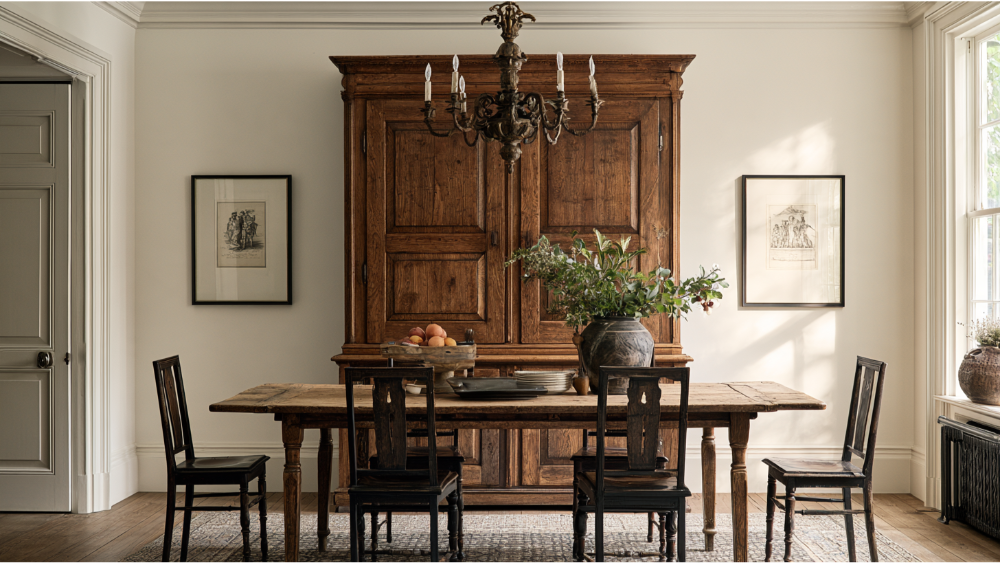
Before you alter anything, it helps to know what you're working with. The word "old" covers several different things, and the difference matters.
| Category | What It Means | How to Treat It |
|---|---|---|
| Antique | Generally furniture more than 100 years old (U.S. Customs and Border Protection uses a 100-year benchmark for imported antiques). | Preserve craftsmanship and patina; consult a professional before altering. |
| Vintage | A broader market term for pieces from a recognizable past era, with no single industry cutoff. | Keep the history and character; modify only where it adds value. |
| Inherited | Anything passed down. The value here is sentimental first. | Let sentiment guide how carefully you handle it. |
| Simply dated | Older, but not collectible. | Easiest category to refinish or update freely. |
Why does this matter? Because whether a piece is a potential antique or just dated decides whether you should modify it at all. A vintage sideboard with original hardware, for example, may be worth preserving exactly as it is. These vintage pieces often carry sentimental value that no new purchase can replace.
Start With What You Own, Then Choose a Statement Piece to Anchor the Room
Begin with an honest inventory. Photograph and measure each piece you want to keep, and note three things for each: its sentimental weight, how you actually use it, and any possible financial value. Flag anything that needs repair.
Then pick one anchor. This is the piece that leads the space, and it can be old or new: a dining table, an armoire, a dresser, a minimalist sofa, a rug, a piece of artwork, or a vintage armchair. One strong statement piece per room gives the eye somewhere to land and makes the whole mix feel deliberate. A room filled with equal competitors has no clear voice.
Judge visual weight, not the number of items. A single carved armoire can carry more presence than a half-dozen small accessories. Choose your anchor, build around it, and resist the urge to give every piece equal billing.
Choose Which Style Leads (and Why the 80/20 Rule Is a Starting Point, Not a Standard)
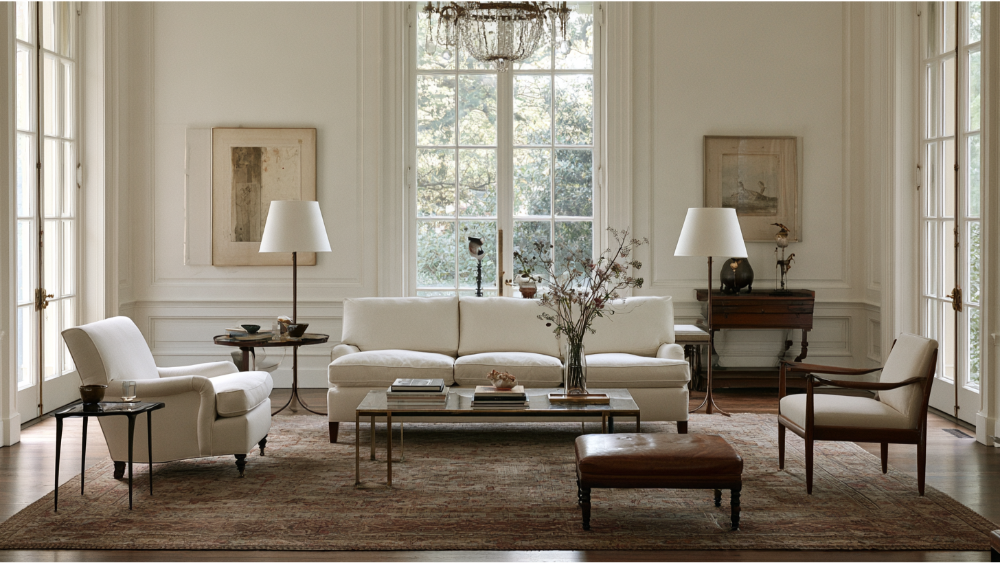
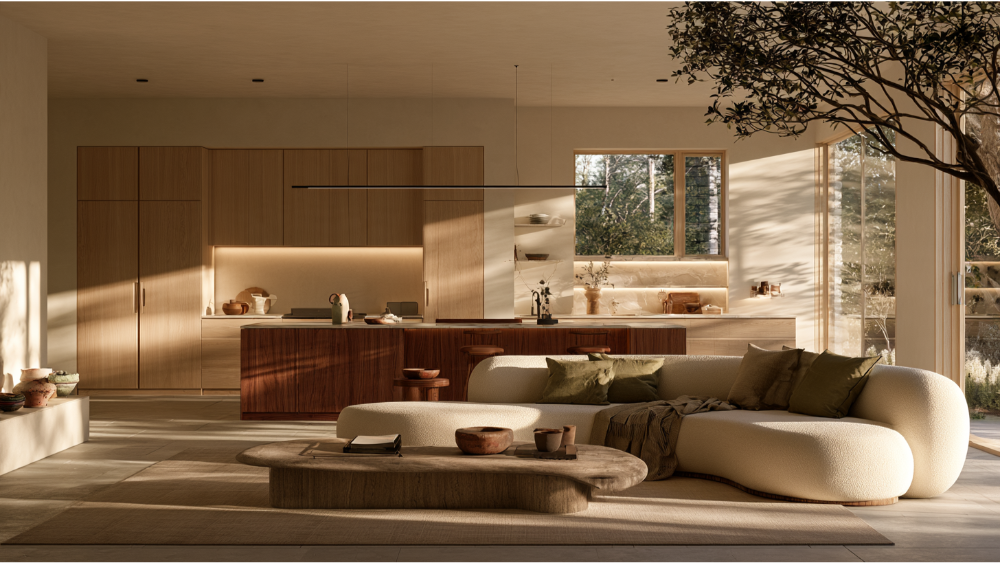
One direction should dominate. That might be a modern room with a few older accents, or a traditional space softened with contemporary relief. A 50/50 split rarely works, because the room ends up with no clear voice. The goal is to blend vintage and new without either side feeling forced.
You've probably seen the 80/20 rule, roughly 80% of one style and 20% of another. Treat it as an optional starting point, not a professional standard. Interior designers disagree on the exact ratio, and that disagreement tells you something useful: these percentages describe visual weight, not a headcount of objects. There's no single correct formula. Pick a lead, commit to it, and let the numbers follow the feel of the room.
Create Visual Bridges Between Different Eras: Color, Wood Tones, Shape, and Materials
This is where the mix comes together. Unlike pieces belong in the same room when they share a few visual threads, and combining those threads is what makes a layered look read as timeless rather than busy. Furniture styles from different eras can coexist once you give them common ground. You usually need only two or three bridges.
- Color: Pull one repeated color across both old and new pieces. A cohesive palette quietly unifies very different styles.
- Wood tones: Mixing wood tones adds depth and character. Don't try to match every finish. A little variation reads as collected; perfect matching often looks flat.
- Shape and silhouette: Echo a curve or a line between an antique and a modern piece so the eye connects them and keeps the visual interest alive.
- Materials and texture: Blending materials like brass, linen, and aged wood, along with textiles such as throws and cushions, adds dimension and keeps contrast interesting.
- Rugs, art, and lamps: These are your easiest connectors. A rug, a pair of vases, or a set of cushions can bridge two eras instantly. Good lighting is often the unsung hero that ties an arrangement together.
Choose your bridges, repeat them with intention, and the contrast stops looking like a mistake. This is the heart of how to create interiors that feel personal and show real personality instead of looking staged or overly polished. The right warmth makes a space feel lived in, not like a showroom.
Balance Scale and Proportion So the Room Doesn't Feel Top-Heavy
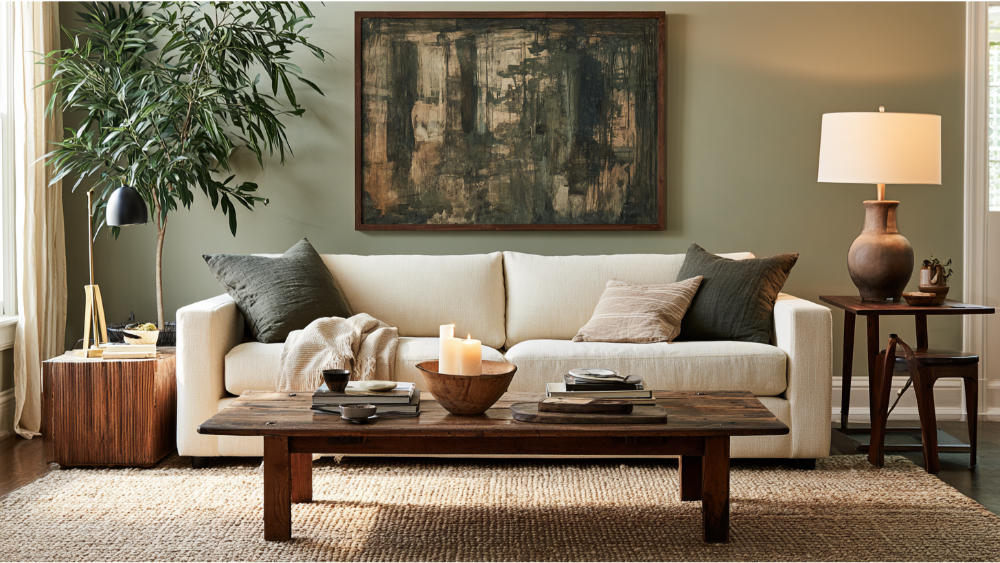
Scale carries a room as much as color does. Avoid pairing a delicate antique side table with a massive modern sectional; the small piece disappears and the large one dominates. Instead, balance heavy with light. Pairing an oversized modern sofa with smaller vintage items creates intentional contrast and lets the eye travel across the space.
Then check the part most articles skip: function. Measure walking paths. Sit in the seating. Open the drawers. Make sure the pieces work for how your family actually lives, and give detailed or ornate furniture a little room to breathe.
Updating Antique Furniture Safely, and When Not to Paint It
You can modernize an older piece and give it new life without erasing what makes it special. New upholstery, a contemporary lamp nearby, a cleaner backdrop, or a gentle cleaning and minor repair often do more than a dramatic overhaul. Larger vintage pieces can be refinished for everyday modern use.
But don't reach for paint by default, and keep a few federal safety points in mind:
- Original finishes carry value. They can hold historical, aesthetic, and financial worth, and the patina on antique furniture is often part of what makes it desirable. If a piece might be genuine, consult an appraiser or restoration professional before altering it.
- Lead paint. Furniture made before 1978 is more likely to contain lead paint, per CPSC, with a federal limit of 90 parts per million. Avoid sanding or stripping where children are present, or test first.
- Stability. Check secondhand pieces for recalls and wobble. Anchor dressers and armoires to the wall; the federal STURDY stability standard took effect September 1, 2023, but anchoring every clothing storage unit is smart regardless of age.
- Old wiring. Have vintage lamp cords, sockets, and wattage checked before you plug anything in.
Room-by-Room Pairings: How to Mix Antique and Modern Furniture in Your Living Room and Beyond
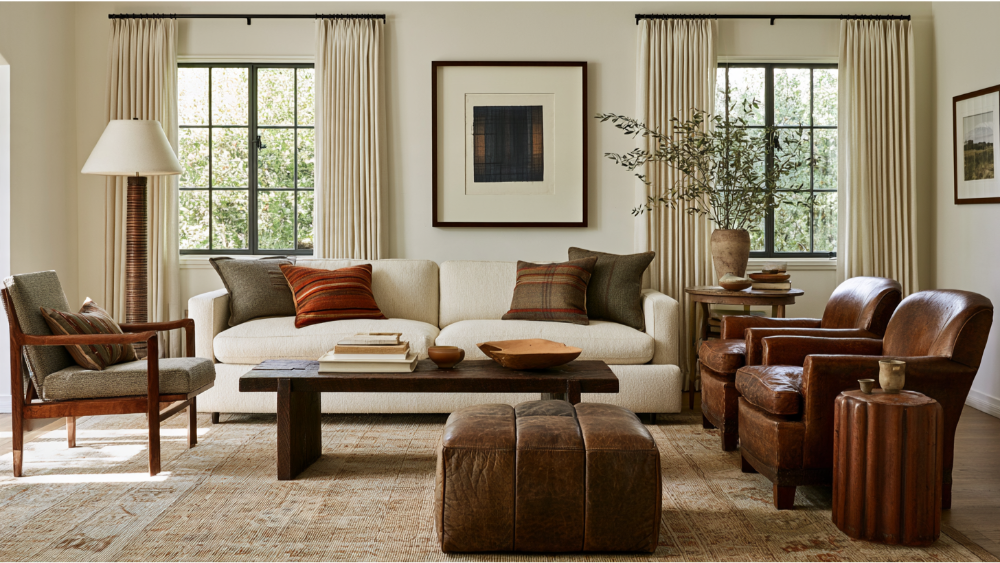
A few examples that work almost every time and mix antique character with contemporary pieces:
- Living room: a modern sofa with an old sideboard, warmed up with vintage table lamps.
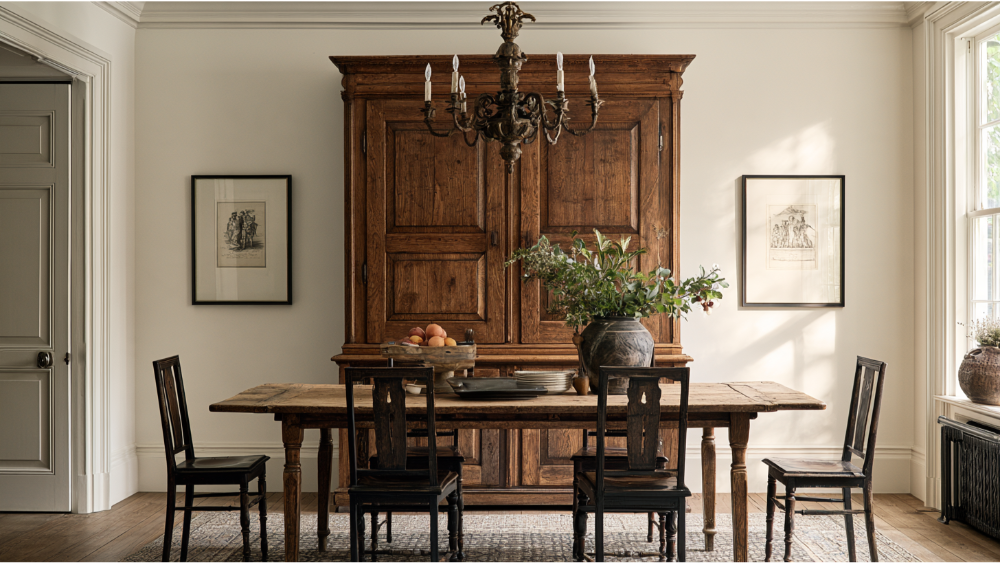
- Dining room: an antique table with modern chairs.
- Bedroom: a new bed flanked by vintage nightstands.
- Entry: an antique console under modern lighting or art.
Antique and modern furniture can share one house when you repeat a connecting thread. Whether you lean toward King's Road glamour or quieter rustic charm, blending vintage and modern styles gives a home a real sense of beauty and depth. If the room still feels off, check for one of these: too many focal points, wood finishes that nearly match, conflicting scale, no repeated color, simply too much furniture, or every old piece and antique finds altered the same way so the mix loses its character.
At Skyline Design Build, our interior designers coordinate furniture, finishes, lighting, and layout as one vision, and 3D rendering and visualization lets you see the mix before you commit to anything permanent. We'd love to join you in your project. Call us at (916) 701-9196 or reach out through our website to schedule a free consultation.
Frequently Asked Questions
Can you mix different styles of furniture? Yes. Let one style lead the space and repeat a few visual connections, like color, wood undertone, or material, so the contrast looks intentional. That repetition is the key to a cohesive result.
What is the 80/20 rule for furniture? It suggests roughly 80% of one style and 20% of another. Treat it as a flexible starting point, not a strict rule, since it describes visual weight rather than item count.
What is the 3-5-7 rule in interior design? It's the habit of grouping objects in odd numbers for arrangements that feel balanced and natural. Odd-numbered groupings tend to look more relaxed than perfectly even ones.
What should you not do to antique furniture? Avoid aggressive cleaning, sanding, or painting a piece that may be valuable or still has its original finish and patina. Check for lead paint and stability first, and consult a professional when the piece might be collectible.