
New Construction Home Warranty: What It Covers and How Long It Lasts
Key Takeaway
A new construction home warranty is a limited written guarantee covering defects in workmanship, systems, and structural components, typically following a 1-2-10 structure: one year for workmanship, two years for major systems like plumbing and HVAC, and up to ten years for qualifying structural defects. The written agreement and your state's law determine actual coverage. Exclusions are broad, so reading the fine print before signing is essential.
What Is a New Construction Home Warranty?
A new construction home warranty is a limited written promise, usually backed by your builder or a third-party plan, to correct defined defects in workmanship, materials, major systems, or structural components for set periods. A common pattern is one year for workmanship, two years for major systems, and up to ten years for qualifying structural defects. But the written agreement and your state's law decide what's actually covered, not a single national rule. If you're planning or finishing a new build and you want clarity instead of surprises, this guide walks through what a warranty does, what it doesn't, and how to use it. That kind of honesty up front is how a project should start.
Builder's Warranty vs. Home Warranty vs. Homeowners Insurance (and Manufacturer Warranties)

Four separate protections often get blurred together. Knowing which is which saves you from assuming you're covered when you're not. The Federal Trade Commission draws a clear line between a builder's warranty, which comes with new construction and covers permanent parts of the home, and a paid home warranty, which is really a service contract.
| Protection | What it covers | Who backs it | When it applies |
|---|---|---|---|
| Builder warranty | Workmanship, materials, systems, structural defects | Builder or third-party plan | New construction, set periods |
| Manufacturer warranty | Appliances, HVAC equipment, windows, roofing products | Product maker | Per product terms |
| Home warranty / service contract | Systems and appliances, often after builder coverage ends | Service company (paid) | Optional, ongoing |
| Homeowners insurance | Covered perils: fire, wind, hail, theft | Insurer (paid) | Sudden damage, not defects |
Insurance pays for covered perils, as the National Association of Insurance Commissioners describes, not for construction defects or normal maintenance. A builder warranty isn't insurance against every event, and insurance isn't a substitute for a warranty.
How Long Does New Home Warranty Coverage Last? The 1-2-10 Structure
Most builder warranties follow a pattern often shortened to "1-2-10":
- 1 year: Workmanship and materials, often drywall, paint, trim, doors, and siding.
- 2 years: Major distribution systems, commonly plumbing, electrical, and HVAC.
- Up to 10 years: Defined major structural defects.
This is common, not universal. There's no federal warranty requirement forcing every builder into this exact format, and the FTC frames these periods as typical industry patterns rather than law. Coverage also narrows as time passes. That ten-year figure doesn't mean the whole house is protected for a decade. It applies only to qualifying major structural problems, which is a much smaller category than most people expect.
What Does a Builder's Warranty Commonly Cover?
Coverage generally falls into a few groups:
- Workmanship and finishes: drywall, paint, trim, siding, and similar work for the first year.
- Major distribution systems: plumbing, electrical, and HVAC, commonly for two years.
- Load-bearing and structural components: foundations, framing, and other elements that hold the home up, for the long-term period.
- Plans, specifications, and approved change orders where the warranty ties performance to the agreed documents.
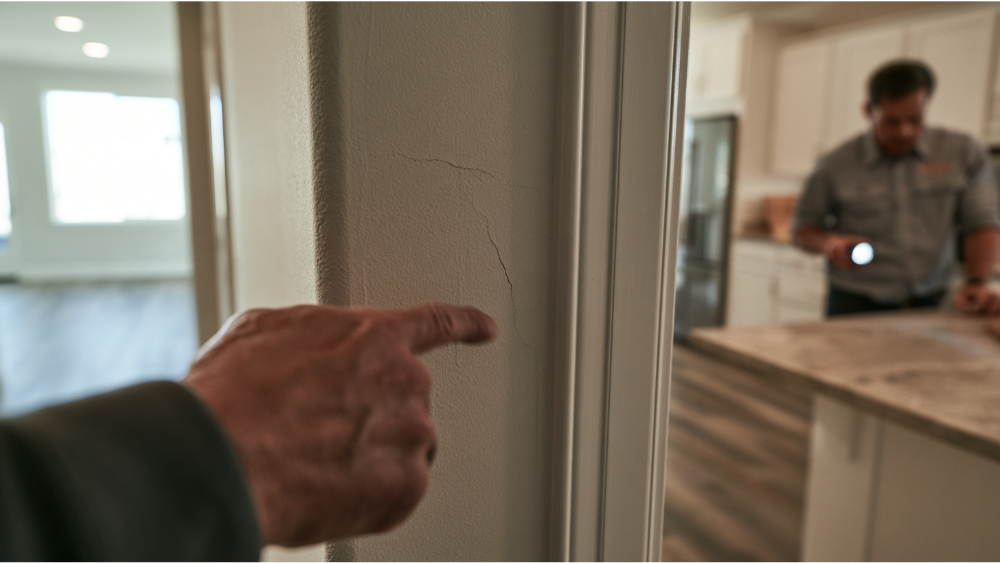
The structural piece is narrower than it sounds. The FTC notes that many warranties define a major structural defect as a condition that makes the home unsafe, such as a roof at risk of collapse or damage to load-bearing elements. A hairline crack in a non-structural wall usually won't qualify, even during the ten-year window.
What Is Commonly Excluded From a New Construction Warranty?
Exclusions vary by document, so treat this as "commonly excluded," never guaranteed. Warranties often leave out:
- Routine maintenance and normal wear and tear.
- Damage from homeowner alterations, misuse, or neglect.
- Minor cosmetic settling and hairline cracks in drywall, brick, or tile.
- Appliances and products carrying their own manufacturer warranties.
- Weather events and other losses typically handled by insurance.
- Landscaping and detached features unless specifically included.
- Consequential costs like temporary housing or lost income during repairs.
Because appliances usually fall under separate manufacturer coverage, ask for the manuals, serial numbers, and registration details at move-in rather than assuming the builder warranty handles them.
Seven Warranty Terms to Read in the Fine Print Before Signing
The fine print decides how much control you really have. Before you sign, read these seven terms closely:
- Commencement date. Don't assume coverage starts at closing. Depending on the document, it may begin at substantial completion, initial occupancy, or transfer of title.
- Coverage periods. Confirm exactly how long each category lasts.
- Defined performance standards. Vague language about "acceptable" work invites disputes. Look for measurable standards.
- Claim procedure and written notice address. Know where and how a claim must be submitted.
- Emergency repair procedure. Understand what counts as an emergency and how it's handled.
- Transferability and backing. Find out whether the warranty passes to a future buyer and whether obligations are insured independently. The American Bar Association recommends checking whether coverage survives if the builder stops operating.
- Dispute resolution. Check for mediation or arbitration clauses: who pays, whether it's binding, and whether it limits your legal options. The FTC warns arbitration can still cost several thousand dollars depending on complexity.
Does a Warranty Replace a New Construction Inspection?
No. A warranty is a process for fixing defined defects. An inspection documents the home's actual condition so you can catch problems early. They work together. The American Society of Home Inspectors points to several useful stages:
- Pre-drywall or phase inspection before framing and mechanicals are covered up.
- Final inspection before closing, scheduled early enough to allow corrections.
- 11-month inspection near the end of a one-year workmanship period, so observable issues can be documented with time to submit them.
Municipal code approval confirms the home meets local requirements. It isn't the same as an inspection performed for you, looking out for your interests.
Punch List vs. Warranty Claim: What's the Difference?

A punch list covers incomplete, damaged, or incorrect work you identify before closing, usually at the final walkthrough. A warranty claim addresses defects discovered after you've moved in. The distinction matters because many warranties apply cosmetic exclusions after the walkthrough. If you see a scratched countertop or an unfinished trim piece before closing, it belongs on the punch list, not deferred into the warranty process where it may be harder to claim. Put both lists in writing and keep copies.
How Do You File a New Construction Warranty Claim?
Filing correctly protects your coverage. The FTC recommends a documented, written approach:
- Read the warranty to confirm the item is covered and note the deadline.
- Prevent further damage where it's safe to do so.
- Photograph the issue and write a clear description.
- Submit through the required written channel. A phone call may not satisfy formal notice requirements.
- Keep proof the claim was received.
- Track inspection, repair, and follow-up dates.
- Don't let the deadline pass while relying on informal conversations.
Response times vary by builder and warranty. As a common pattern, emergencies may be addressed within 24 to 48 hours and non-emergency claims inspected within one to three weeks. Treat those as typical, not guaranteed, and confirm the actual windows in your document.
What If the Builder Delays or Denies Your Warranty Claim?
A denial isn't the end of the road. Work through it in order:
- Request the written reason and the specific contract provision cited.
- Follow the internal escalation steps in your warranty.
- Contact the third-party administrator if your warranty is insurance-backed.
- Review any mediation or arbitration requirements before taking further action.
- Consult your state's relevant authority or a qualified attorney for unresolved legal disputes.
Keep every piece of correspondence. Clear records are your strongest asset if a disagreement escalates.
Special Notes for FHA and VA Buyers

Federal loan rules changed, and some older articles still report them incorrectly. Here's the current picture:
- FHA: Effective March 14, 2019, FHA eliminated its insured 10-year protection plan requirement. It kept the Warranty of Completion of Construction, Form HUD-92544, which provides one-year protection against covered defects in equipment, materials, or workmanship. HUD's current Handbook 4000.1 still lists this form among required new-construction documents.
- VA: The VA Lender's Handbook requires a qualifying veteran buyer to receive either a one-year Warranty of Completion of Construction or a 10-year insurance-backed warranty.
Confirm the exact documents your loan requires with your lender, since requirements interact with inspections and property classification.
Do Warranty Rules Vary by State?
Yes. Express, implied, and statutory warranty rights differ from one state to the next. A few examples show the range: Florida mandates a one-year builder's warranty effective July 1, 2025, New Jersey requires a 10-year structural warranty, and Texas pays particular attention to foundation and soil-movement language given its expansive soils. None of these is a national standard. For how the rules apply to your home, confirm local requirements with a qualified attorney.
Frequently Asked Questions
Do home warranties cover structural issues? A builder or structural warranty may cover qualifying major structural defects. Paid home warranties, which are service contracts for systems and appliances, generally do not.
What does a 10-year structural warranty cover? Narrowly defined major structural defects that affect load-bearing elements and can make the home unsafe. Cosmetic cracks and minor settling usually don't qualify.
What is a red flag on a home warranty? Watch for vague performance standards, very short claim deadlines, mandatory binding arbitration, and no independent insurance backing behind the builder's obligations.
What is the warranty period for the construction project? Commonly the 1-2-10 structure, but the written document and the commencement date control. Always confirm when coverage actually begins.
Does homeowners insurance cover construction defects? Generally no. Insurance covers perils like fire, wind, hail, and theft, not workmanship defects, which fall under the builder warranty.
Build Warranty Clarity Into Your Project From Day One
A new-home warranty is a written process, and understanding that process before construction begins gives you more control after move-in. When coverage, start dates, performance standards, and claim procedures are clear from the start, there's far less room for confusion later. That's the whole point of honesty and open communication: you stay involved and never kept in the dark, with one integrated design-to-build team handling your project instead of a chain of separate parties pointing fingers.
We'd love to talk through the warranty, documentation, and completion process with you during a free consultation, so you know what to expect before a single plan is drawn. Serving the Greater Sacramento area and the San Francisco Bay Area, we're ready when you are. Reach us at (916) 701-9196 or (415) 480-4607, email [email protected], or send a message through our website contact form.