Organic Modern Interior Design: A Warm, Natural Home From Architecture to Finishing Touches
Key Takeaway
Organic modern interior design combines clean modern lines and uncluttered layouts with natural materials like wood and stone, warm earthy colors, and soft curves. White oak is favored by roughly 51% of designers working in this style, and wood-grain cabinetry now leads painted finishes at about 59%. The key is building on a simple modern foundation and adding warmth through texture, natural materials, and intentional decoration rather than filling space.
Organic modern interior design blends the clean lines and uncluttered planning of modern design with natural materials, warm earthy colors, tactile textures, and soft sculptural forms. The balance is what makes it work: you start with a simple modern foundation, then add warmth through wood, stone, textiles, and curves. If you love the calm, grounded feeling of this style but worry your home will end up cold and entirely beige, that worry is well founded, and avoidable. Here's how to plan it with confidence.
- Clean, functional layouts and simple lines
- Natural wood and stone as central materials
- Warm, nature-derived neutrals instead of cool grays
- Soft curves balancing straight edges
- Limited, intentional decoration with real texture
What Makes Organic Modern Different From Plain Modern Design?
Modern design gives you the bones: restraint, clean lines, and a focus on function over ornament. Organic modern keeps those bones and adds warmth. Where strict modern rooms can feel sparse or hard, organic modern softens the edges with natural wood, stone, and handmade-looking pieces, plus curved shapes that quiet a space. The point is restraint, not emptiness. Every object in the room is chosen on purpose, and craftsmanship shows in the details.
It overlaps with warm minimalism and strict minimalism but leans softer and more curve-forward than either. Minimalism strips things back; organic modern invites a little more texture and life while keeping the clutter out.
The Five Foundations of Organic Modern Style
- Clean, functional layouts. Open, uncluttered floor plans with clear purpose behind every piece. Space to breathe matters as much as the furniture itself.
- A warm, nature-derived palette. Colors pulled from earth, stone, and plant life rather than cool industrial grays.
- Visible material texture. Woven textiles, grain in the wood, and honed stone give neutral rooms depth without needing bold color.
- Curves balanced with straight lines. A rounded sofa or arched doorway softens the geometry and creates a calming atmosphere.
- Limited, intentional decoration. Handcrafted objects and a few meaningful pieces, not shelves packed with filler.
Building an Earthy Color Palette Without Making Everything Beige
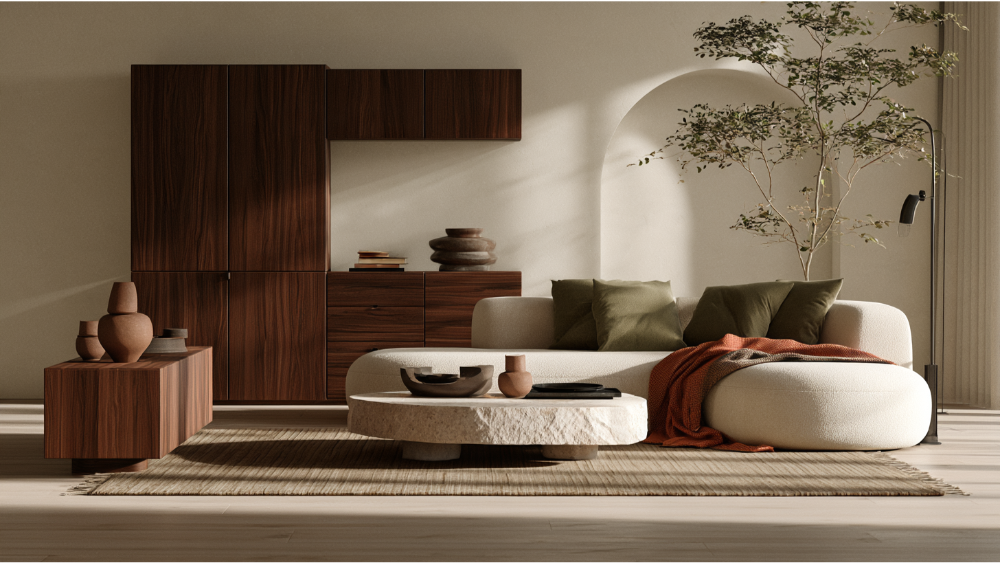
The all-cream room is the trap most people fall into, and it's easy to avoid once you plan contrast on purpose.
Warm neutrals as your base
Start with warm whites, sand, mushroom, and taupe. These are your quiet backdrop. Skip cool grays, which tend to flatten the warmth this style depends on.
Depth and contrast colors
Layer in deeper, earthier tones so the room has somewhere for your eye to rest: walnut brown, olive, sage, clay, terracotta, ochre, and charcoal. Rust has jumped about 178% in popularity among designers, and it brings real warmth as an accent. You can go pale (lots of light neutrals with gentle contrast) or moody (walnut, charcoal, and deep clay doing the heavy lifting). Both are organic modern. Whichever direction you choose, test undertones in the room's actual light before committing, because a swatch that looks warm in the store can turn gray or pink on your wall.
Choosing Natural Materials for Beauty and Everyday Performance
Natural materials carry this style, but they also have to survive daily life. Choose for how a surface looks and how it holds up.
Wood
Visible-grain woods like white oak and walnut are the heart of organic modern. White oak is favored by roughly 51% of designers, and wood-grain cabinetry has overtaken painted finishes at about 59%. Mixing wood tones is welcome here, not a mistake, as long as you keep the undertones in the same warm family.
Stone and countertop surfaces
Travertine, limestone, marble, and warm quartzite all fit the look. Be honest with yourself about upkeep: softer stones can stain and etch, and most need sealing and gentle cleaning. Ask how a specific slab performs around food, water, and daily wear before you fall for the veining.
Walls and plaster finishes
Limewash-style paint, matte finishes, and lightly textured walls add subtle movement that flat white paint can't. They reinforce the handmade quality the style is after.
Textiles and soft materials
Linen, wool, cotton, leather, and bouclé bring softness, while jute, cane, and rattan add woven texture. Layering different fabrics is what keeps a neutral room from feeling dull.
Before you buy anything permanent, ask the practical questions: How is this cleaned? Does it need sealing? How does it handle pets, kids, and moisture? No single material is universally the best choice. The right one depends on the room.
Make Fixed Design Decisions Before You Buy Decor
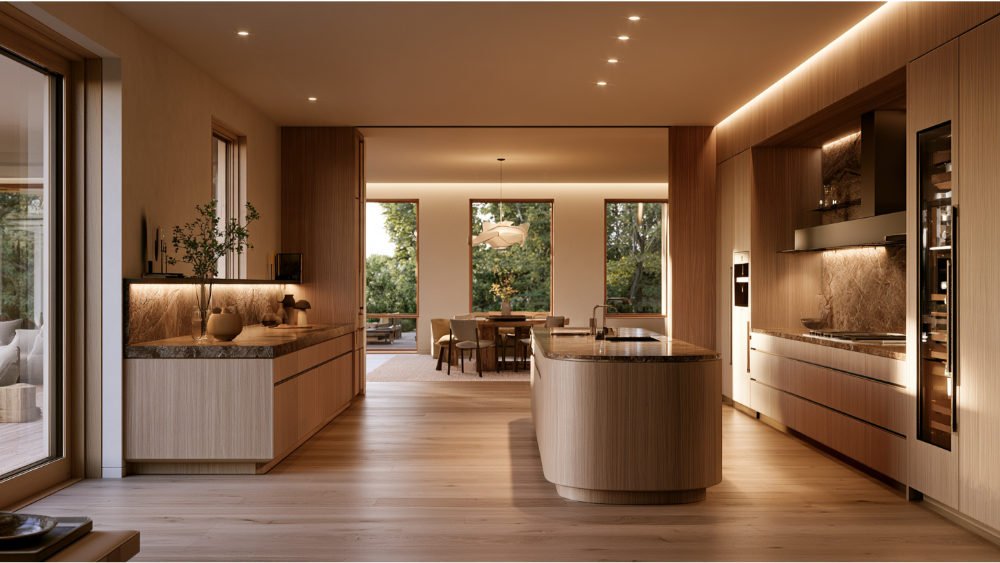
Here's the order that saves money and regret. Permanent, expensive finishes come first, because they're the hardest to reverse. Furniture and decor come last, chosen to suit what's already built in.
- Layout and architecture. How the space flows and connects to natural light and the outdoors.
- Flooring. The largest continuous surface in the room.
- Cabinetry and built-ins. Profiles, wood tones, and storage that keeps clutter hidden.
- Countertops. Matched to the cabinetry and the room's use.
- Wall finishes and lighting. The envelope and how it's lit.
- Furniture, then textiles and decor. The finishing layer, chosen to complement the fixed elements above.
Resolving the fixed decisions first is what separates a decorating refresh from a remodel, and it's exactly where a coordinated design-to-build approach earns its keep.
Organic Modern Room by Room
Organic modern living room
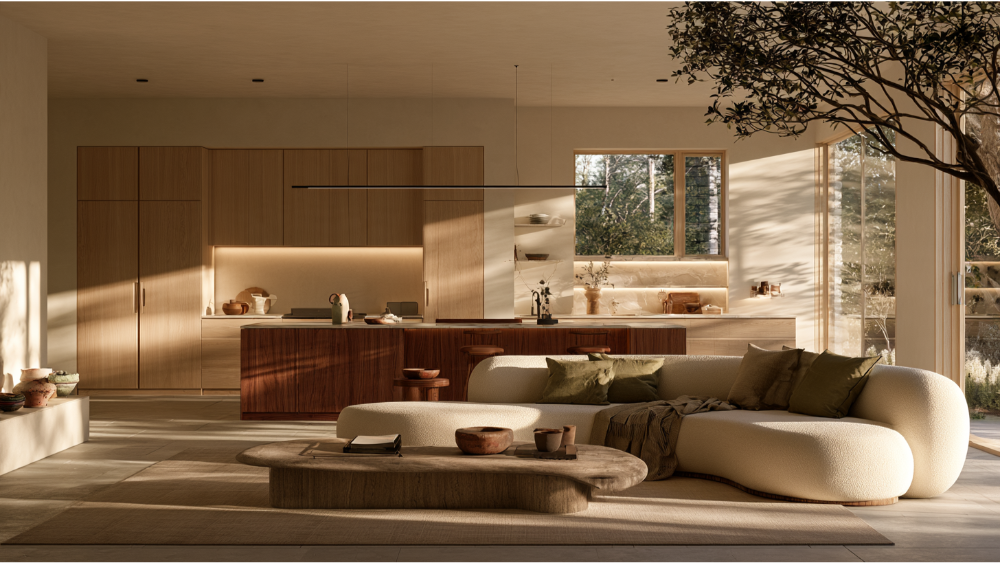
A curved sofa, a natural wood coffee table, and layered linen and wool throws set the tone. Add a fiddle-leaf fig or an olive tree. Large indoor plants support the biophilic feel, help purify the air, and bring a sense of calm. If you want less upkeep, succulents are a low-maintenance alternative.
Organic modern kitchen
Wood-grain cabinetry, honed stone, and warm metal hardware carry the style while standing up to daily cooking. The material and layout choices here run deep, and we cover them in a dedicated organic modern kitchen guide.
Bedroom
Linen bedding, a soft earthy palette, and an uncluttered layout make the room restful. Keep surfaces clear and let texture do the work.
Bathroom
Natural-look surfaces are the goal, but moisture and cleaning set the rules. Balance the aesthetic against what can handle water and repeated wiping. We go deeper on this in a separate bathroom materials and maintenance article.
Dining area
A natural wood table anchors the space. Mixing seating, rather than buying a matched set, keeps the room from feeling like a showroom.
Lighting an Organic Modern Home
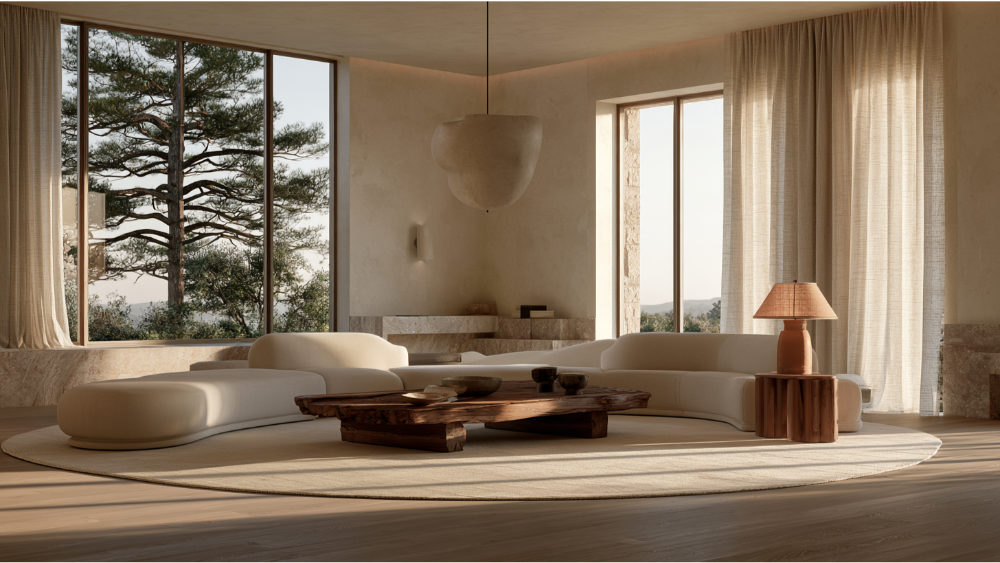
Start with natural light
Daylight is the most flattering light for wood, stone, and earthy textiles, and it strengthens the connection to the outdoors this style is built around. Plan to maximize it before anything else.
Layer warm, well-rendering artificial light
Build in ambient, task, and accent layers rather than one overhead fixture. ENERGY STAR describes 2700 to 3000K as warmer white light, with 4000K and above reading cooler or bluer. Warmer light tends to flatter organic modern materials. Aim for a Color Rendering Index of at least 80 so your colors stay true. These are helpful guides, not rigid rules, and your daylight and finishes should steer the final plan.
Sculptural fixtures
Statement pieces in plaster, wood, or woven materials double as decor. Choose energy-efficient LEDs, and never let a beautiful fixture leave a work zone underlit.
Is Organic Modern Design Actually Sustainable?
"Organic modern" describes a look, not an environmental certification. Natural-looking doesn't automatically mean sustainable, low-emitting, or responsibly sourced. The Federal Trade Commission's Green Guides advise against broad, unqualified claims like "green" or "eco-friendly," and recommend specific, qualified ones instead.
This matters because of how much time we spend inside. The EPA reports Americans spend about 90% of their time indoors, where some pollutants run 2 to 5 times higher than outdoor levels, and many VOCs can run up to 10 times higher. Pressed-wood products in cabinetry and furniture are a known formaldehyde source. So look for real documentation:
- Composite wood: ask whether products meet TSCA Title VI limits (hardwood plywood 0.05 ppm, MDF 0.11 ppm, thin MDF 0.13 ppm, particleboard 0.09 ppm).
- Wood products: the three FSC labels are FSC 100%, FSC Mix, and FSC Recycled.
- Textiles: GOTS requires 95% certified fiber for its "Organic" grade and 70% for "Made with."
- Finishes and furniture: GREENGUARD Gold flags lower-emission products.
No single finish makes a home "healthy." The most honest sustainability levers are reuse and buying fewer, durable pieces that last.
Common Organic Modern Design Mistakes to Avoid
- Too many cream surfaces with no contrast, which reads flat and cheap.
- Overusing curves and arches until the room feels gimmicky.
- Buying matching furniture sets instead of collecting pieces that relate.
- Repeating the same bouclé-and-travertine combination in every corner.
- Ignoring storage, so clutter undoes the clean look.
- Choosing appearance over maintenance reality.
- Harsh or inconsistent lighting that fights the warm palette.
- Calling every natural-looking product sustainable without proof.
How Professional Design-to-Build Planning Brings It Together

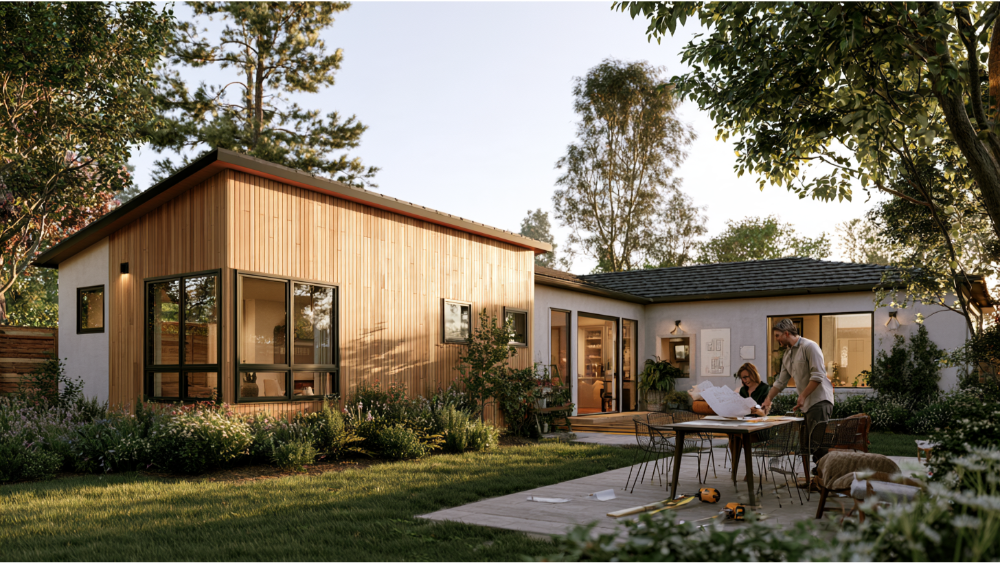
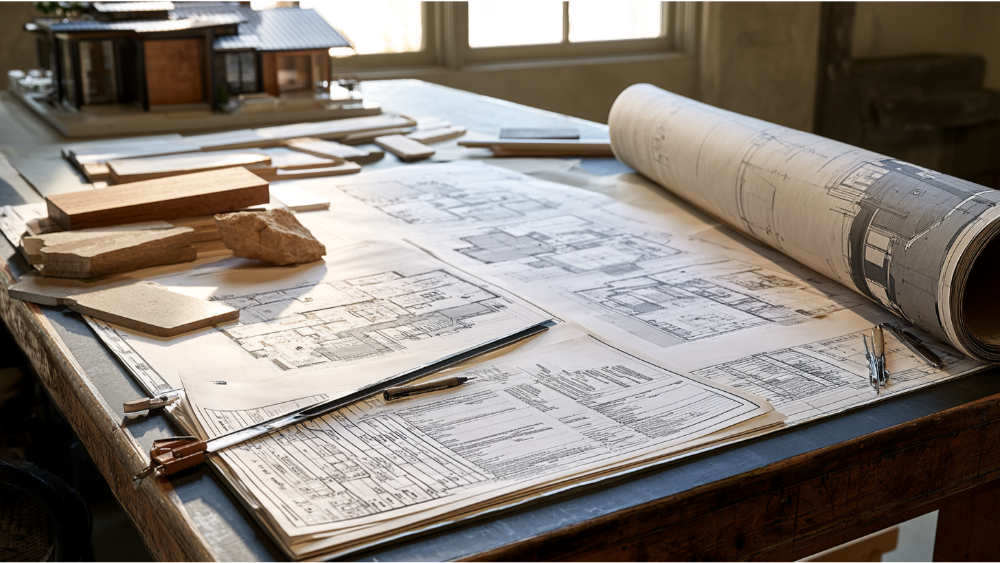
Organic modern lives or dies on coordination. When cabinetry, lighting, flooring, and interior finishes are chosen by separate people, undertones clash and scale slips. One integrated team keeps those decisions aligned so the warmth you pictured actually shows up in the finished room. At Skyline Design Build, we work from physical samples and material boards, and we use 3D rendering and visualization so you can see the space before you commit, catching mismatched undertones or proportions early. We help prioritize your budget, balancing cost and craftsmanship honestly, and we carry one vision from design through construction. One team, one process, fewer surprises.
Start Your Organic Modern Project With Confidence
We would love to join you in your unique project and help shape your space around your vision. Start with a free consultation covering your priorities, timeline, and budget, no pressure. Call us at (916) 701-9196 in Sacramento or (415) 480-4607 for the Bay Area, email [email protected], or reach out through our website contact form.
Frequently Asked Questions About Organic Modern Design
What is organic modern style?
Organic modern pairs the clean lines and uncluttered planning of modern design with natural materials, warm earthy colors, tactile textures, and soft, sculptural forms. Balance is the whole idea: a simple modern base warmed up with wood, stone, and curves.
How is organic modern different from Japandi and warm minimalism?
Organic modern is softer and more curve-forward than Japandi's leaner restraint, and warmer and more textured than strict warm minimalism. We cover each contrast in detail in separate comparison articles.
Can organic modern design include dark colors?
Yes. The moody version leans on walnut, charcoal, olive, and clay to add depth and contrast, which is exactly what keeps a room from turning into an all-cream blur.
Can organic modern work in a small home or apartment?
Yes. Clean lines, an uncluttered layout, and rounded furniture suit tight spaces well, which is partly why curved-furniture searches have climbed about 123%.
What 2026 directions are shaping organic modern?
Wood-grain cabinetry now leads painted at roughly 59%, white oak is favored by about 51% of designers, rust is up around 178%, and soft curves keep rising. Treat these as current directions, not rules you have to follow.