Restoration of a House: A Homeowner's Guide to Doing It Right
Key Takeaway
Restoration of a house means repairing and returning a home to a documented earlier condition while preserving original materials and craftsmanship. Most projects follow a nine-step sequence: stabilize first, update mechanical systems, then restore finish details last. Set aside a 10 to 20 percent contingency, since older homes regularly hide conditions behind walls.
What Is the Restoration of a House? (Intro)
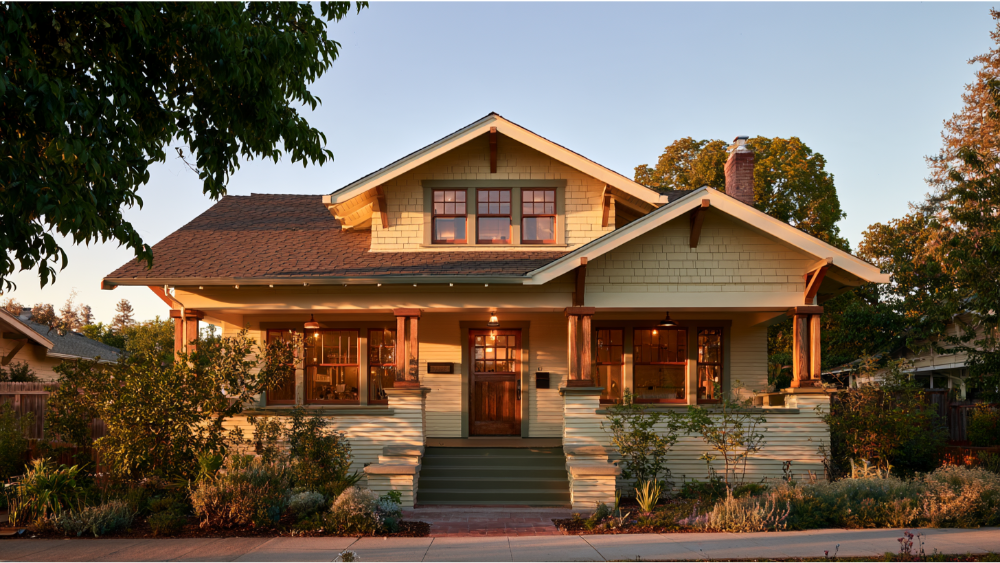
Restoring a house means repairing and returning a home, or selected features, to a documented earlier condition while preserving as much original material and craftsmanship as practical. For most lived-in homes, the smart path is selective restoration inside a broader renovation, so you keep the character that makes the house special while gaining modern comfort. If you own an older or inherited home, you're probably excited about the vision and a little anxious about doing it right. We understand both feelings. One quick distinction before we go further: historic or architectural restoration (bringing back period features and original details) is different from post-damage restoration after fire, water, mold, or a storm, which aims to return a home to its pre-loss condition. This guide focuses on the first.
Restoration vs. Renovation vs. Remodeling vs. Rehabilitation
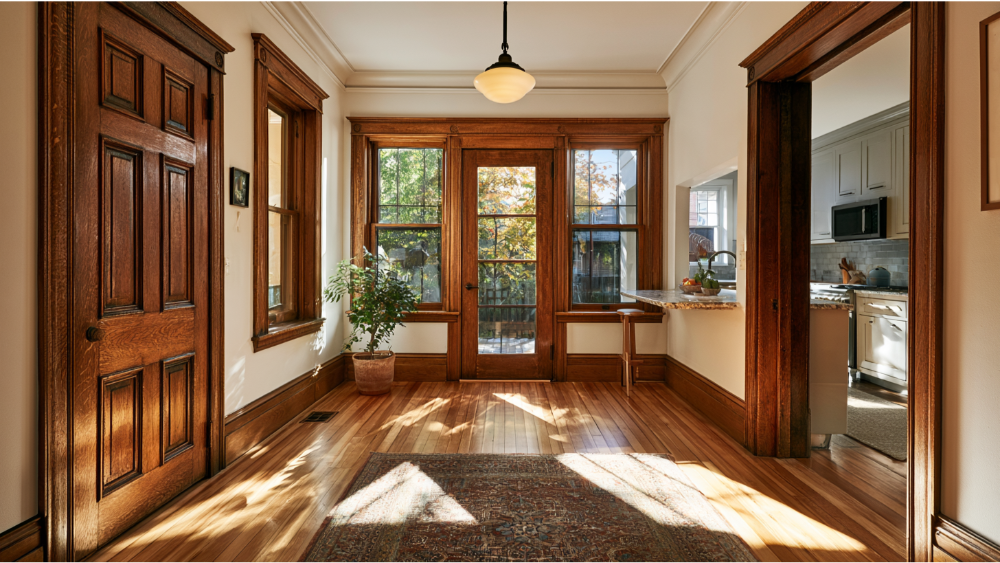
These words get used interchangeably, but they mean different things once you start planning a project.
| Term | Primary goal | Typical example |
|---|---|---|
| Restoration | Return to a documented earlier period | Rebuilding documented porch details |
| Preservation | Maintain what survives | Stabilizing and repairing original plaster |
| Rehabilitation | Support modern use while retaining character | New systems plus repaired original windows |
| Renovation | Refresh or update | New finishes and fixtures |
| Remodeling | Change layout or function | Moving walls or relocating a kitchen |
| Damage restoration | Return to pre-loss condition | Rebuilding after fire or water damage |
Most homeowner projects are really rehabilitation with selective restoration. You want a modern kitchen, updated electrical and plumbing, and a layout that fits your family, but you also want to keep the trim, floors, and architectural details worth saving. When modern systems are integrated discreetly, you preserve the home's historical integrity without freezing it in one period.
Is It Worth Restoring an Old House?
Treat this as a decision, not a style choice. Weigh the architectural character worth saving, the current physical condition, how your family actually needs to use the home, and any historic designation that applies. Well-chosen upgrades also tend to return value. Kitchen and bathroom remodels commonly recoup 70 to 80 percent of their cost, a wood deck addition returns around 83 percent, replacing a garage door can add roughly $8,750 in value, and added attic insulation often recoups its cost. These are general industry figures, not a promise for your specific home. When the bones are sound and the character is irreplaceable, restoration usually earns its place.
Document First: Why You Should Never Start With Demolition
Our guiding order is simple: document first, stabilize second, modernize carefully, restore details last. Tearing into walls before you understand the house destroys evidence and invites expensive surprises. Good documentation also leaves a lasting historical record of what the home was and how it changed. Work through these preconstruction steps before anyone swings a hammer:
- Research the house through deeds, maps, photos, and old plans
- Photograph and measure existing conditions
- Identify character-defining features worth protecting
- Inspect the structure and major systems
- Diagnose moisture and drainage problems
- Test suspect hazardous materials
- Identify required permits and any historic review
- Build a written scope and a decision log
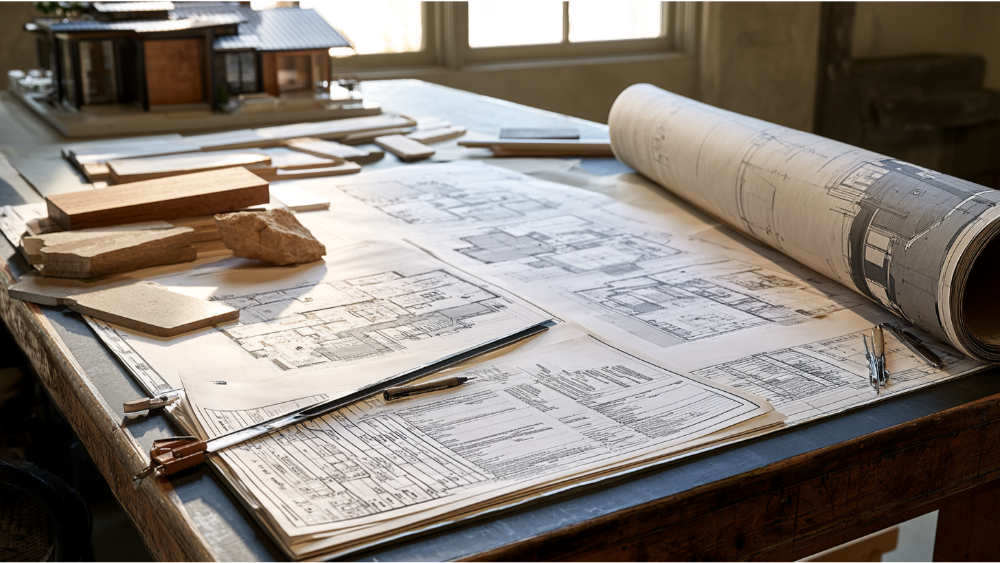
This is where an integrated team earns its keep, handling existing-condition analysis and permit-ready drafting before design decisions are locked.
The Right Order to Restore a House: Essential Steps
Restoration follows a sequence for a reason: skipping ahead to finishes wastes money when a hidden problem surfaces later. Here is the order we follow.
- 1. Protect occupants and stabilize any unsafe conditions.
- 2. Stop active water entry from the roof, flashing, or grading.
- 3. Evaluate and repair the structure and foundation.
- 4. Make the roof and exterior envelope weather-tight.
- 5. Address lead, asbestos, and mold hazards with certified professionals.
- 6. Plan and install mechanical rough-ins: plumbing, electrical, HVAC, and code upgrades.
- 7. Repair windows, siding, masonry, doors, and porches.
- 8. Restore plaster, trim, built-ins, flooring, and hardware.
- 9. Finish with painting, fixtures, testing, punch-list work, and final documentation.
Controlling moisture early, before walls and floors go back together, protects everything built on top of it.
Repair, Restore, or Replace? A Decision Framework
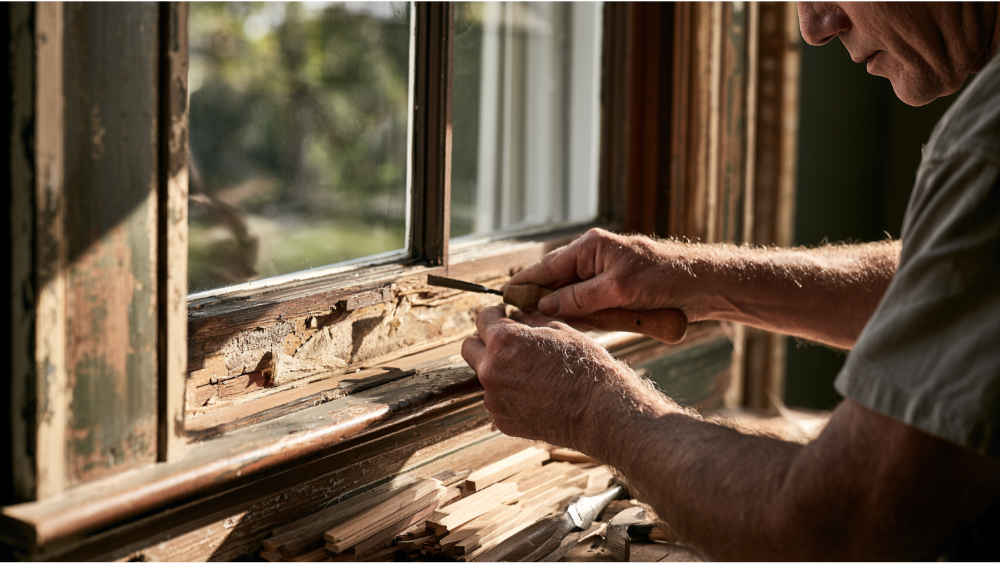
Favor repair and restoration of original features over replacement whenever it's practical. Original materials and craftsmanship are what give an old house its value, and they're often impossible to recreate. Weigh each feature against these criteria:
- Historical or architectural significance
- Percentage of original material remaining
- Severity and cause of the deterioration
- Safety and structural performance
- Whether it can be repaired with compatible materials
- Availability of physical or photographic documentation
- Energy performance and long-term maintenance
- Local review requirements
One caution: an "old-looking" replacement is not the same as restoration.
Safety Hazards to Check Before Opening Walls
Older homes carry risks you can't see, and the rules below are federal baselines. State and local requirements may be stricter, so verify before work begins. Treat any paint in a home built before 1978 as lead-based unless testing proves otherwise. EPA estimates that some lead paint is present in 87 percent of homes built before 1940, 69 percent of homes from 1940 to 1959, and 24 percent from 1960 to 1977. For paid work in pre-1978 housing, EPA's Renovation, Repair and Painting Rule generally applies once you disturb more than 6 square feet of interior painted surface per room or 20 square feet outside. Asbestos can't be identified by sight, so use an accredited professional for sampling, and undamaged material is often safer left in place. Dry any water-damaged materials within 24 to 48 hours to prevent mold. Test for radon and mitigate at 4 pCi/L (consider it between 2 and 4). Lead and asbestos removal always calls for certified professionals.
Do You Need Permits or Historic Approval to Restore a House?
There's no single nationwide permit rule. Permits are issued locally, and structural, electrical, and plumbing work typically requires them. Unpermitted work can bring fines and complicate a future sale, so secure approvals before you start. A common misconception: listing on the National Register of Historic Places does not, by itself, restrict what a private owner may do. Review usually comes instead from local landmark or historic-district rules, state law, deed easements, or conditions tied to grants. Check each of these:
- Local building and zoning permits
- Local landmark or historic-district status
- Your State Historic Preservation Office
- Preservation easements attached to the deed
- Conditions tied to grants or incentives
Get approval before ordering custom materials, since design review can affect windows, siding, porches, and other visible exterior work.
Adding Modern Comfort and Energy Efficiency Without Erasing Character
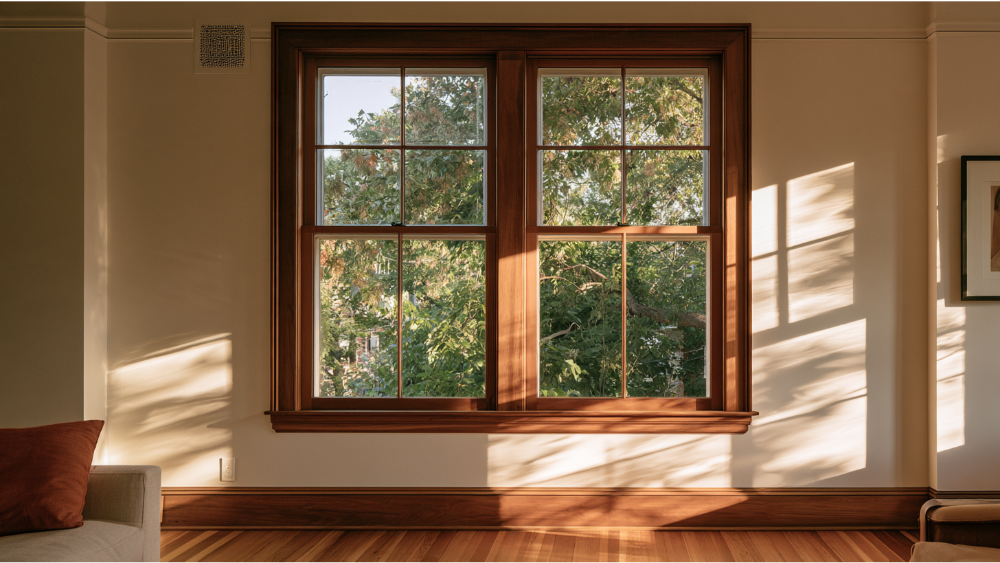
You can gain modern comfort and energy efficiency without stripping the home of its history. Integrate new electrical, plumbing, and HVAC discreetly so the systems do their job without dominating the space. Modern kitchens and bathrooms, added insulation, and air sealing all fit within a sensitive restoration. Start with an energy audit to find air leakage and insulation gaps before sacrificing any original material. Attic insulation often recoups its cost in value, and it's one of the simplest ways to improve comfort. Original windows can usually be repaired and weatherized with storm windows rather than replaced wholesale. When you do add new work, design it to be compatible with the house without faking a history it never had.
How Long Does House Restoration Take?
No honest answer is one fixed number. Your schedule depends on design and investigation time, permit and historic review, hazardous-material testing or remediation, structural conditions, custom fabrication, material lead times, whether you're living in the home during work, concealed damage, and how quickly you make decisions. Separate the construction duration from the full design-to-completion calendar, because planning and permitting happen long before the first wall opens. Damage restoration is a different category with its own timelines; water damage cleanup often runs 3 to 5 days, while fire damage needs specialized equipment and remediation.
Planning Your Budget Without Relying on Misleading Averages
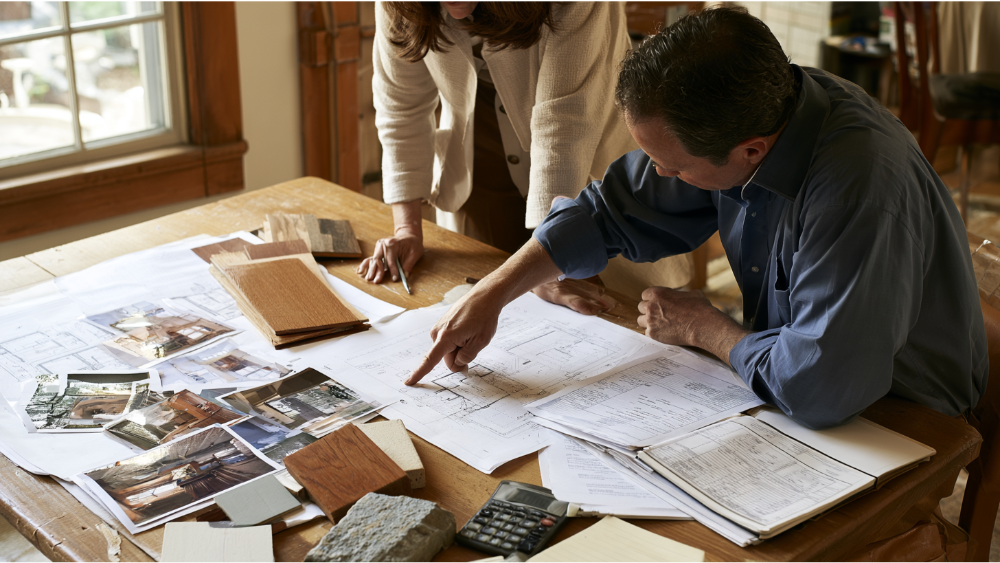
Per-square-foot averages mislead more than they help, because restoration cost depends on your specific home. The real drivers are scope and square footage, structural stabilization, hazardous materials, custom millwork, the condition of plumbing, electrical, and HVAC, how accessible concealed areas are, preservation review, temporary protection and storage, and whether work is phased or continuous. Set aside a 10 to 20 percent contingency for surprises, since older homes hide conditions behind their walls. Whole-home projects commonly range from the low tens of thousands into six figures depending on scope, and for damage work, insurance claims may cover part of the cost. We believe surprises should be handled openly: documented, priced, and approved in writing before the work proceeds.
How to Choose a Design-Build Team You Can Trust
Verify any builder's credentials and licensing through your state licensing board or a recognized credential-check resource before signing anything. Look for experience with older homes, proof of insurance, and a written contract that spells out scope, price, and timeline. Then ask the questions that reveal how a team actually works:
- Who documents existing conditions and prepares permit-ready drawings?
- How are original features identified and protected?
- How are hazardous materials handled?
- How will we see and approve the design before construction?
- Who manages permits and inspections?
- How are hidden conditions documented, priced, and approved?
- How often will we get updates, and who has final say on restore-versus-replace calls?
We built Skyline Design Build as one integrated team so you aren't juggling a separate architect, drafter, and builder. Honest, transparent communication is our real differentiator.
Partner With Skyline Design Build on Your Restoration
Your home holds a story worth keeping, and we would love to join you in your unique project. From existing-condition analysis and drafting through permitting and construction, one team carries your vision from blueprint to build, with regular updates and clear answers at every step. We serve the Greater Sacramento area and the San Francisco Bay Area. To schedule your free consultation, call (916) 701-9196 or (415) 480-4607, or email [email protected].
Frequently Asked Questions About House Restoration
In what order should you renovate a house?
Stabilize structure and stop water first, then update systems like plumbing, electrical, and HVAC, and finish with details and finishes last. The nine-step sequence above moves from safety and the building envelope through mechanical rough-ins to restored trim and final punch-list work.
What are the three types of renovation?
They're commonly grouped as cosmetic or refresh work, functional or layout changes (remodeling), and structural or whole-home work. Restoration and rehabilitation sit alongside these as preservation-focused approaches that prioritize original character.
Is it worth restoring an old home?
It depends on the home's condition, character, and how you plan to use it. When the structure is sound and the craftsmanship is irreplaceable, well-chosen upgrades return value while preserving details you couldn't buy new.
What is the 30% rule of home renovation?
It's a rule of thumb suggesting you avoid spending more than about 30 percent of your home's value on a single renovation. Treat it as a planning guideline, not a hard limit, since a sound older home can justify more.
Can you live in a house while it is being restored?
Often yes for phased work, as long as dust containment and safety are managed. Hazardous-material work and extended systems downtime may require temporary relocation, so it comes down to the scope of your project.