Traditional Style Interior Design: A Complete Guide for Homeowners
Key Takeaway
Traditional style interior design is a layered, symmetry-driven approach rooted in European and early American traditions, built on refined furniture silhouettes, warm wood, quality materials and patterned textiles. It ranked second in style preference in the 2026 Houzz kitchen study. Done well, it feels collected and livable, not stiff or dated.
Traditional interior design is a classic, layered style built on symmetry, refined furniture silhouettes, warm wood, quality materials and patterned textiles. Done well, traditional interiors feel collected and comfortable, like a home that came together over time, not a stiff period reproduction. We're using the term the way most American homeowners and designers do, drawing on European and early American roots. If you're planning a project and want your home to feel timeless and personal, this traditional interior design style gives you a strong foundation. And despite what you may have heard, traditional doesn't mean dark, formal or dated. A traditional interior style can be warm, bright and completely livable, offering understated luxury without feeling precious.
Where Traditional Style Comes From
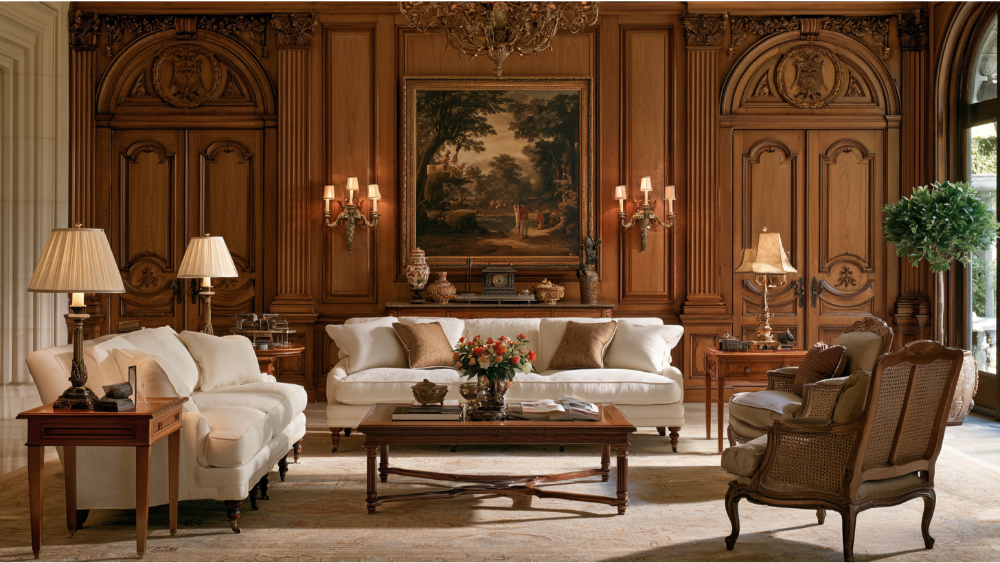
Traditional design draws on European and early American decorative traditions, especially the 18th and 19th centuries. Influences like Queen Anne, Georgian, Chippendale and Neoclassical furniture gave us the curved outlines, classical proportions and refined detailing people still reach for today. But traditional was never one pure period. Even 18th-century interiors blended classical, Baroque, Rococo and other influences under one roof. That's the point worth holding onto: traditional style is an evolved, layered vocabulary, not a copy of a single moment in history. That heritage is exactly what gives these traditional styles their timeless elegance and sense of grandeur.
Key Elements of Traditional Interior Design and Its Timeless Elegance
A few consistent hallmarks define the look. You don't need all of them, but the best traditional interiors draw on several.
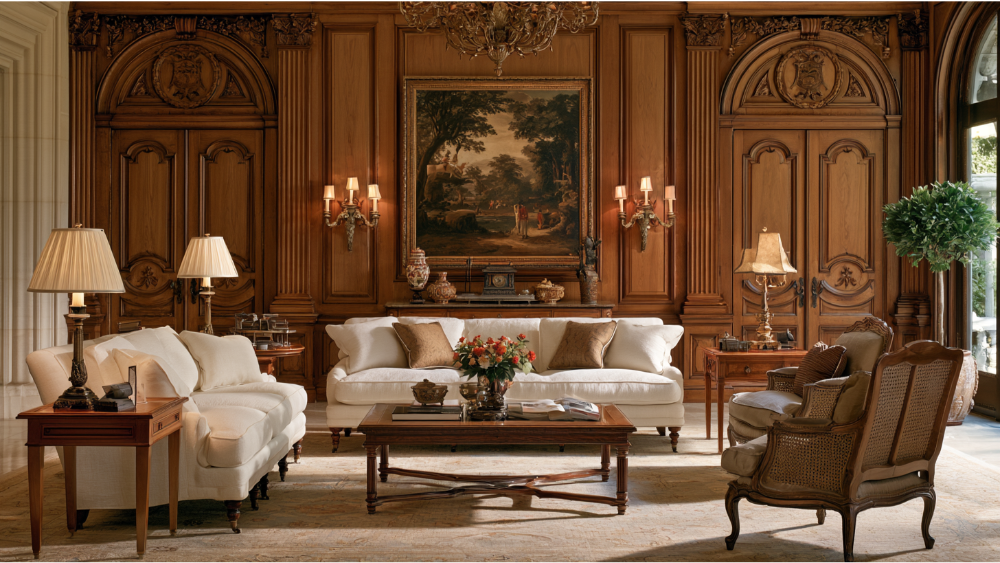
- Symmetry and balance. Matched lamps, paired chairs and arrangements that center on a focal point create calm, orderly rooms with a quiet sense of order.
- Architectural millwork. Crown molding, wainscoting, paneling and built-ins give walls depth, texture and craftsmanship.
- Classic furniture silhouettes. Wingback chairs, substantial dining tables, claw foot tables and pieces in rich stained woods like mahogany and walnut.
- Enduring materials. Silk, velvet, leather and warm brass accents that wear well and add quiet elegance.
- A warm, controlled palette. Restrained neutrals like cream and beige, lifted by jewel-tone accents such as deep red, green and navy.
- Traditional patterns. Florals, stripes, plaid and damask with intricate patterns, layered with intention rather than scattered. These give a room its traditional character and visual appeal.
- Layered textiles. Drapery, a well-chosen window treatment, upholstery and anchor rugs that add softness, texture and visual interest.
- Warm lighting. Chandeliers and fixtures that cast a flattering glow instead of flat, cool light.
- Curated accessories. Oil paintings, framed art, books and heirlooms that tell your story. A piece of modern art can complement the mix without breaking the mood.
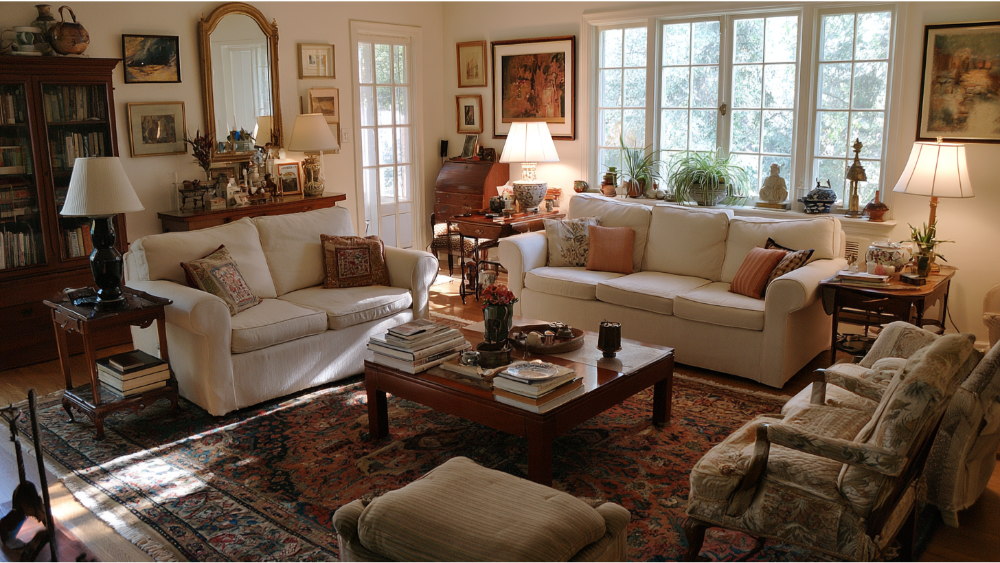
What ties it together is warmth and craftsmanship. Traditional interiors feel inviting because the pieces are built to last and chosen with care, not swapped out every season. That is the elegant, functional quality traditional decor is known for.
Traditional vs. Transitional vs. Modern Traditional
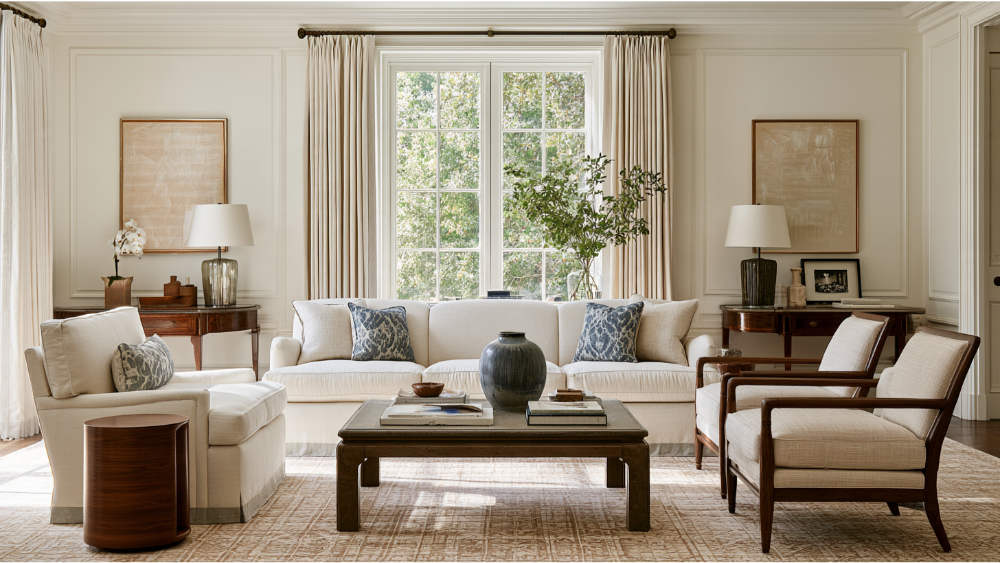
These styles share bones but differ in how much ornament and formality they carry.
| Element | Traditional | Transitional | Modern Traditional |
|---|---|---|---|
| Architecture | Full millwork, detailed | Softened, selective | Classic bones, cleaner |
| Furniture lines | Curved, ornate | Blended old and new | Refined, restrained |
| Color | Warm neutrals, jewel tones | Neutral-forward | Light with rich accents |
| Pattern | Florals, damask, plaid | Fewer, subtler | Used sparingly |
| Formality | Higher | Relaxed | Comfortable |
| Mixing eras | Occasional | Central to the look | Common |
| Ornament | Generous | Edited | Minimal |
Transitional softens ornament and blends classic shapes with contemporary pieces. Modern traditional keeps classic architecture while leaning into restraint and everyday function. A traditional interior design style is firmly relevant: in the 2026 U.S. Houzz kitchen study of 1,780 homeowners who changed their kitchen style, transitional led at 25% and traditional ranked second at 12%. That study surveys Houzz users rather than every homeowner, but the signal is clear even as newer design trends come and go.
How to Design a Traditional Interior Step by Step
The order matters. Start with the architecture, then work outward to the decorative layers to create a cohesive space.
- Assess the home's existing architecture. Note ceiling height, window proportions and any existing millwork. Scale drives every later decision.
- Choose a focal point. A fireplace, a window or a bed that the room can organize around.
- Set the furniture plan and circulation. Map comfortable seating and clear paths before you shop.
- Select a few strong anchor pieces. A dining table, a sofa or a case piece with real presence.
- Build a controlled palette. Warm neutral backdrops let layered traditional decor read clearly.
- Establish a pattern hierarchy. One lead pattern, supported by smaller-scale companion patterns to add texture.
- Layer the lighting. Ambient, task and accent light working together.
- Add storage and conceal technology. Built-ins keep clutter and screens out of sight.
- Finish with art and personal objects. Oil paintings, books and heirlooms bring the space to life.
- Edit. Pull back rather than filling every surface. Negative space adds to the elegance and quiet luxury.
Steps one through four and eight often involve construction or custom work. The rest are decorative layers you can adjust over time to refine your traditional style interiors.
How to Make Traditional Style Feel Current in Modern Homes
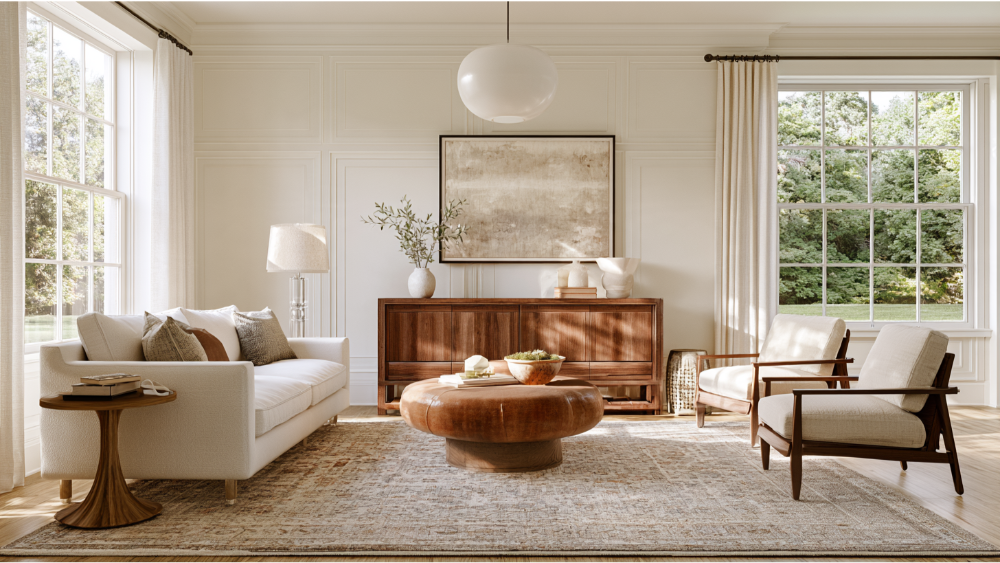
Traditional stays fresh when you keep it from feeling like a period set. A few moves help you create a current, livable traditional interior that feels inspired rather than copied:
- Mix periods instead of buying a matched furniture suite.
- Choose fewer, better-crafted pieces over many ornate ones.
- Balance dark wood with lighter walls and textiles.
- Add contemporary comfort and performance fabrics for real family use.
- Update lighting without erasing the room's architectural character.
- Leave visual breathing room between pieces.
- Hide technology discreetly.
For lighting, warm white light around 2700K to 3000K suits traditional wood tones and textiles. Look for a color rendering index of CRI 80 or higher so wood, art and fabrics read true. The right light brings out the texture and timeless elegance in a room, and you may opt for dimmers to shift the mood by time of day.
Traditional Interiors Room by Room
Living room: Symmetrical seating around a focal point, an anchor rug large enough to ground the furniture, and layered lighting for warmth. Balance patterns and solids so the space feels collected rather than busy.
Kitchen: Warm wood or painted cabinetry, classic hardware and a furniture-style island that reads like a piece of furniture rather than a box.
Dining room: A substantial table, a chandelier centered overhead and framed oil paintings for an elegant, collected feel.
Bedroom: An upholstered or wood bed with warm, layered textiles and soft patterns, perhaps with a velvet headboard. If you use tall dressers, armoires or wardrobes, anchor them to the wall. The CPSC recommends it, and a federal stability standard for these units took effect September 1, 2023.
Bathroom: Classic fixtures and warm finishes keep the space calm and timeless.
Working With an Existing or Historic Home in More Detail
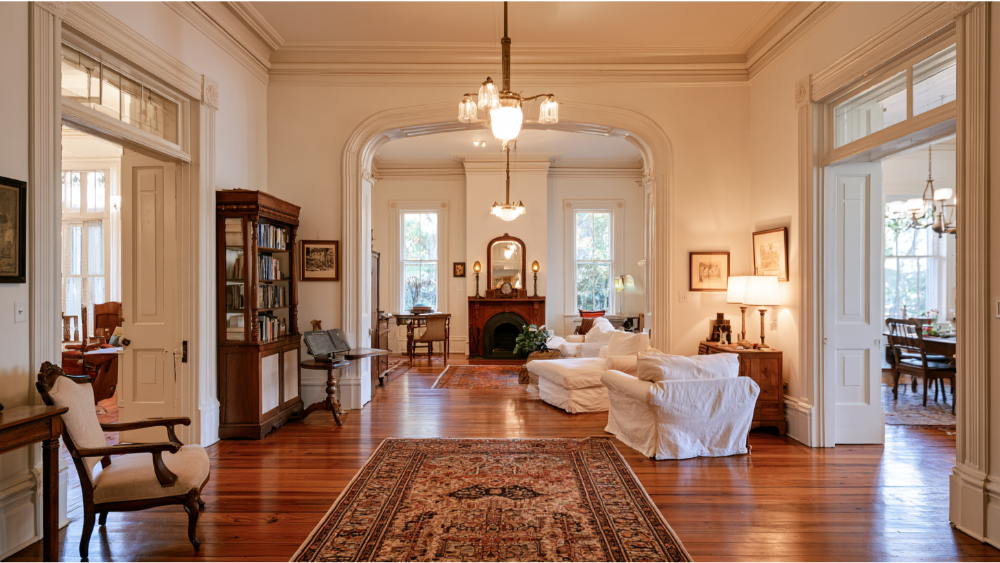
Creating a traditional look is not the same as preserving a genuinely historic home. If your house has authentic historic interiors, the National Park Service recommends identifying and preserving character-defining millwork, plaster, floors, hardware and spatial relationships before any major changes. The Secretary of the Interior's rehabilitation framework sets out 10 standards for this kind of work. And a word of caution: don't add arbitrary columns or moldings that have no relationship to your home's scale. In traditional homes, the look should feel intentional, never invented.
Decorate, Remodel or Build? Planning Your Traditional Home
How far you go depends on your goals.
- Decorating: Paint, rugs, textiles, furniture and fixtures. The fastest path to the look.
- Remodel: Built-ins, paneling, cabinetry, flooring, lighting and altered openings.
- New build: Room proportions, sightlines, ceiling details and integrated millwork, designed from the ground up.
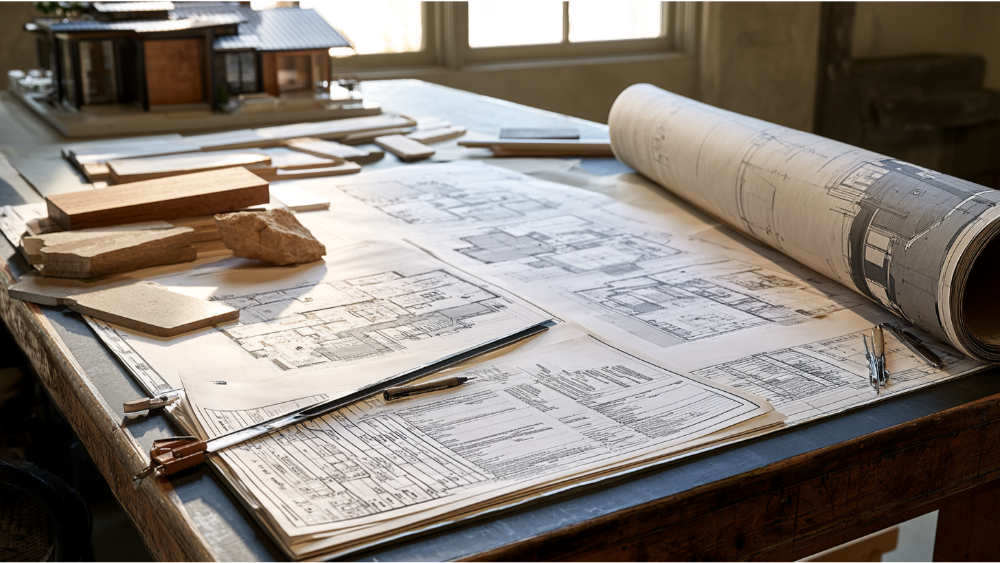
This is where an integrated team earns its keep. When interior design, drafting and construction work together, drafting and 3D visualization let you test millwork, cabinetry, furniture scale and symmetry in more detail before anything is built, so there are no surprises. In the 2026 Houzz study, 87% of renovating homeowners hired at least one professional and 13% worked with a design-build firm.
Common Traditional Design Mistakes to Avoid
- Matching every furniture piece into one stiff suite.
- Overfilling the room instead of editing.
- Using undersized rugs or lighting that float awkwardly.
- Adding ornate details unrelated to the architecture.
- Relying only on dark finishes until the room feels heavy and loses its balance.
- Choosing appearance over comfort and function.
- Confusing traditional style with a literal historical reproduction.
Bring Your Traditional Vision to Life With Skyline Design Build
Your home should feel just right for you, and a traditional space built with care can do exactly that. At Skyline Design Build, interior design, drafting, 3D visualization and construction live under one roof, serving the Greater Sacramento area and the San Francisco Bay Area. We lead with honesty and keep you involved in the key decisions, so you always know where your project stands. We would love to join you in your unique project and help you create traditional spaces with real timeless elegance, pulling inspiration from the details that matter most to you. Call us at (916) 701-9196, reach our Bay Area team at (415) 480-4607, or email [email protected] to schedule your free consultation.
Frequently Asked Questions
Is traditional home decor still in style?
Yes. It ranked second among style choices in the 2026 Houzz kitchen study and stays popular because homeowners value its timeless appeal over passing trends.
What is the difference between traditional and transitional design?
Transitional softens ornament and blends classic bones with contemporary pieces. Traditional interiors embrace fuller detail, richer pattern and more deliberate symmetry.
How do I make traditional décor look less dated?
Mix periods instead of a matched set, lighten your walls, add modern comfort and lighting, and leave visual breathing room so the space can breathe.
Does traditional furniture have to be antique?
No. Quality craftsmanship and classic silhouettes matter more than age. Mixing antique and new pieces often creates the best balance.
What colors work best in a traditional interior?
Warm neutrals like cream and beige, paired with rich jewel accents such as deep red, green and navy for a sophisticated sense of elegance.