Victorian Style Interior Design: How to Bring Historic Character Into a Modern Home
Key Takeaway
Victorian style interior design uses layered pattern, rich jewel tones, carved furniture, detailed millwork, and tactile fabrics to create rooms with warmth and historic character. The Victorian era spanned 1837 to 1901 and includes several distinct movements, from Gothic Revival to Arts and Crafts. Most homeowners succeed by deciding early whether to restore, rehabilitate, or simply draw inspiration from the period.
Victorian Style Interior Design: The Quick Answer
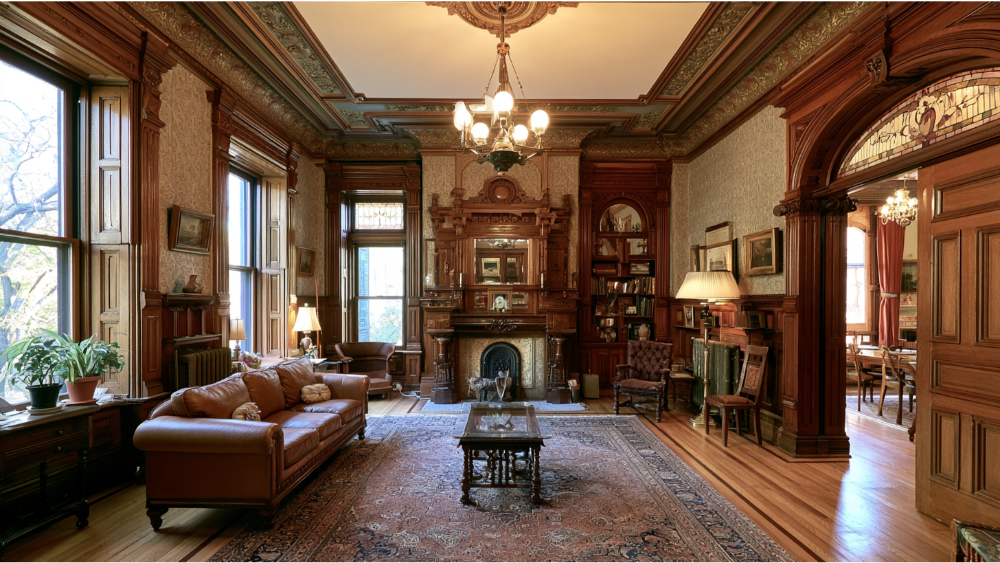
Victorian interior design uses layered pattern, expressive color, detailed millwork, decorative furniture, and tactile fabrics to create rooms with real warmth and character. Because the victorian era ran from 1837 to 1901, it isn't one fixed look. It's a long time period that holds several distinct design movements. If you love that historic character but still want a home that works for the way you actually live, the honest path is deciding what to preserve, what to recreate, and what to modernize. This guide walks you through all three, so your finished victorian interiors feel personal and livable rather than frozen in time.
Victorian Design Is a Period, Not One Fixed Look
Queen Victoria reigned for almost 64 years, from 1837 to 1901, and interior fashion shifted considerably across that span. "Victorian" covers a lot of ground: Gothic Revival, Rococo Revival, Renaissance Revival, the Aesthetic Movement, and the Arts and Crafts reaction against machine-made design. British taste drove the early years, but American victorian homes adapted it freely. Different rooms in one house could follow different styles, with Rococo Revival in the parlor and Gothic Revival in the library or dining room.
Industrialization is a big part of the story. Mass production put wallpaper, furniture, and decorative elements within reach of far more households than before, which is how the layered, collected look spread. That also means the common myth, that every victorian room was dark and cluttered, simply isn't accurate. Palettes in the victorian period ranged from bright florals to muted art greens and reds depending on the decade, the income, and the room. The result is a design language with genuine range, not a single template.
Choose Your Approach Before You Start
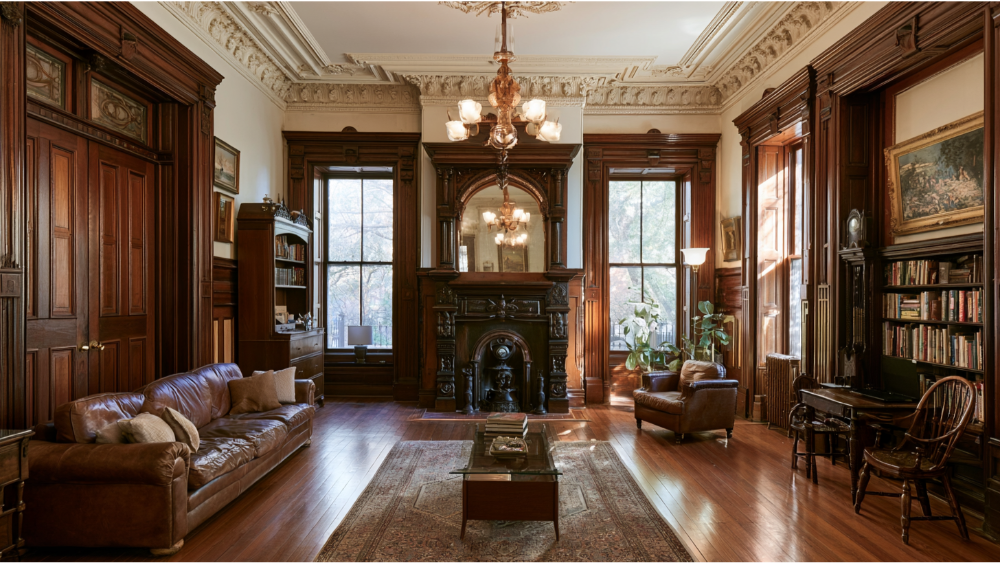
Deciding how far you want to go, honestly and early, saves money and regret later. Federal preservation guidance recognizes four treatment categories: preservation, rehabilitation, restoration, and reconstruction. For most homeowners, the real choices look like this:
- Authentic restoration: Return a space to one documented historical period using period-correct materials and research.
- Respectful rehabilitation: Keep the character-defining features while adapting the home for modern living. This is what most residential projects actually are.
- Modern Victorian interior: Blend historic references with contemporary comfort, layout, and lighting.
- Victorian inspired accents: Add a few period touches to an otherwise contemporary home.
Many victorian houses aren't on any historic register, which gives you room to make meaningful changes. Start with your own vision and personal style, then name your level of authenticity up front. That single decision shapes every choice that follows.
The Defining Elements of Victorian Interiors
Architectural features, period properties, and millwork
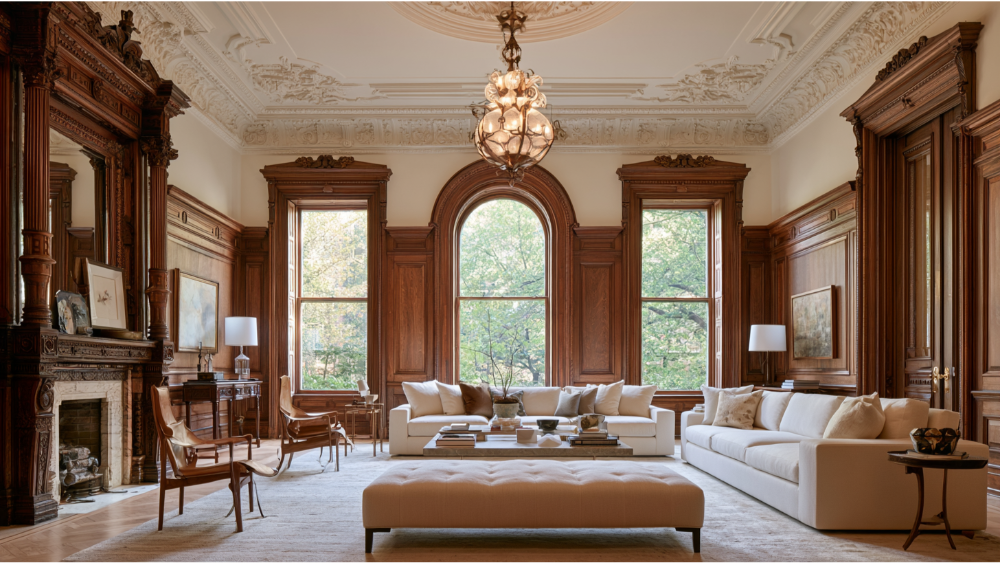
The architecture carries the style. High ceilings, crown molding, ornate plasterwork, ceiling medallions, and carved trim give a room its backbone. Steeply pitched roofs and ornate detailing were a point of pride, and these are usually the hardest to replicate well, which is why original ones are worth protecting. On many period properties, bay windows add depth to the facade while flooding the interior with light.
Color and pattern with bold colors
Deep jewel tones like burgundy, forest green, navy, and antique gold show up often, but so do lighter floral patterns and softer art palettes. These rich colours give victorian design much of its drama, though lighter schemes with soft greys and neutral walls were common too. Wallpaper is central, and it went well beyond flowers: damask, stripes, botanicals, architectural motifs, and imitation wood or marble all add visual interest. The three-part dado, filling, and frieze arrangement was first recommended in 1868 and had become standard in fashionable victorian interiors by 1880, with a darker, durable lower band and livelier upper frieze. Wall paneling added a layer of texture below that line. William Morris alone designed more than 50 wallpapers, and his stylized plant patterns shaped the Aesthetic and Arts and Crafts years.
Victorian furniture, luxurious fabrics, and lighting
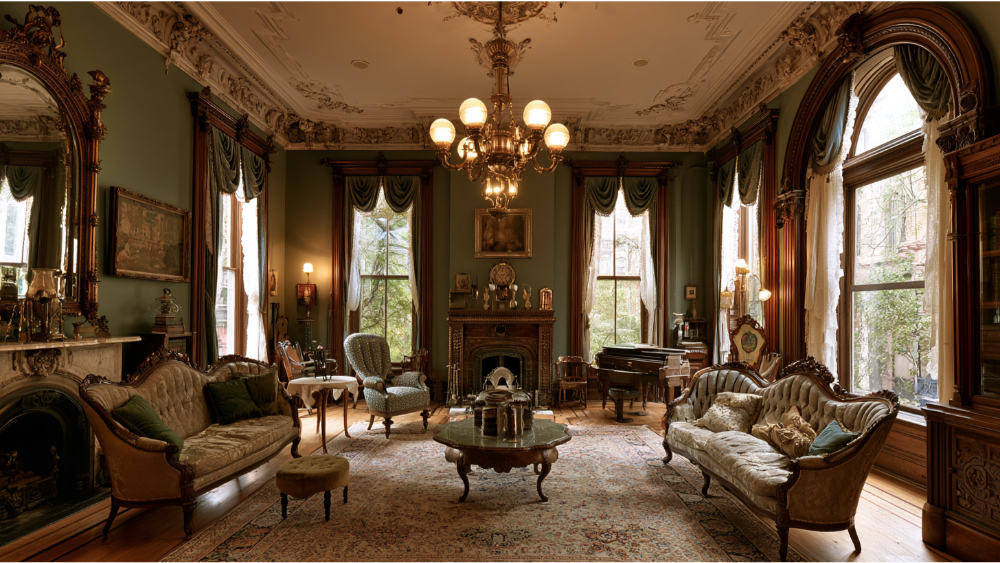
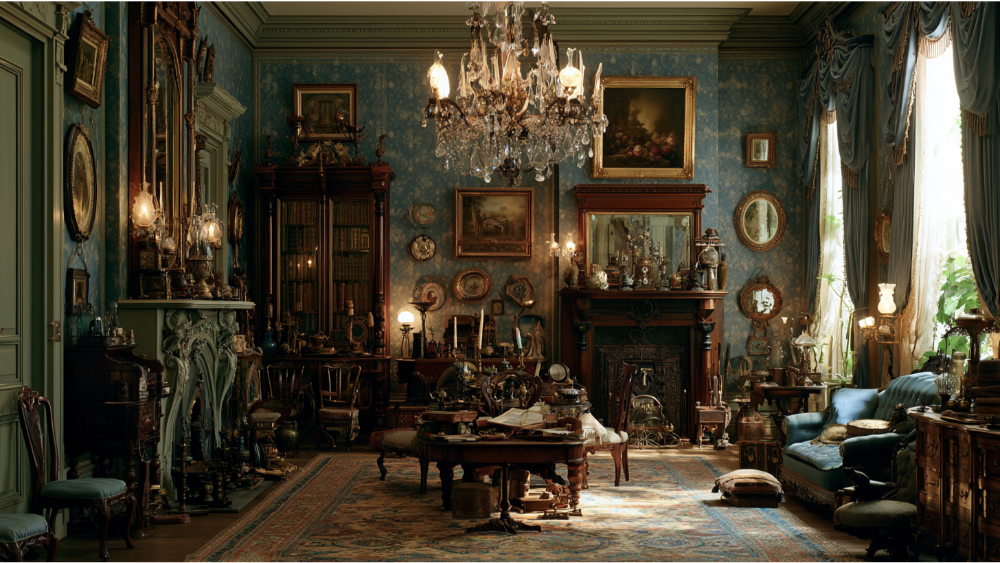
Expect carved, substantial victorian furniture with intricate details, paired with velvet and silk. These luxurious fabrics and rich fabrics gave victorian rooms their sense of comfort. Elaborate curtains and layered window treatments softened the windows while giving owners real light control. Crystal chandeliers and brass fixtures handle ambient lighting. Ornate furniture, framed paintings, botanical prints, decorative pillows, and collected objects fill out the room. These decorative elements feel curated and intentional, not clutter. Each piece is meant to feel chosen.
What to Preserve in an Older Victorian Home
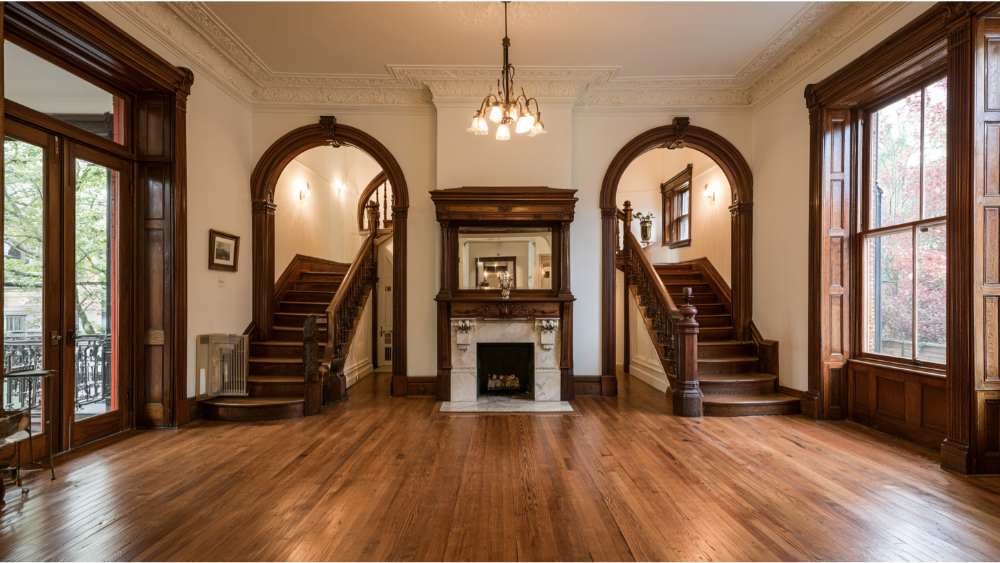
Before you remove anything, identify what makes the house itself. The National Park Service recommends pinpointing character-defining features and repairing them before considering replacement. When replacement is unavoidable, match the original in design, color, texture, and material where you can. Key features and period features worth protecting usually include:
- Fireplaces and mantels, often the room's natural centerpiece
- Original trim, doors, and hardware
- Plasterwork and ceiling medallions
- Wood and tile floors
- Stairs, bay windows, sash windows, and built-ins
- Room proportions and spatial relationships
Exterior brickwork deserves the same care. Victorian masonry was built with breathable lime mortar, and repointing with the wrong modern mix can trap moisture and damage the brick. Assess before you demolish. Once a hand-carved detail is gone, it rarely comes back the same.
How to Create Modern Victorian Interior Design Without the Museum Effect
Modern Victorian design blends historic character with contemporary comfort, so a room reads as warm and personal rather than staged. The goal is a perfect balance between old and new so nothing starts to feel stuffy. The trick is restraint and hierarchy. Here's how it comes together:
- Pick one dominant focal feature. A feature wall, a fireplace, or a single wallpaper gives the eye somewhere to land.
- Balance pattern with quiet surfaces. Let dark colours like deep greens and blues carry weight, then keep the surrounding walls and floors calm.
- Mix modern furniture and antiques. Pair an antique-inspired carved piece with cleaner modern styles and clean lines so neither feels like a costume.
- Improve the lighting. Period rooms can read dark, so layer fixtures and manage natural light instead of relying on one overhead source.
- Protect circulation and function. Leave clear paths and real working space. Multifunctional furniture helps a smaller space stay practical, which matters most in smaller rooms.
- Use durable current materials where historically exact ones are impractical, so the look holds up to everyday life.
Velvet textures and a few well-placed antiques add depth without tipping the room into theme-park territory. When you incorporate elements of victorian character this way, functionality and aesthetic appeal live together in one space, and contemporary pieces keep it grounded in modern sensibilities.
Victorian Style Room by Room
Entry and hallway
This is your first impression. A statement wallpaper or a bold runner sets the tone, and a bay window becomes a natural moment of light.
Living room with a gallery wall of modern pieces
Rich jewel tones like deep green anchor the living room. An ornate mirror makes a strong focal point, a Chesterfield sofa brings an iconic silhouette, and velvet or silk adds texture. A gallery wall mixing contemporary artwork with modern pieces keeps the living room personal and tied to your own taste. This is where victorian interiors most easily gain a modern twist, because the room welcomes both antique and contemporary furniture.
Dining rooms
Lean into a rich palette and a strong light fixture overhead in dining rooms, but hold back on competing patterns so the table stays the star.
Bedroom, kitchen, and bathroom
Bedrooms suit layered fabrics and softer color. Kitchens and bathrooms are where Victorian character meets modern reality: plan for storage, task lighting, and ventilation first, then dress the room. These spaces deserve their own detailed treatment, which we cover in dedicated guides.
Preserve, Recreate, or Modernize? A Decision Table
A quick reference for common features and the approach that usually makes sense:
| Feature | Preserve | Recreate | Modernize |
|---|---|---|---|
| Walls / wallpaper | Keep intact historic papers | Reprint a period pattern for one feature wall | Use durable, washable modern wallcoverings |
| Trim / millwork | Repair original profiles | Mill matching pieces for gaps | Simplify in secondary rooms |
| Fireplaces | Restore as a centerpiece | Source a period-correct mantel | Convert the firebox for safe modern use |
| Flooring | Refinish original wood or tile | Match in-kind where damaged | Add engineered or heated flooring |
| Lighting | Rewire original fixtures | Add brass or crystal reproductions | Layer in discreet task and recessed light |
| Windows | Repair original sashes and bay windows | Match profiles if replacing | Add interior storm or efficient glazing |
| Furniture | Keep quality antiques | Choose antique-inspired pieces | Mix in clean-lined modern pieces |
| Kitchens | Keep built-ins where usable | Reference period cabinetry details | Modern appliances, storage, ventilation |
| Bathrooms | Save original tile if sound | Pattern tile and fixtures with period feel | Current plumbing and moisture control |
Planning a Victorian-Inspired Remodel
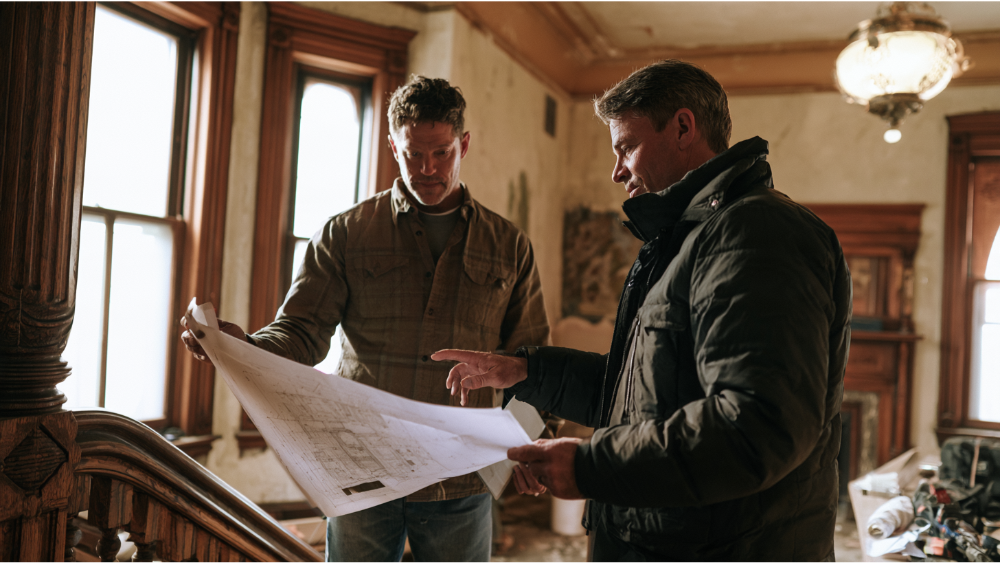
A good plan turns a vague wish into a clear path. We work through it as one connected process rather than a string of disconnected handoffs:
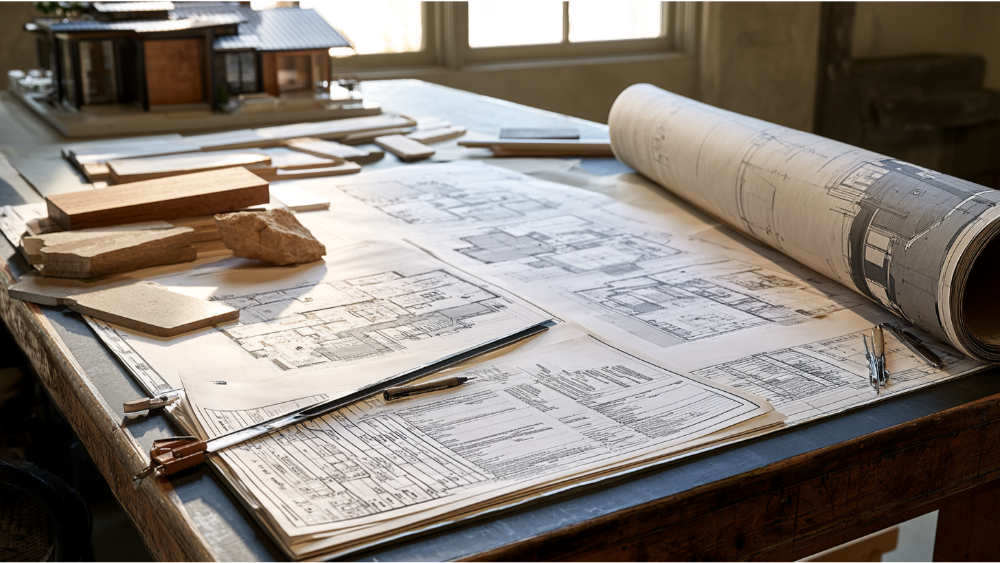
- Document existing conditions and the home's character-defining features.
- Define your authenticity level, from restoration to inspired accents.
- Set functional priorities: storage, lighting, comfort, and circulation.
- Develop drafting and interior design concepts that respect the original architecture.
- Use 3D rendering and visualization to test bold colors, pattern scale, and furniture placement before anything is built.
- Finalize materials and the construction scope.
- Keep transparent updates running all the way through completion.
Because our drafting, interior design, and construction live under one roof, those decisions inform each other instead of getting lost between separate firms. Our interior designers stay close to the build, you stay involved in the choices that matter most, and your personal style guides the victorian interior design from first sketch to final walkthrough.
Safety Considerations in Older Victorian Houses
Older victorian houses carry real risks worth planning around. Housing built before 1978 may contain lead-based paint, and under the EPA's Renovation, Repair and Painting Rule, paid work that disturbs those surfaces generally must be done by a certified firm using lead-safe practices. A limited minor-repair exception can apply to no more than 6 square feet of interior painted surface per room, combined over a 30-day period, or 20 square feet on the exterior, with important exclusions.
Suspected asbestos-containing materials can't be identified by appearance. If they may be disturbed, have them tested by a professional rather than sampling them yourself. Requirements vary by project and jurisdiction, so confirm what applies to your home before work starts.
Common Victorian Interior Design Mistakes
- Treating every victorian room the same when the period held many styles.
- Removing authentic features before anyone assesses them.
- Adding imitation detail the house doesn't actually support.
- Using too many competing focal points so nothing stands out.
- Sacrificing lighting, circulation, or storage for looks.
- Assuming "historically inspired" means historically accurate.
Frequently Asked Questions About Victorian Interior Design
What do Victorian homes look like? Layered pattern, carved furniture, detailed millwork, high ceilings, bay windows, and collected objects, often with rich color. The exact look depends on the decade and the design movement, so no two feel identical.
What colors work in Victorian interiors? Deep jewel tones like burgundy, forest green, navy, and antique gold are classics, but documented palettes also included brighter florals and muted art greens and reds. Choose by room and mood rather than one fixed list.
What is modern Victorian interior design? It blends historic character with modern living, keeping ornate detail and color while improving layout, lighting, and function for daily life.
Who was Queen Victoria and why does the style carry her name? The style is named for Queen Victoria, and Queen Victoria's reign from 1837 to 1901 defined the decades when these interiors took shape across Britain and America.
What is the Victorian aesthetic called? One major strand is the Aesthetic Movement, which spread in the U.S. after the 1876 Centennial Exhibition and treated a space as one integrated environment. The broader period style is simply called Victorian.
Can Victorian style work in a modern house or apartment? Yes. Use a feature wall, a few antique-inspired modern pieces, jewel-tone accents, and considered lighting to bring in the victorian charm and intricate details without a full renovation.
Bring Your Victorian Vision to Life
The right design preserves the character you love while reflecting how you actually live. At Skyline Design Build, our integrated team handles drafting, interior design, 3D visualization, and construction under one roof, serving the Greater Sacramento area and the San Francisco Bay Area. We would love to join you in your unique project and help you decide what to preserve, recreate, and modernize across your victorian interiors. If you would like to submit related articles or questions, or schedule a free consultation, call us at (916) 701-9196, email [email protected], or reach out through our contact form.